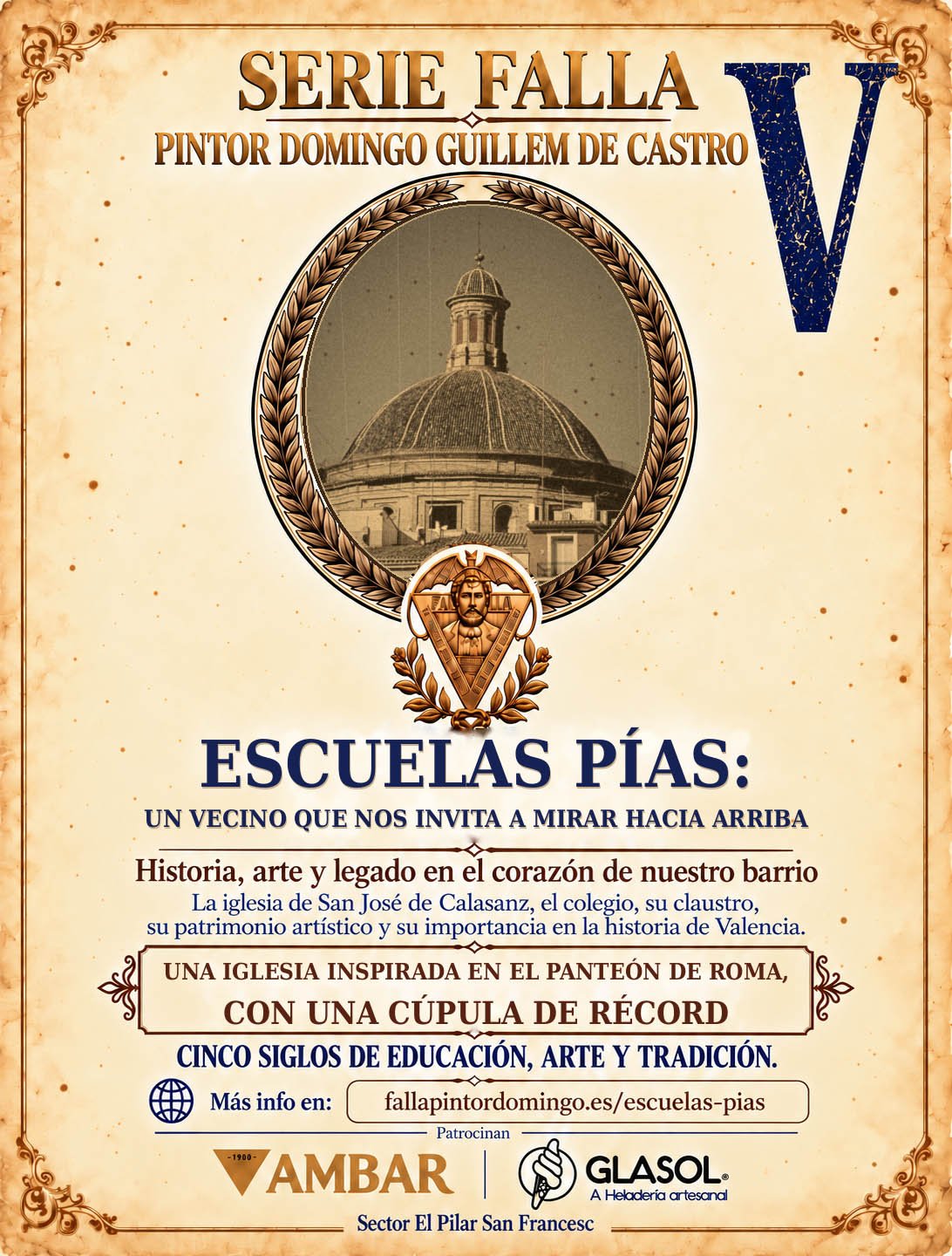

Just a few steps from our falla, in the heart of the Velluters neighbourhood, stands a building that has been educating generations of Valencians for almost three centuries and conceals one of our city’s great architectural treasures. A church inspired by the Pantheon in Rome, a record-breaking dome and a history full of fascinating details.
Some buildings can be seen from afar, while others have to be discovered. The Escuelas Pías of Valencia have the curious distinction of being both at once.
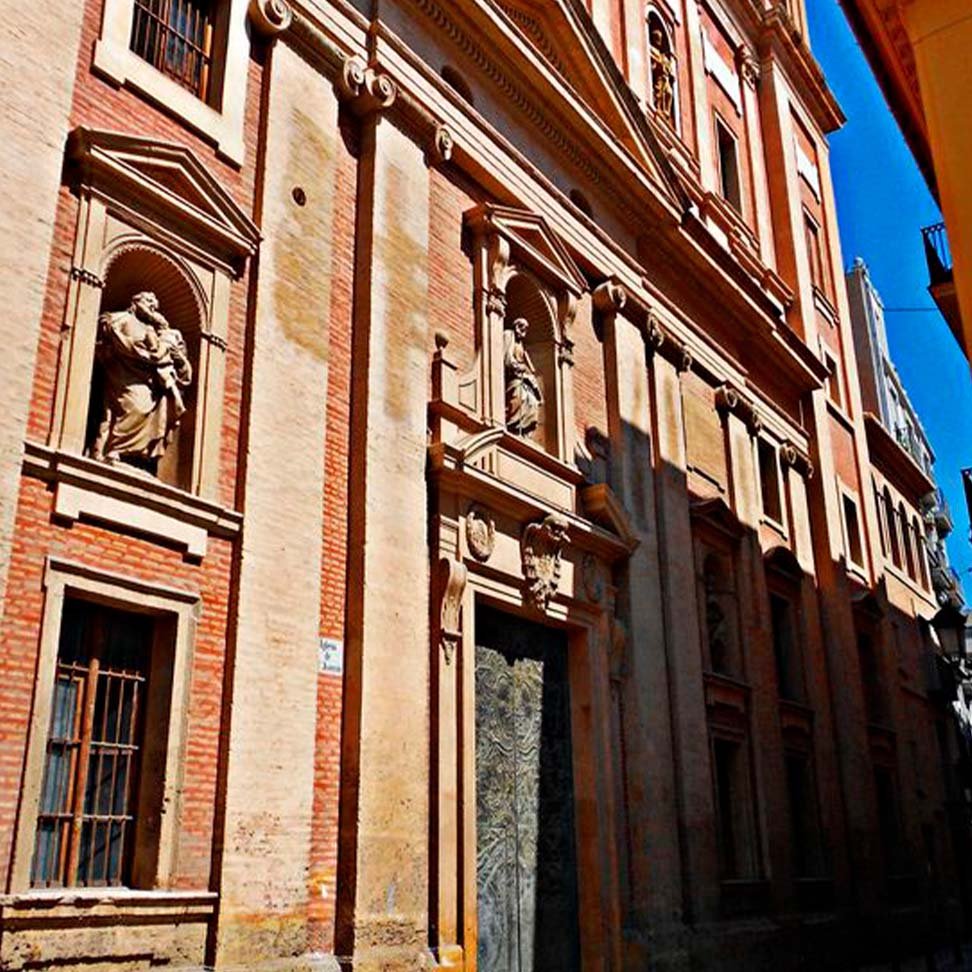
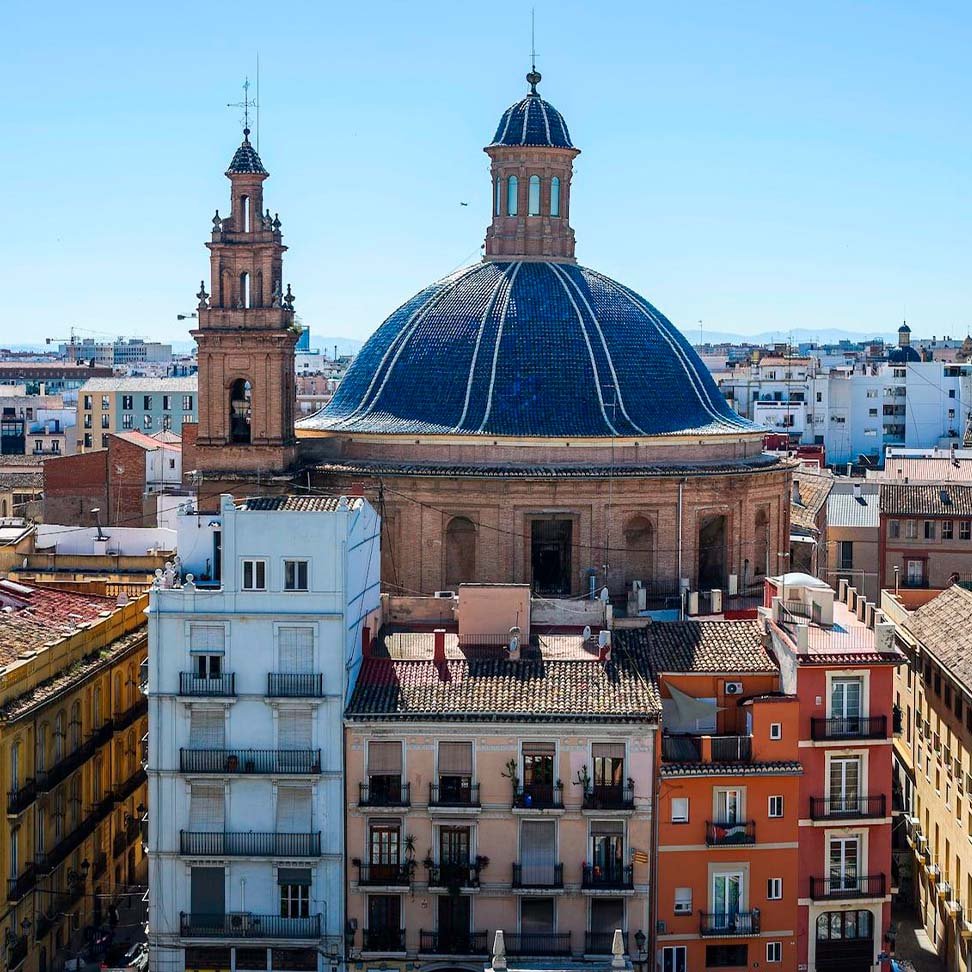
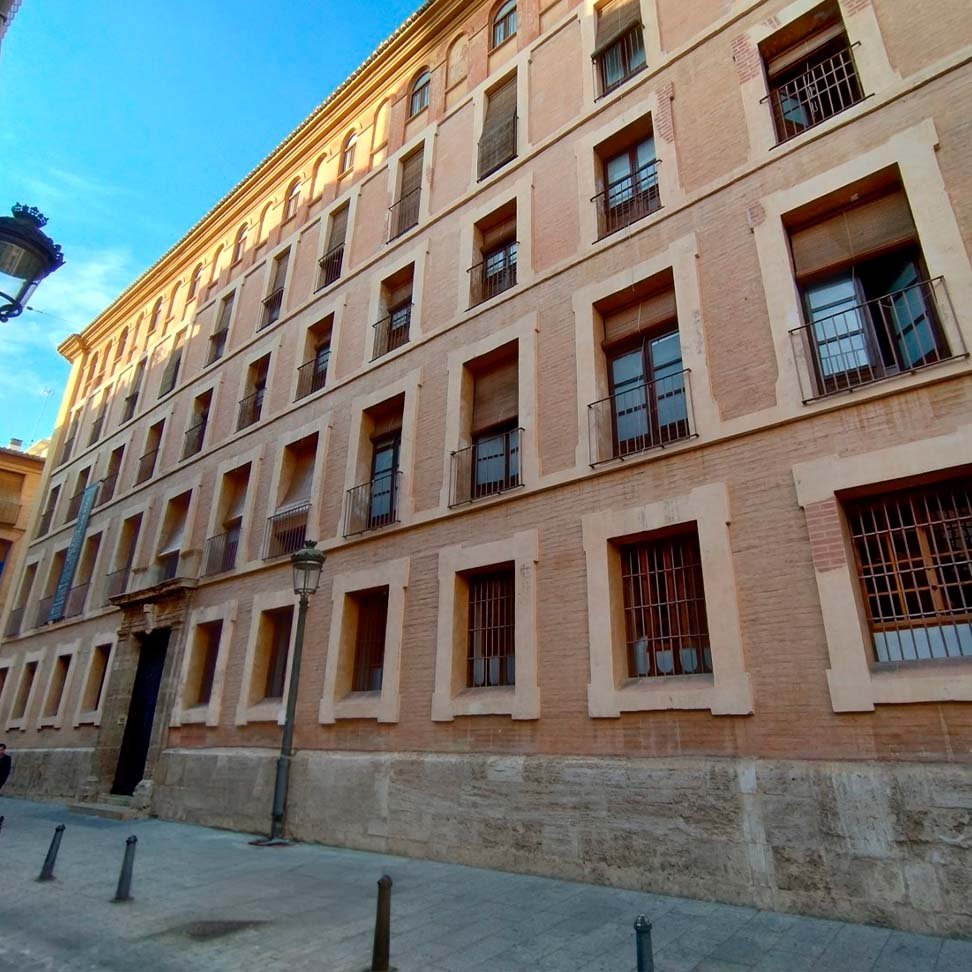
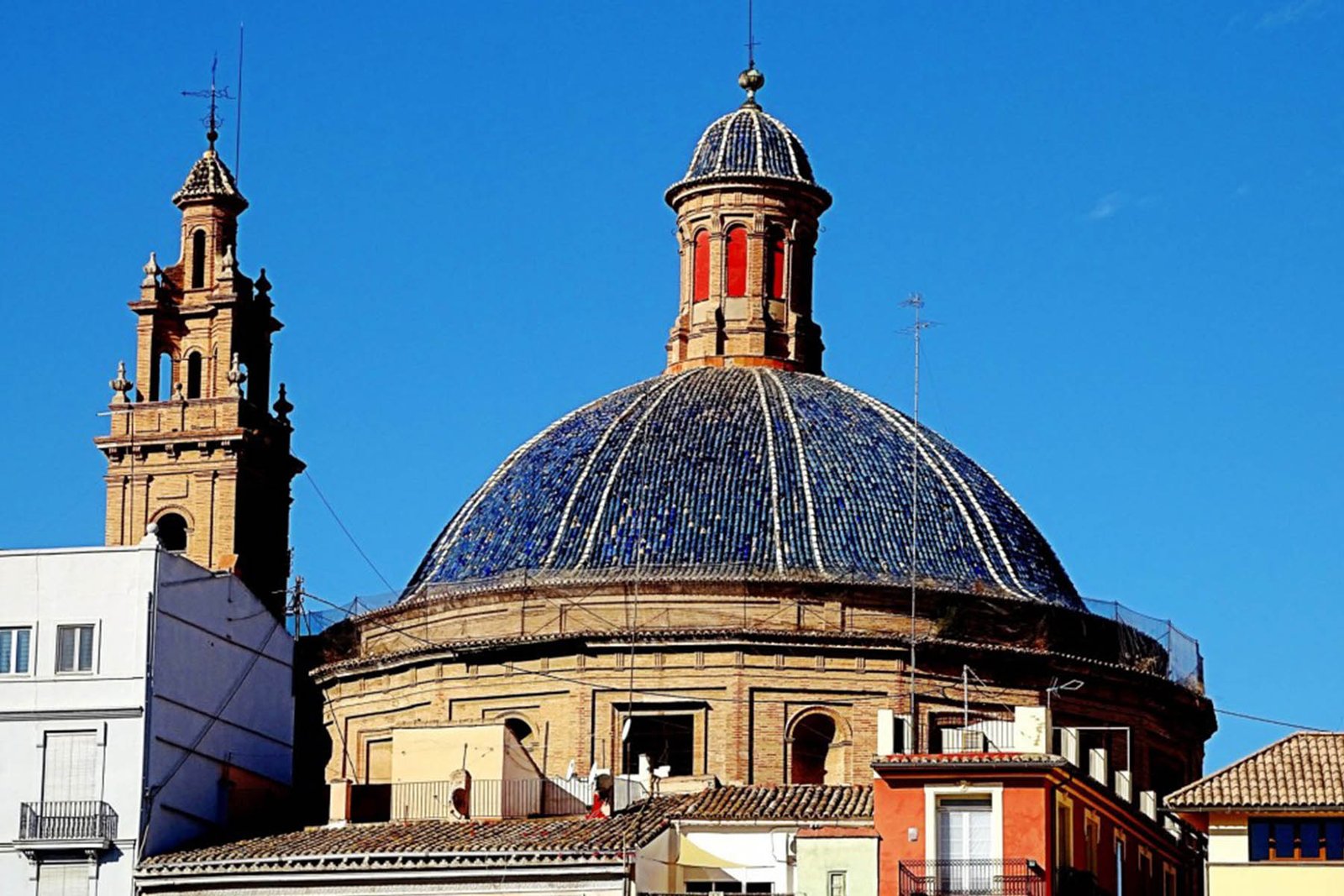
From Carniceros Street, you see a school. A large one, yes, but a school nonetheless. You have to look up—or step through the door of its church—to discover that, very close to our casal, stands what is considered the second-largest church dome in Spain.
In this new instalment of our Our History series, we visit a neighbour that has spent almost three centuries teaching people to read, write and, along the way, look upwards.
An Aragonese saint who studied in Valencia
To understand this building, we must first travel to Rome at the end of the sixteenth century. There, an Aragonese priest named Joseph Calasanz opened free schools for poor children in the Trastevere neighbourhood in 1597.
It was a revolutionary idea at the time: that the children of families who could not afford a teacher should also have the chance to learn to read, write and count.
Those classrooms gave rise to the order of the Escuelas Pías, whose religious members are known as Piarists.
One detail we particularly like: before leaving for Rome, Calasanz had studied theology in Valencia, among other places. So when his Piarists arrived in our city a century and a half later, in a sense they were coming home.
A count, a Piarist and an archbishop
The Piarists arrived in Valencia in 1737. They did so thanks to the determination of the Count of Carlet, a Valencian nobleman who had encountered the order’s work in Zaragoza, and the support of Archbishop Andrés Mayoral, who would become the school’s great patron.
The early years were not easy. Education was already an area in which other religious orders were active, and the arrival of the Piarists met with some resistance.
Among those who viewed the newcomers with suspicion were the Jesuits, who had been established in Valencia since the sixteenth century.
And here we find an interesting connection to the previous instalment of Our History: Ignatius of Loyola, founder of the Jesuits, had stayed two centuries earlier at the Palaces of the Eixarchs, whose story we have already told.
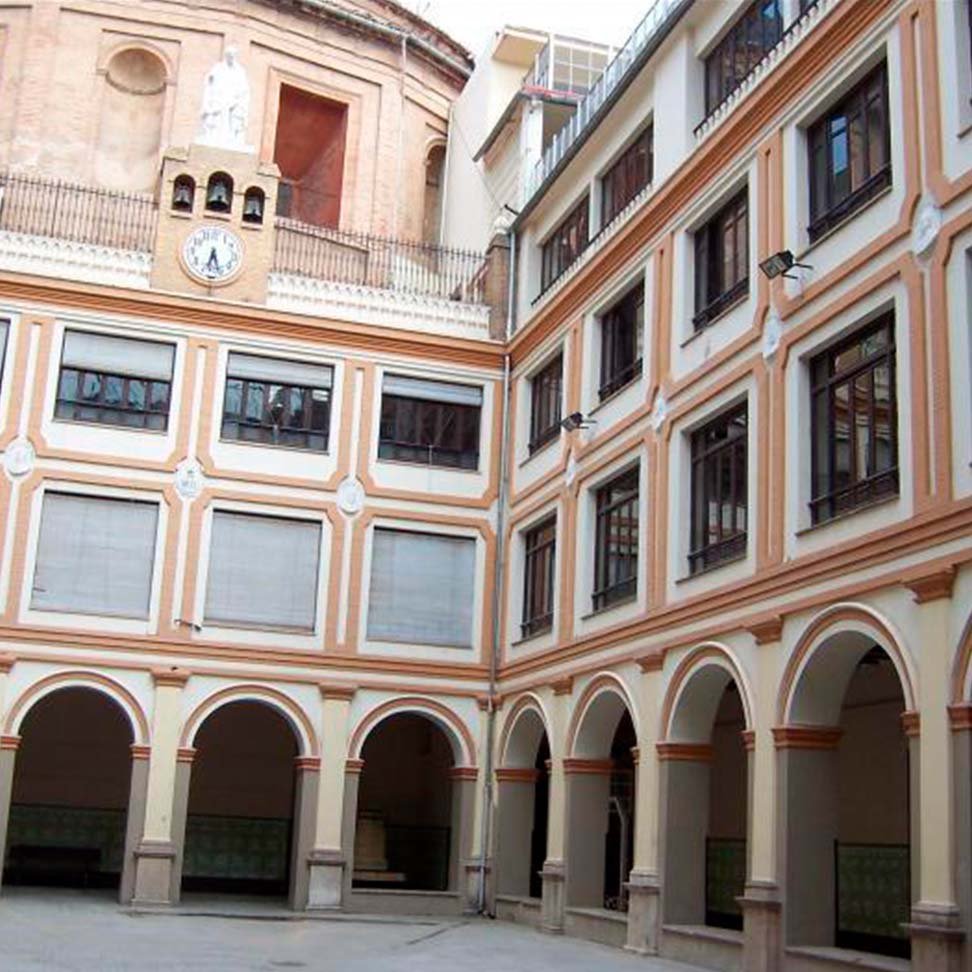
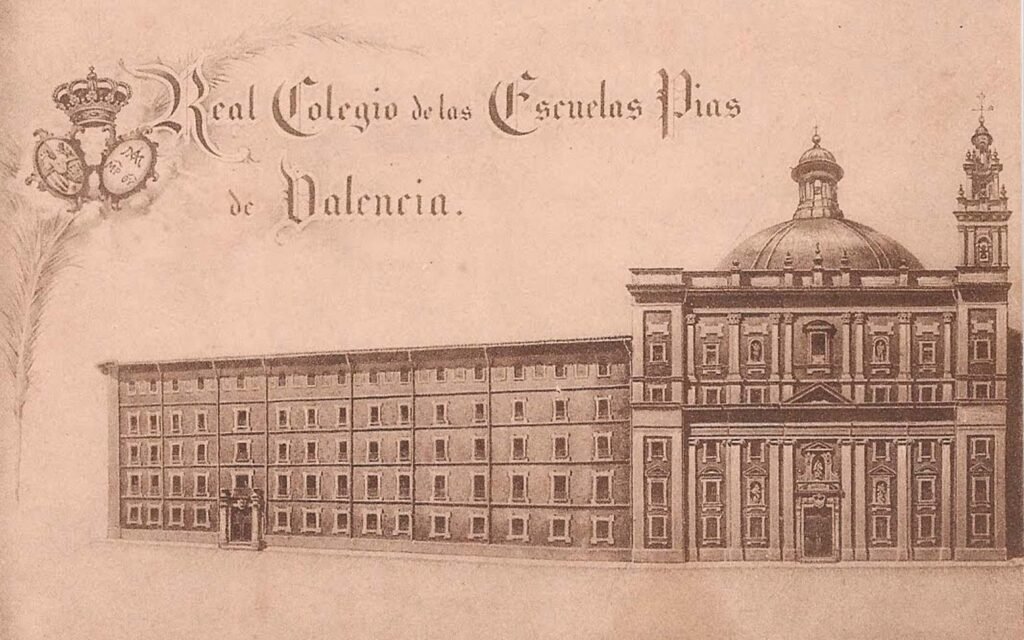
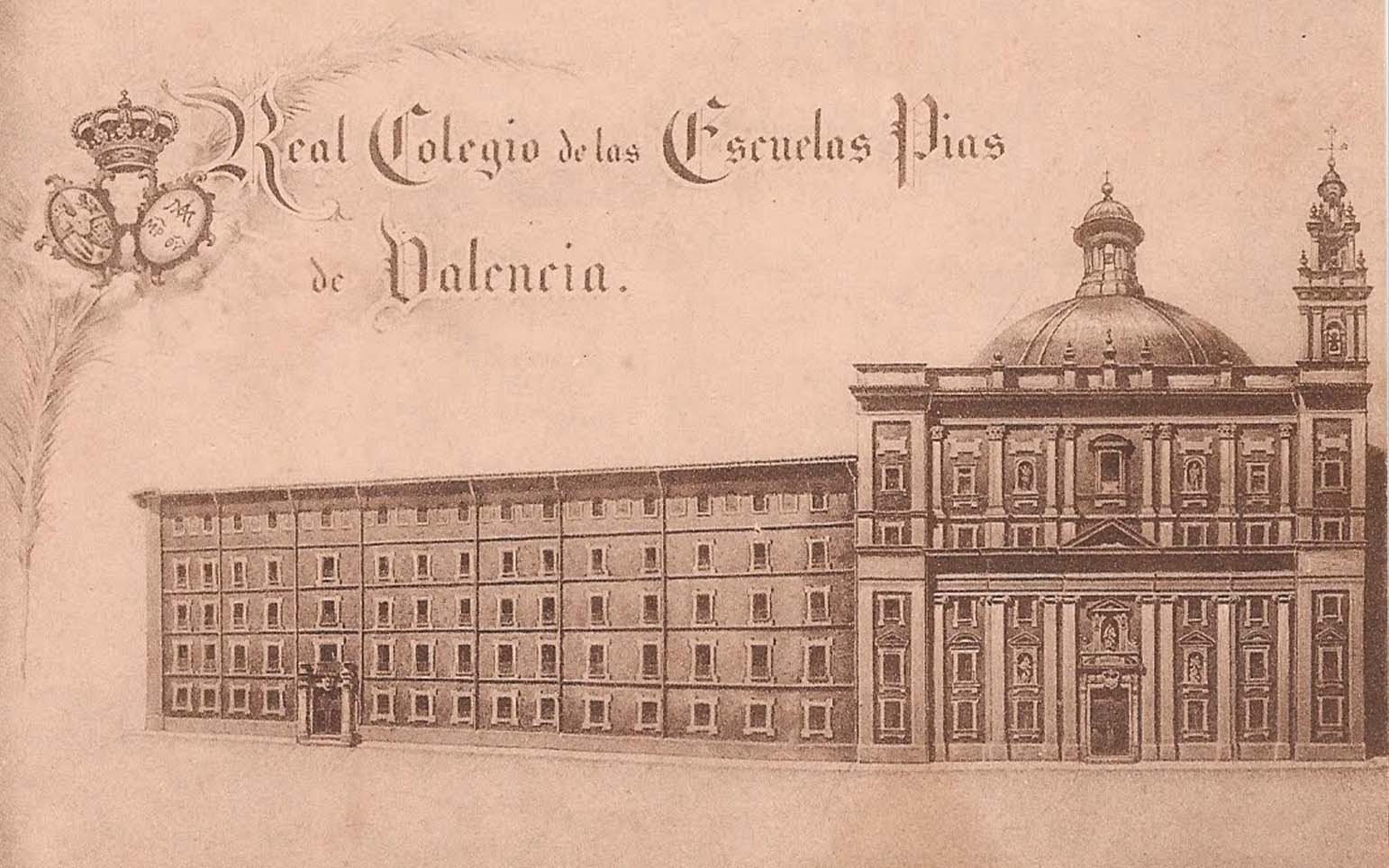
Construction of the school began in 1739, under the direction of the religious architect Blas del Espíritu Santo, and was completed in 1742. The building was arranged around a large arcaded courtyard, with sober, functional architecture.
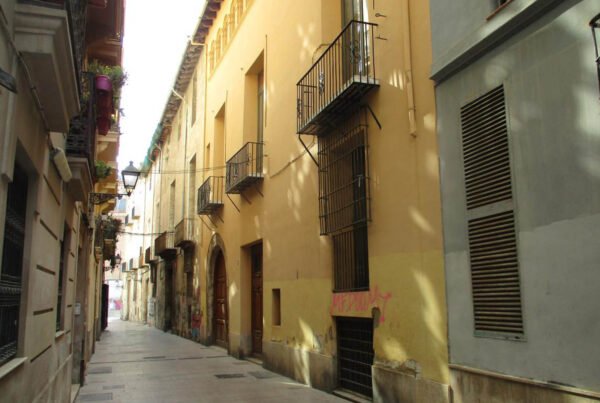
All around it stretched the Velluters neighbourhood, full of silk workshops, craftspeople and working families. Precisely the kind of setting in which the education promoted by Calasanz could be especially important.
Over time, the Escuelas Pías also welcomed pupils from well-to-do families and developed other educational initiatives, such as the Andresian Seminary, inaugurated in 1763.
The curious story of its old entrances
The school’s main entrance was not always where we know it today.
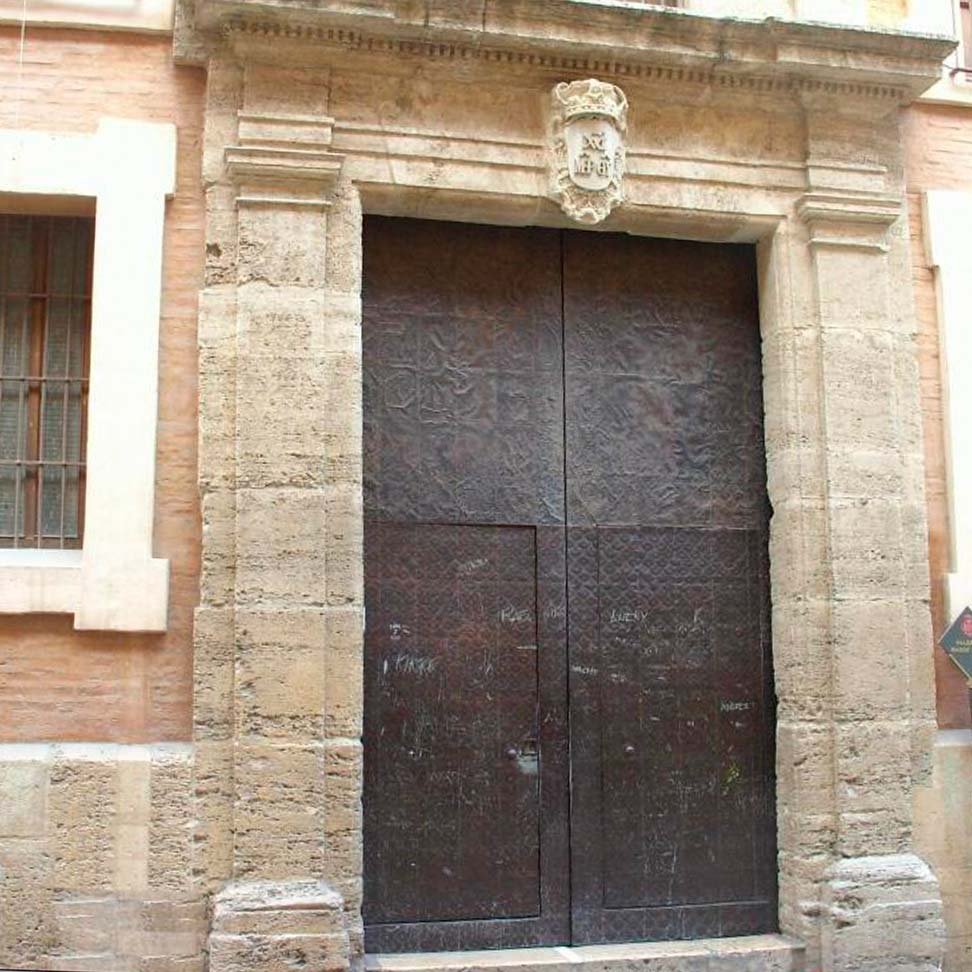
In its early years, the main entrance was on Colomer Street, with the order’s emblem above the doorway. Later, when Carniceros Street was opened up and widened, the main entrance moved there.
It is a small detail that reminds us how much the layout of our streets has changed since the eighteenth century.
An archbishop in a hurry and a record-breaking dome
Andrés Mayoral did not want the Escuelas Pías to be simply another school in Valencia. He also wanted to give them a monumental church, unlike the existing churches in the city.
In 1767, when the archbishop was already over eighty, work began following a design by José Puchol, with the involvement of Antonio Gilabert, who would ultimately give the building its final appearance.
The chosen model was none other than the Pantheon in Rome.
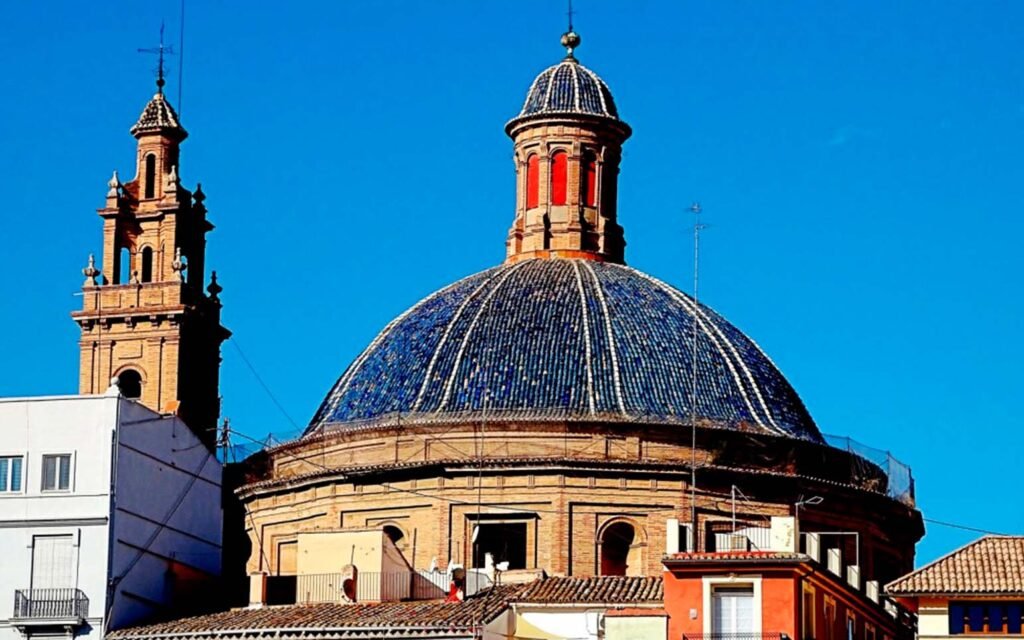
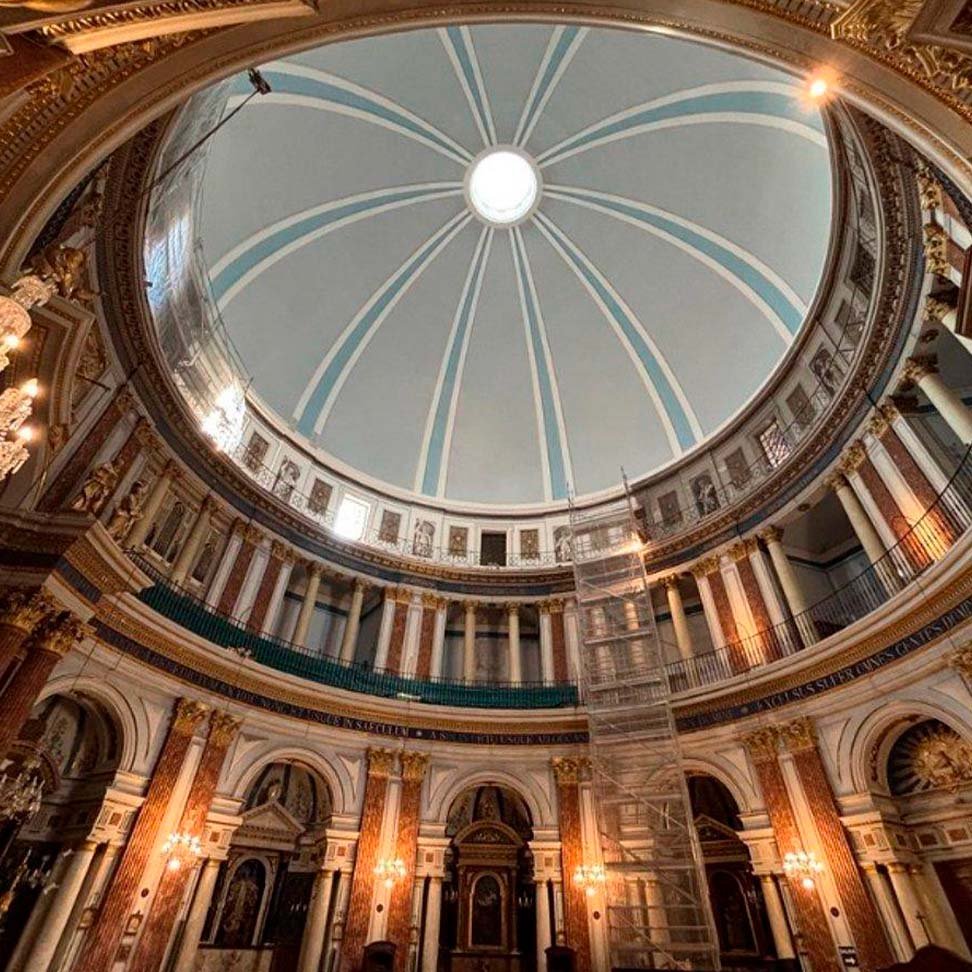
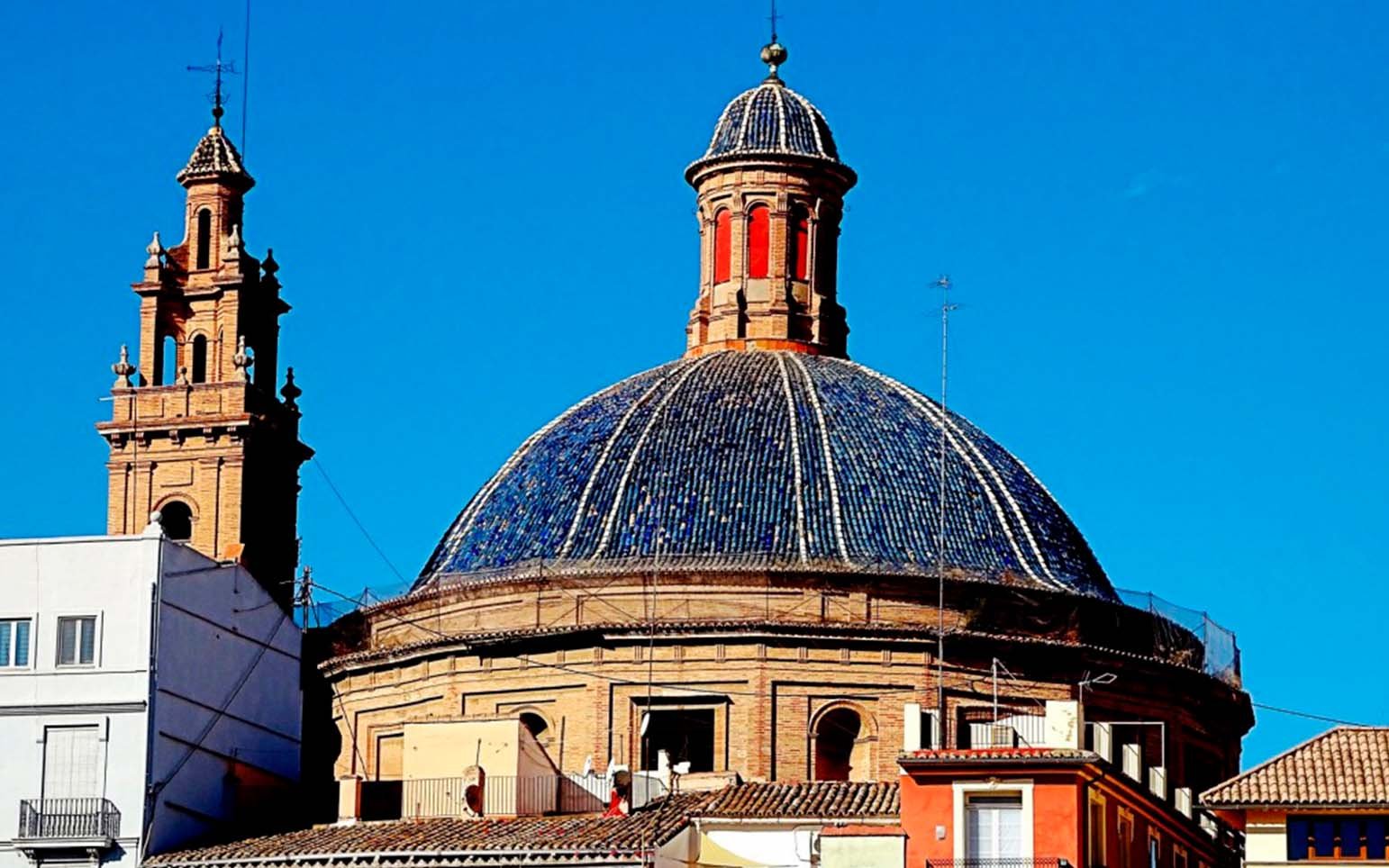
The result was a circular church dedicated to Saint Joachim, crowned by an enormous dome 24.5 metres in diameter, with an interior height of approximately 48 metres.
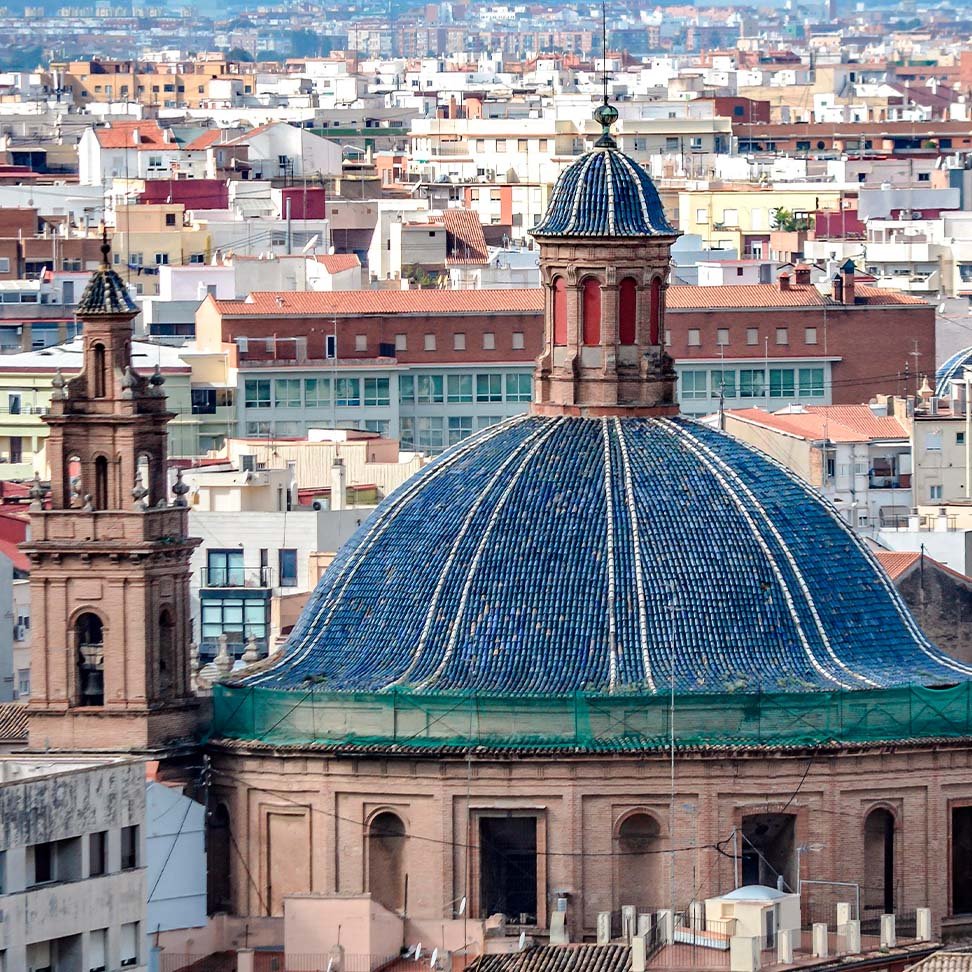
Its glazed blue-tile roof rises above the rooftops of the historic centre and is one of the most recognisable sights in Velluters.
But Mayoral had even more ambitious plans. He wanted to enlarge the school and decorate the inside of the dome with paintings.
He did not live to see it completed. The archbishop died in 1769, funding was reduced and the church was completed in 1771, without the paintings originally planned for its great vault.
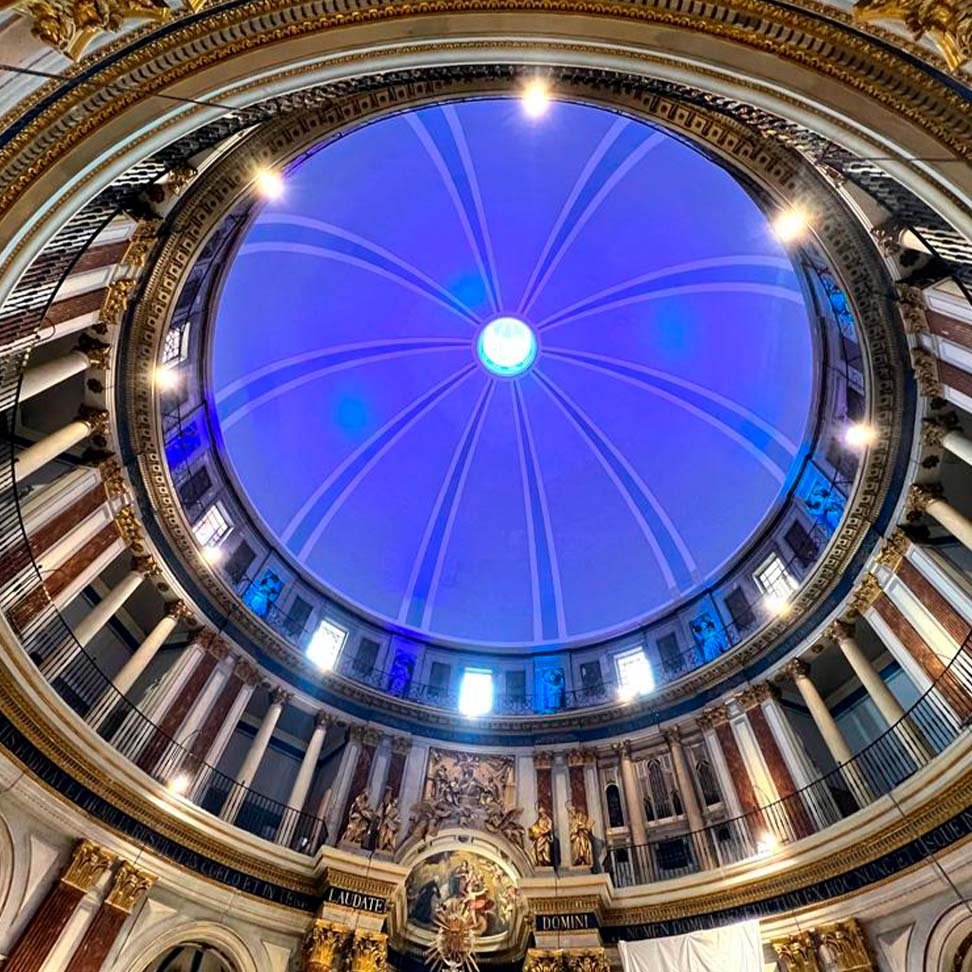
What was then a concession to a lack of funds eventually became one of its defining features: the bare, clean and monumental dome is precisely one of the elements that most closely links it to its Roman inspiration.
An interior worth looking up for
Entering the church of the Escuelas Pías means discovering a space unlike most others in Valencia.
Its circular floor plan, enormous pilasters, Corinthian columns and chapels arranged around the church create a sense of spaciousness that surprises first-time visitors.
Two great Valencian artists contributed to its decoration: Ignacio Vergara, responsible for numerous sculptures, and José Vergara, who painted works and frescoes for the church.
There is also a detail that often goes unnoticed: beneath the floor of the rotunda lies a large crypt that housed the burial vault of the religious community.
So the Escuelas Pías preserve history not only above our heads. They also keep it beneath our feet.
Distinguished pupils and hidden treasures
Over almost three centuries, thousands of Valencians have passed through the classrooms of the Escuelas Pías.
Its former pupils include such well-known names as the writer Vicente Blasco Ibáñez and members of the Benlliure family, associated with some of the most outstanding chapters in Valencian art.
The school also preserves an important artistic and bibliographic heritage.
One of its most interesting spaces is the Researchers’ Library, created following the refurbishment of the ground floor in the 1990s. It brings together numerous volumes from the seventeenth to nineteenth centuries, originating from different schools and private libraries, and is open to researchers for consultation.
A little-known treasure just a few steps from our falla.
The Escuelas Pías during the Civil War
The Spanish Civil War also left its mark on this building.
In 1936, the Piarist community suffered the consequences of the religious and political violence of those years. The church and school premises were affected, and part of their heritage suffered damage and losses.
The complex went through one of the most difficult periods in its history, although it subsequently resumed its educational and religious activities.
The history of the Escuelas Pías has never unfolded separately from that of the city: it has shared its transformations, its difficulties and its moments of recovery.
A restoration amid flying footballs
As the centuries passed, the enormous dome began to show worrying signs.
Four large cracks ran across different sections of the vault and drum. Water seeped through the roof, numerous tiles had deteriorated and the windows of the lantern crowning the church had been blocked, preventing much of the natural light from entering.
The restoration became an enormous challenge.
The team led by architect Luis Cortés Meseguer, of the Universitat Politècnica de València, combined traditional techniques with modern tools such as laser scanners, drones, thermal studies and digital models.
Working on the dome required the installation of a spectacular 75-tonne scaffold, designed to rest on the drum without placing weight directly on the vault.
And all this while the school remained open.
Because there was a small complication: classes and break times continued next to the works for around a thousand pupils. The restoration of an architectural treasure had to be reconciled with the daily life of a school.
Even footballs flying around the playground became something that had to be taken into account.
Thirty-two thousand tiles, four shades of blue and a lot of patience
The dome’s roof is made up of approximately 32,000 tiles, all of which had to be carefully inspected.
Some 7,000 needed replacing.
But simply fitting new tiles was not enough. To respect the original appearance, the existing shades of blue were studied and replacement pieces were handcrafted in four different shades.
Traditional lime mortars were also used to repair the cracks, and decorative features that had been hidden or damaged were restored.
The work, carried out between 2018 and 2025, has restored much of the dome’s former splendour.
A European award and a ray of sunlight on the altar
The effort was rewarded.
In 2026, the dome’s restoration received one of the European Heritage Awards / Europa Nostra Awards, among Europe’s most prestigious recognitions for cultural heritage conservation.
But perhaps one of the most curious results of the restoration has nothing to do with tiles or scaffolding.
When the lantern windows were reopened, natural light once again entered from the top of the church. Studies revealed that on 26 July, the feast day of Saint Joachim, the sun’s rays reach the main altar when the sun is at its highest point.
A detail that connects the building’s architecture with the saint to whom the church is dedicated.
Almost three centuries after its construction, the dome still had something new to teach us.
The Escuelas Pías in five facts
- An idea born in Rome. Saint Joseph Calasanz promoted free education for poor children in 1597. He had previously studied in Valencia.
- A school dating from 1737. The Piarists arrived thanks to the Count of Carlet and the support of Archbishop Andrés Mayoral. Construction of the building began in 1739.
- A record-breaking dome. At 24.5 metres in diameter, it is one of Spain’s largest church domes and the largest in Valencia.
- An unfinished project. Mayoral’s death in 1769 reduced funding and left the great dome without the planned paintings.
- A European award. The restoration completed in 2025 was recognised with a Europa Nostra Award in 2026.
A neighbour that invites us to look up
So, next time you walk along Carniceros Street, look up.
That blue rising above the rooftops is the dream of an eighteenth-century archbishop, the work of generations of architects and craftspeople, and an important part of our neighbourhood’s history.
Meanwhile, down below, pupils keep arriving, bells keep ringing and the school courtyards keep filling with life.
Because the Escuelas Pías are not just a monument. They are also one of those neighbours who have been with us for as long as we can remember and still have plenty of stories to tell.
We continue discovering our neighbourhood, our people and our history.
We are Pintor Domingo.