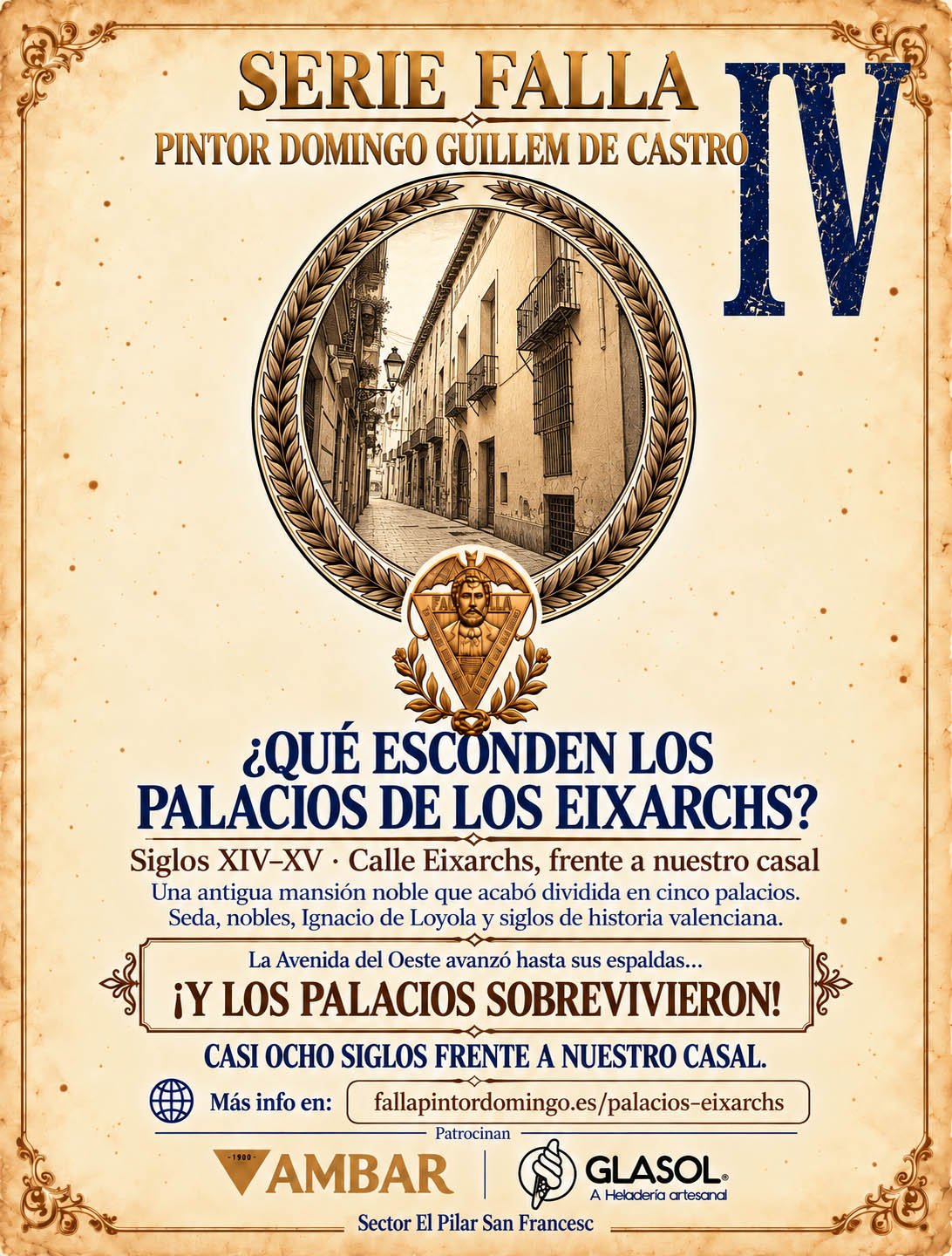


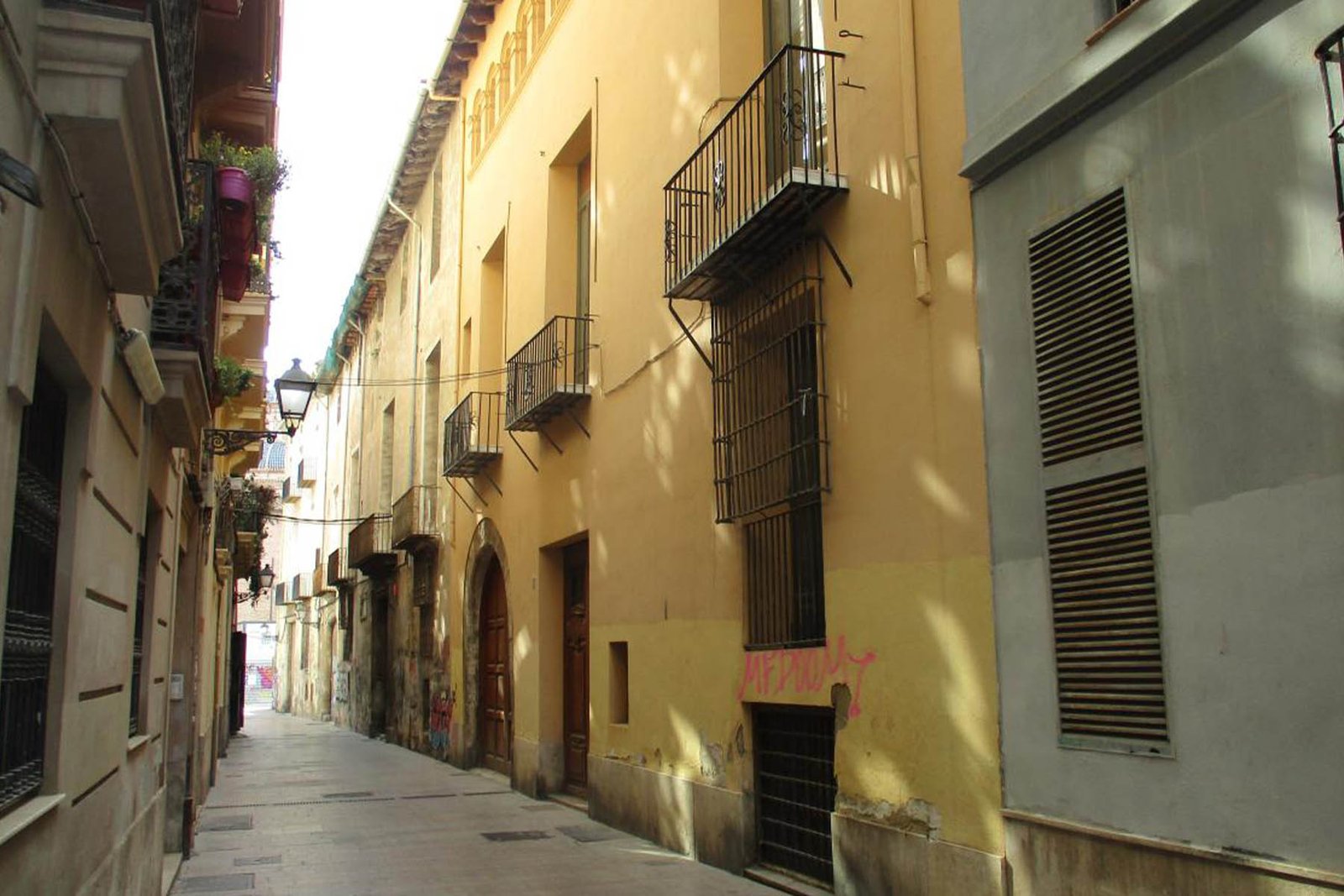
If someone told us that a knight who accompanied James I, silk merchants recommended by a king, a future saint, a university rector and a community of nuns had all lived on the same street in Valencia —and that all of this history could fit behind just five doorways— we might think they were exaggerating.
But no. All we have to do is step outside our casal, at 14 Calle Eixarchs, and look across the street.
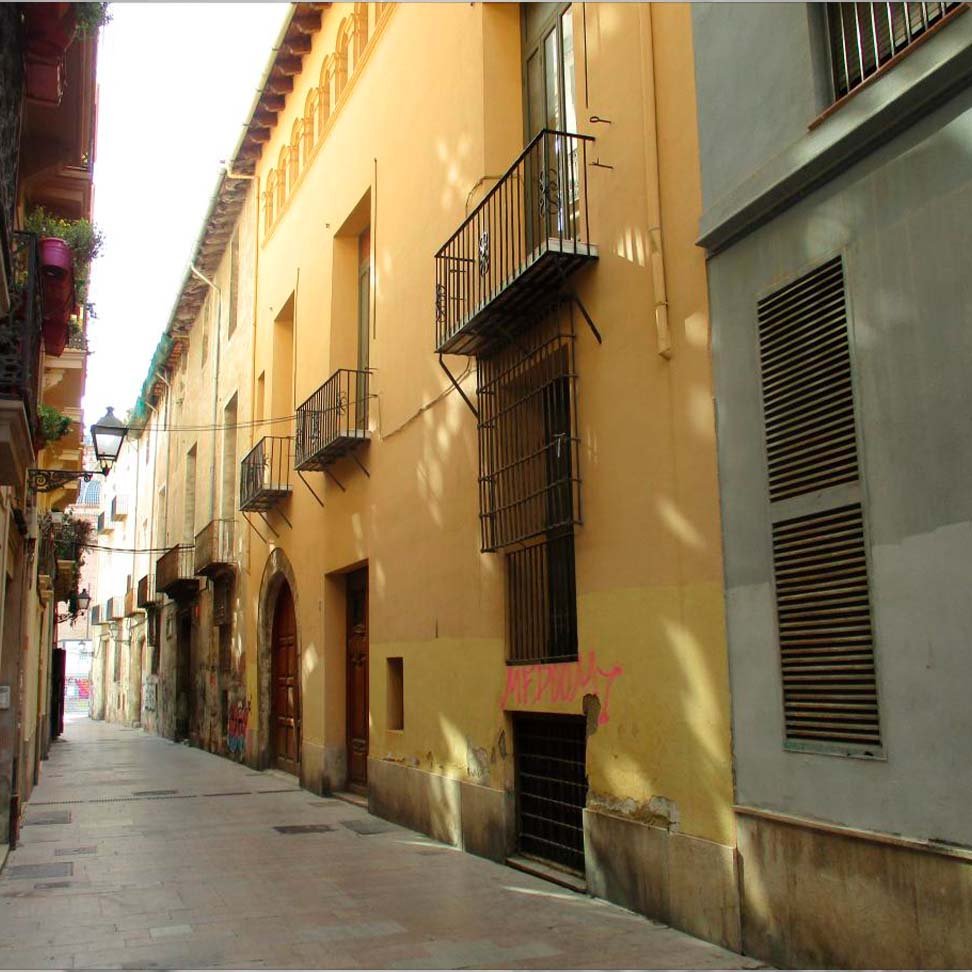
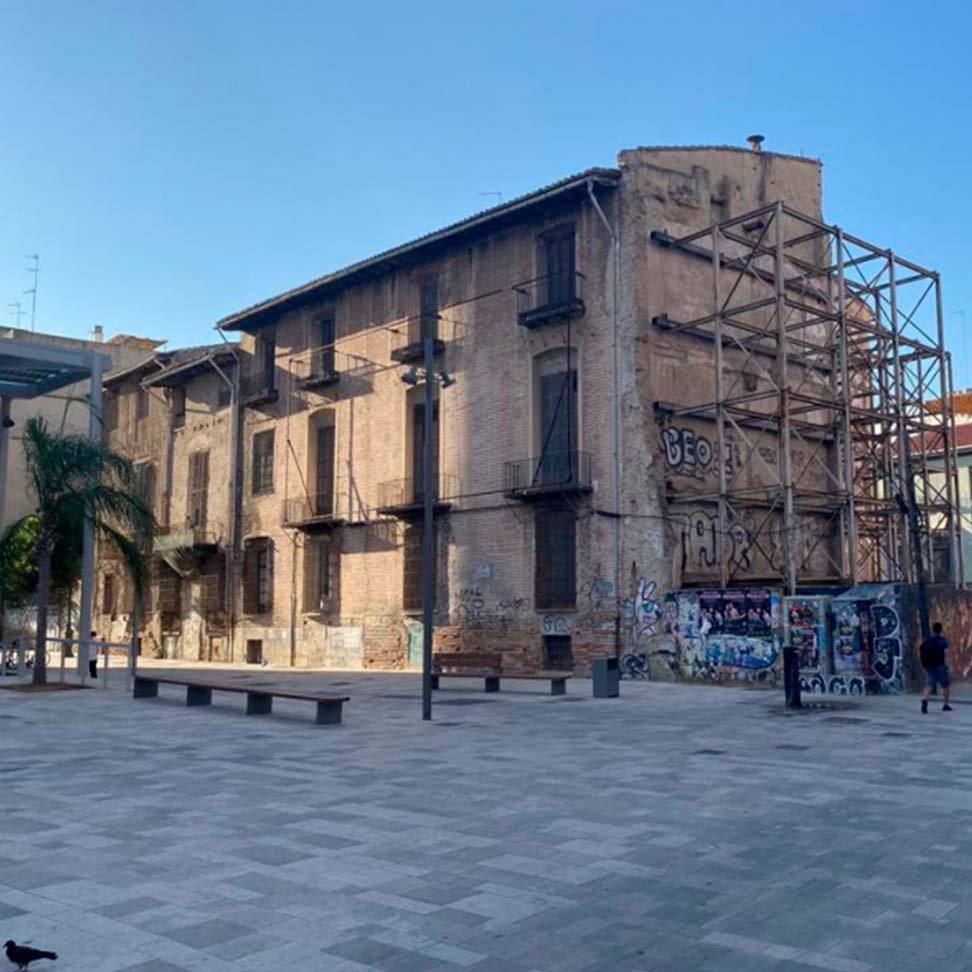
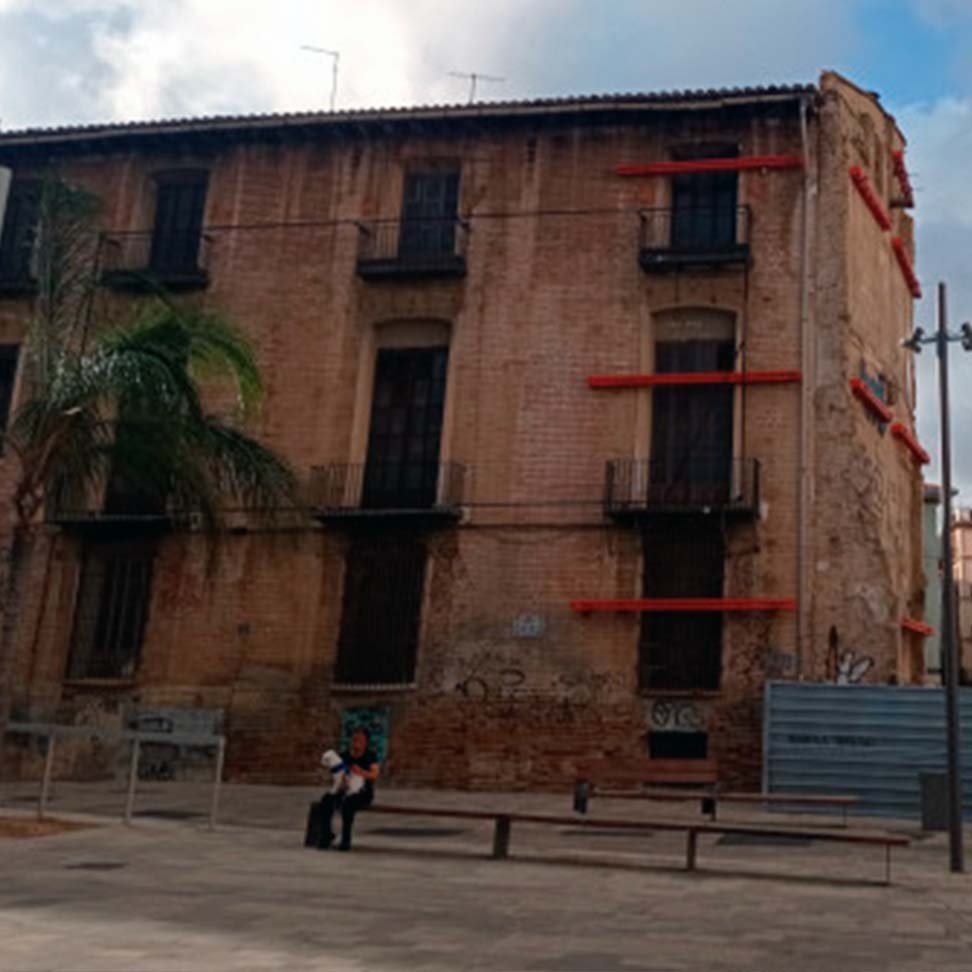
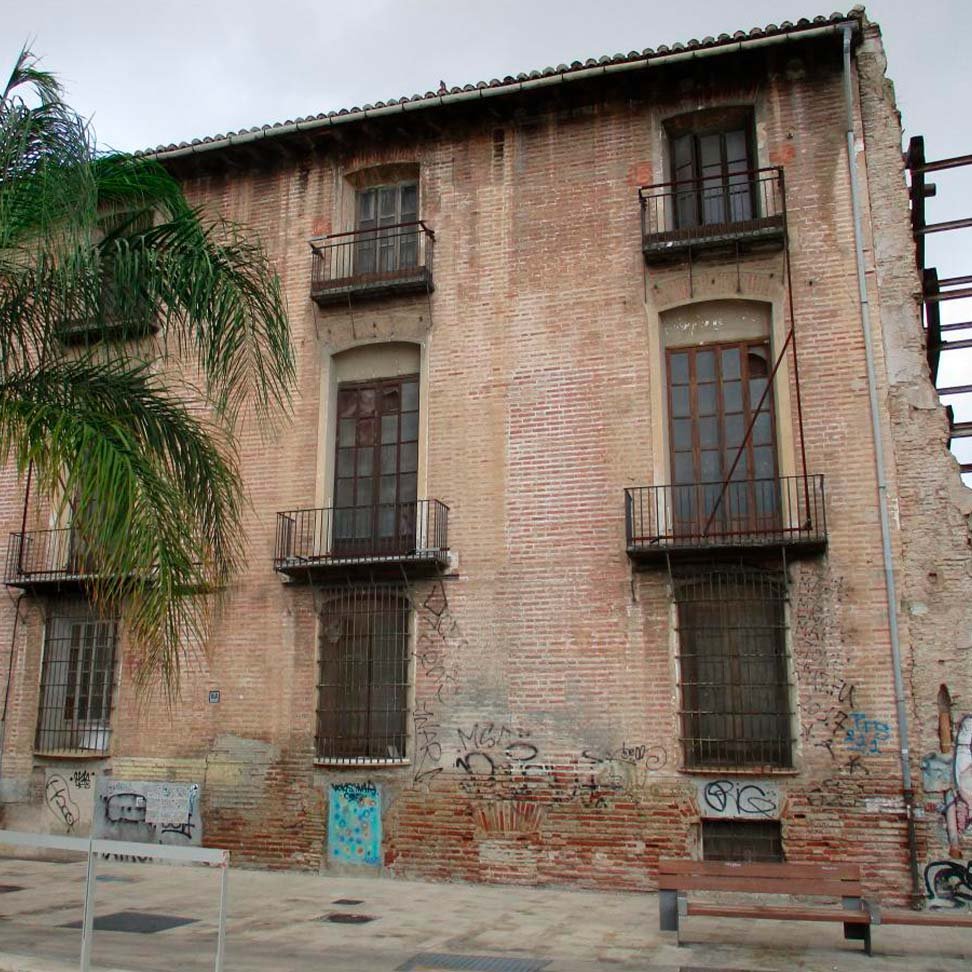
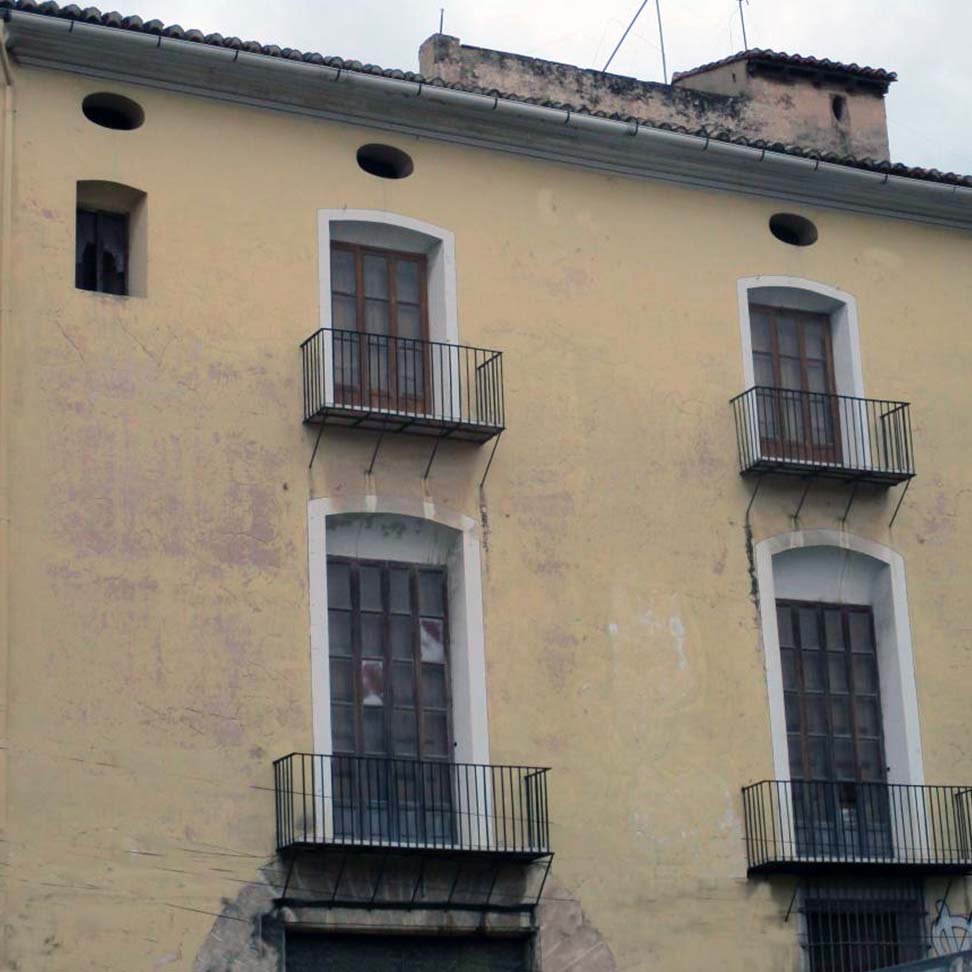
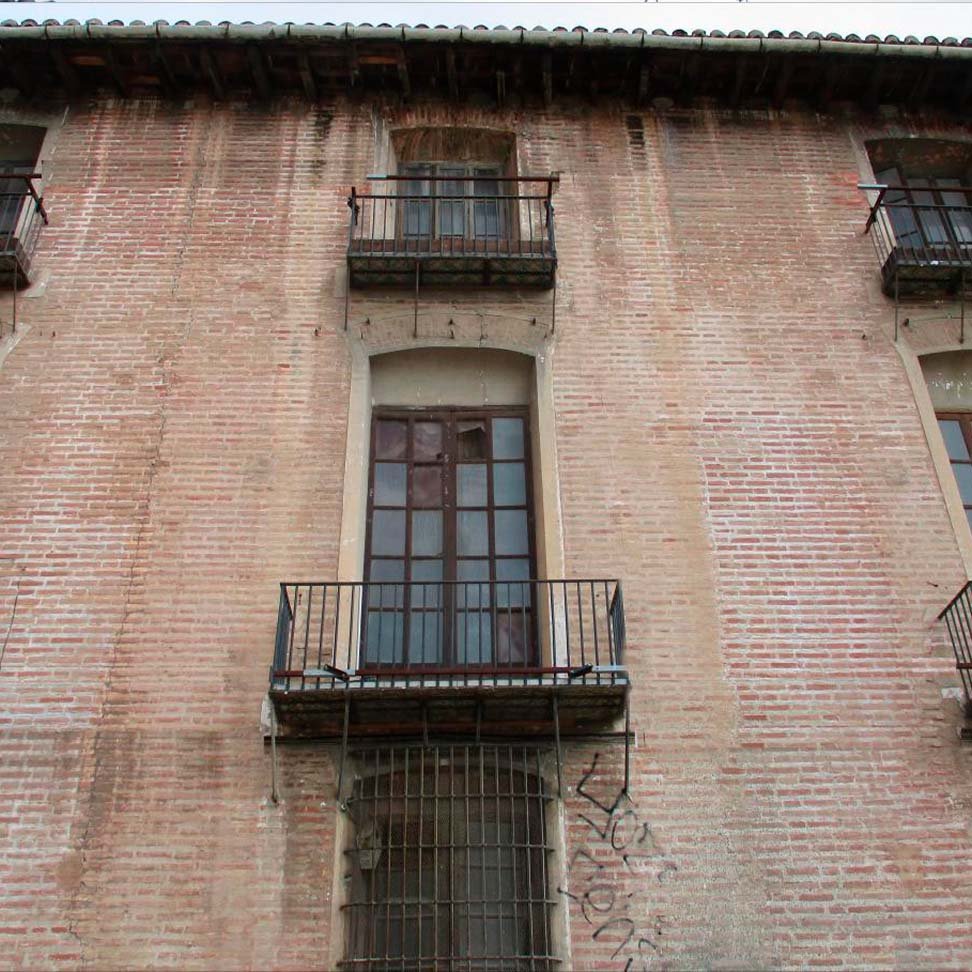
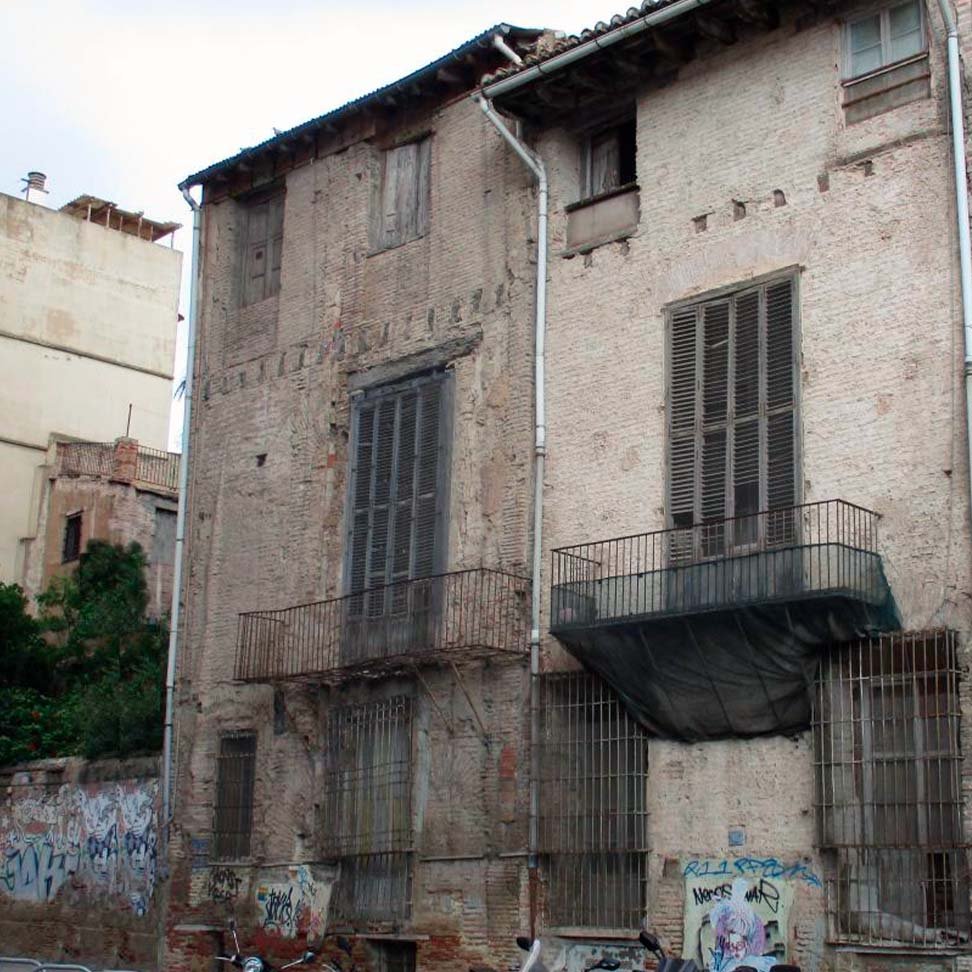
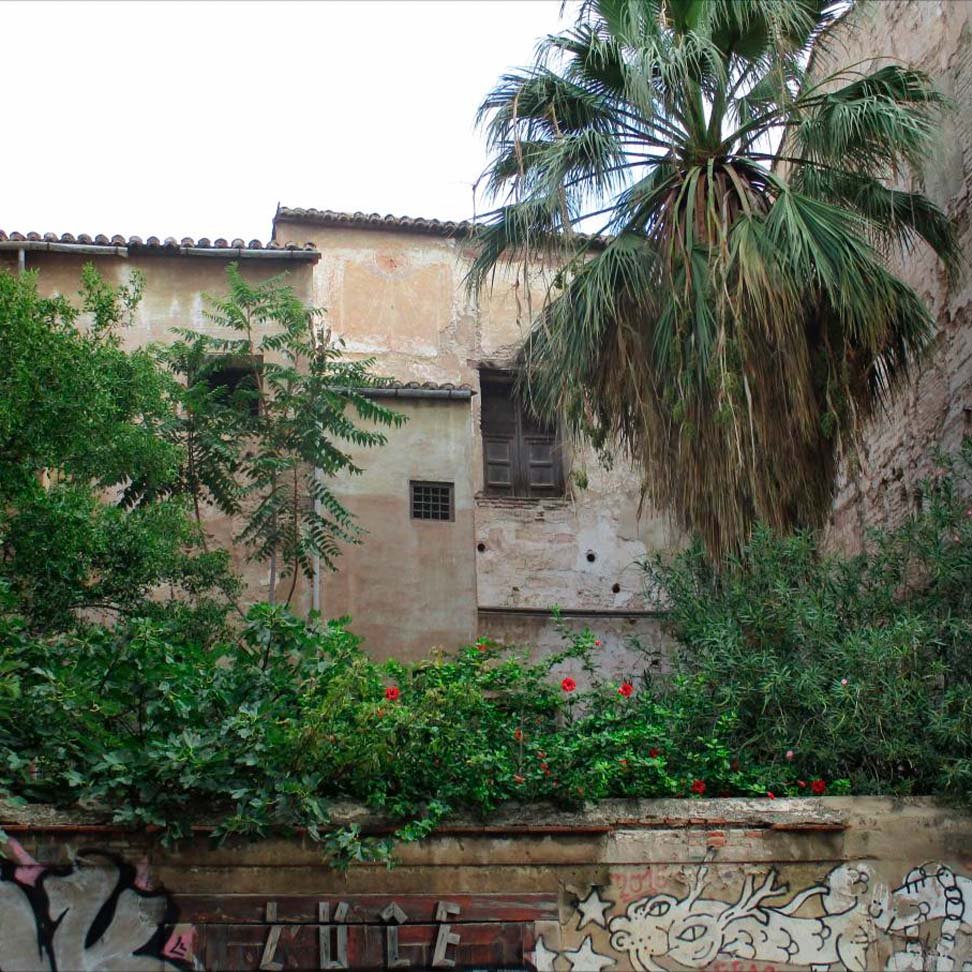
What stands before us is what remains of a large medieval noble residential block, now known as the Eixarchs Palaces. And since at Falla Pintor Domingo – Guillem de Castro we like to know who our neighbours are —even if they have been there since the 13th century— we decided to investigate who the Eixarch family were and why their home looks like an architectural jigsaw puzzle.
Spoiler alert: there are swords, high-end textile trading, a saint staying as a guest, nuns who held on for almost a century and an avenue that never quite got its way.
Neighbours who arrived with James I
The Eixarch family (or Exarchs, depending on the day and the scribe) were hardly newcomers. Their story in Valencia begins in the 13th century, when a knight named Pedro de Eixarchs accompanied James I during the conquest of the city in 1238. As a reward, the family settled on strategically located land just behind the Church of Santos Juanes, a stone’s throw from the Market and what would later become the Silk Exchange.
There is, however, a small warning worth mentioning. Much of what is said about that first Eixarch comes from the Trobes de Mossén Jaume Febrer, a collection of verses describing the family lineages and coats of arms of the knights who accompanied the king. The problem is that many historians suspect the Trobes were not written in the 13th century at all, but several centuries later.
In other words, more than one Valencian family boasted about its ancestors thanks to a book that was considerably younger than it appeared.
What is well documented is that the Eixarch family had been in Valencia since medieval times. And that they did rather more than polish their swords.
Silk, public office and a chapel in Santos Juanes
Over the centuries, the family proved to have a keen eye for business. Royal documents show Alfonso the Magnanimous recommending members of the family for trade between Valencia and the Kingdom of Granada, particularly in silk and textiles from Granada. Basically, they dressed the high society of their day.
They also held positions as city jurors, royal advisers and even mustassaf, the official responsible for making sure merchants did not cheat customers with false weights and measures.
In other words, the same family that sold luxury fabrics also helped ensure that nobody was being cheated in the marketplace. The terror of medieval traders.
And when the Church of Santos Juanes suffered a major fire in 1362, the Eixarch family helped finance the reconstruction of the high altar. In return, they secured their own burial chapel. Business is business, even when it comes to the afterlife.
The palace that multiplied into five
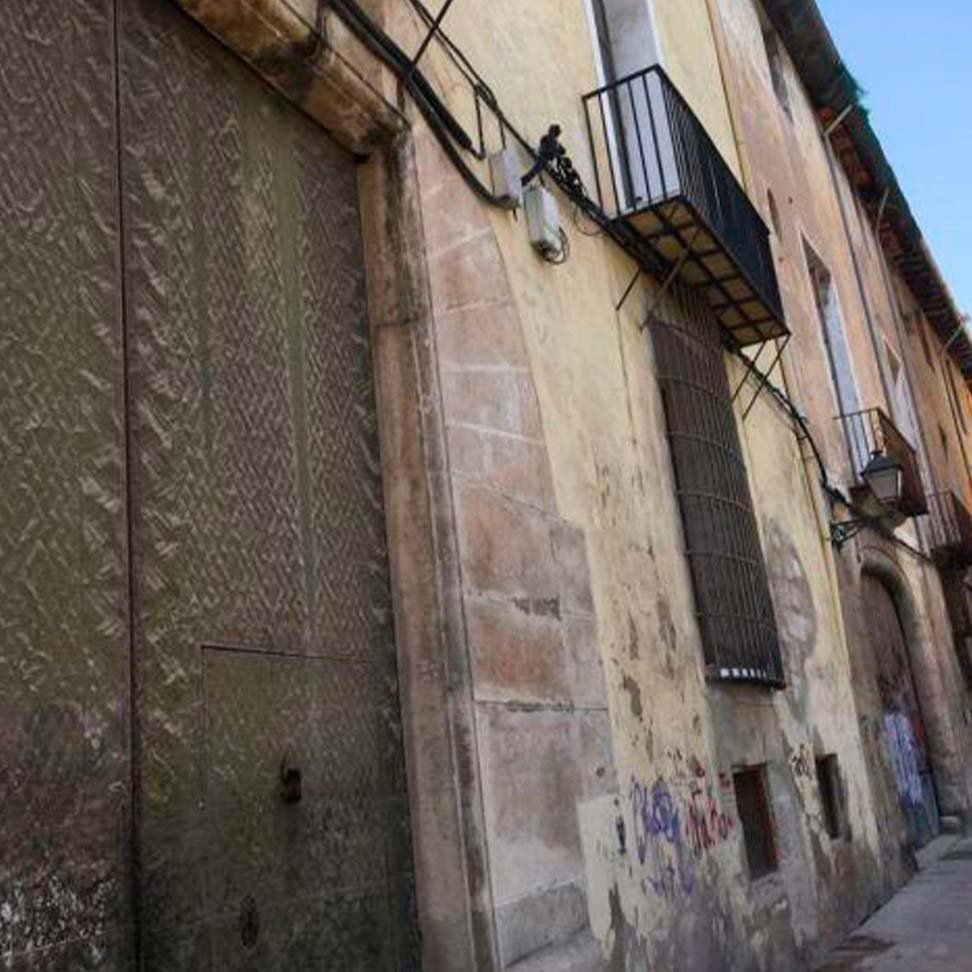
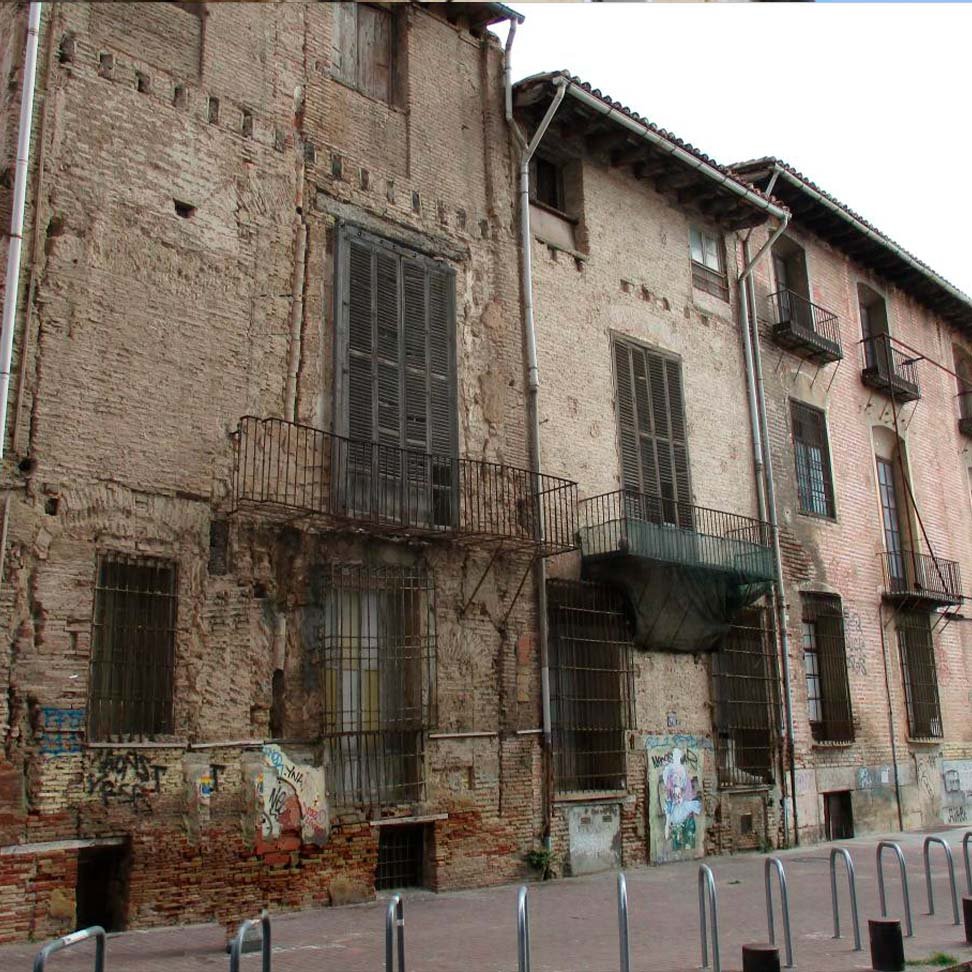
The complex we see today is striking for its asymmetry. In the 14th and 15th centuries, all indications suggest that it was a single large noble residence. But inheritance took its course: as the family grew and properties were divided, the original mansion was gradually split into five separate homes, now numbered 3 to 11.
Anyone who has ever been involved in dividing an inheritance between siblings can probably imagine the result.
The curious thing is that, although each owner adapted the exterior of their property to suit the tastes —or budget— of their time, the houses remained connected inside. In fact, numbers 3, 5 and 7 still form a single architectural structure today: from the street, they look like three clearly separate houses, but inside they are laid out as one large home.
Three façades, one house. A rather unusual residents’ association.
A saint at number 3
If we could travel back in time and slip inside, number 3 would be the jewel in the crown. According to tradition, Ignatius of Loyola stayed in these houses during his visit to Valencia in 1535. At the time, he had not yet founded the Society of Jesus and, needless to say, nobody was calling him a saint.
His stay left such a lasting impression that a chapel dedicated to him was built inside the building in the 17th century.
Plenty of houses boast that some distinguished figure once slept there. Very few can say their guest ended up being canonised.
In the 18th century, the palace underwent a Baroque renovation. The courtyard dates from this period, with a magnificent low stone arch leading to a spectacular open marble staircase. Climbing it in the clothes of the day must have required a certain amount of skill. Some rooms also retained kitchens decorated with traditional Valencian ceramic tiles.
Rectors, nuns and a surviving doorway
As the family’s fortunes declined, the palaces changed owners and uses throughout the 19th and 20th centuries.
At number 7 lived the family of the jurist Eduardo Pérez Pujol (1830–1894), who served as rector of the University of Valencia. A plaque on the street still commemorates the fact that he died there.
Number 9 became the home of a community of Capuchin Tertiary Sisters of the Holy Family in 1930, a congregation founded by the Valencian Luis Amigó. They ran the Jesús, José y María school there, and the sisters held on with remarkable determination until 2022. When a shortage of vocations reduced the community to just five nuns, the building was sold.
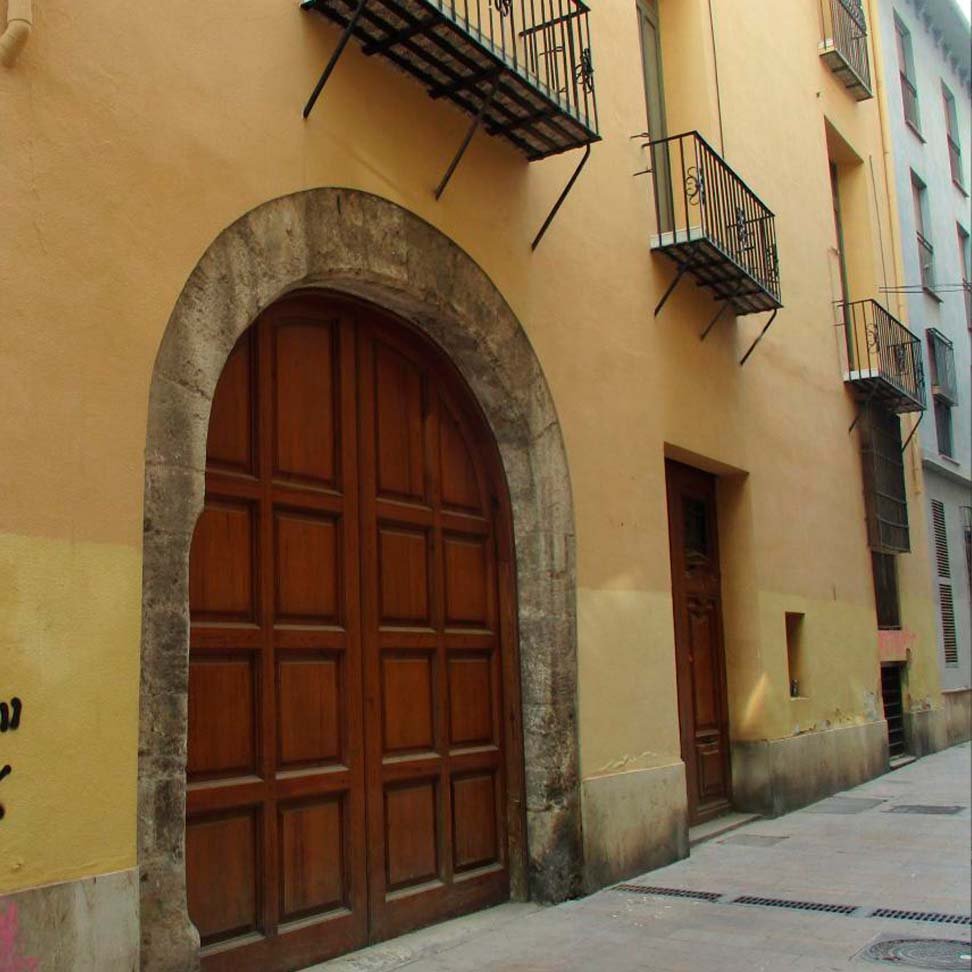
Number 11 was less fortunate: it was demolished in 1990. A modern building was erected in its place, but the enormous original 14th-century doorway was preserved, the only remaining reminder of the old palace.
A medieval doorway on a building from the 1990s. Sometimes history has to make do with whatever can be saved.
The avenue that never quite made it
But if there is one episode that proves just how lucky these palaces have been, it is their encounter with 20th-century urban planning.
For decades, plans were drawn up for Avenida del Oeste —today’s Avenida del Barón de Cárcer—, which was intended to cut straight through the city centre from Plaza de San Agustín to Portal Nou. And a straight avenue through a medieval city can mean only one thing: demolition.
The avenue advanced, sweeping away everything in its path. It was heading straight towards the Eixarchs Palaces. However, between budget problems, changes to architect Javier Goerlich’s plans and bureaucratic delays, construction came to a halt just behind the palaces.
What largely saved them was the project running out of money.
Not the most heroic way of protecting architectural heritage, but it worked.
And now… a hotel
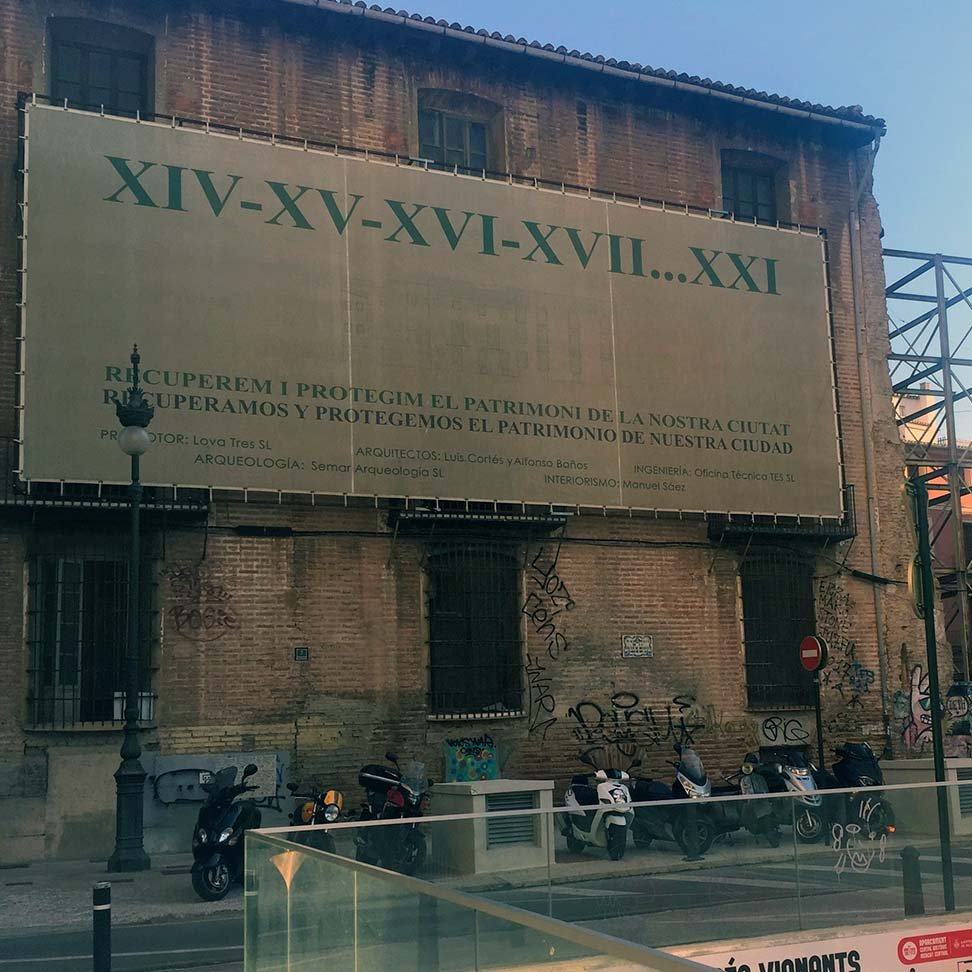
The history of the palaces has not come to an end. In 2024, Valencia City Council granted permission to restore numbers 3, 5 and 7 and convert them into a hotel complex with tourist apartments. The project includes reopening original openings in walls that had long been sealed, partially restoring the internal connections the house once had.
If everything goes according to plan, the palace will once again welcome guests. Although the bar is set rather high: its most famous visitor was Saint Ignatius of Loyola.
The Eixarchs Palaces in five facts
For anyone who wants to impress people with stories about their neighbours without having to go through seven centuries of history in one sitting:
- They arrived with the king. The Eixarch family settled near Santos Juanes following James I’s conquest of Valencia in the 13th century.
- Silk was their business. They traded textiles between Valencia and Granada and held public offices, including that of mustassaf.
- One palace, five houses. What was once a large noble residence ended up divided into five homes, numbered 3 to 11 on our street.
- They had a distinguished guest. According to tradition, Ignatius of Loyola stayed at number 3 in 1535, and a chapel was dedicated to him in the 17th century.
- They survived an avenue. Avenida del Oeste came to a halt just behind them.
A neighbour with centuries of history
So, the next time you step out onto Calle Eixarchs during a parade or to discuss how the Fallas monuments are coming along, take a look across the street. You are standing before a complex that has survived the conquest, inheritances, Baroque renovations, changing occupants and even Avenida del Oeste itself.
A neighbour with a long history, for a Falla with a history of its own.
And, come to think of it, a remarkably patient neighbour: it has spent our entire lives watching us build Fallas monuments outside its front door without ever complaining.