
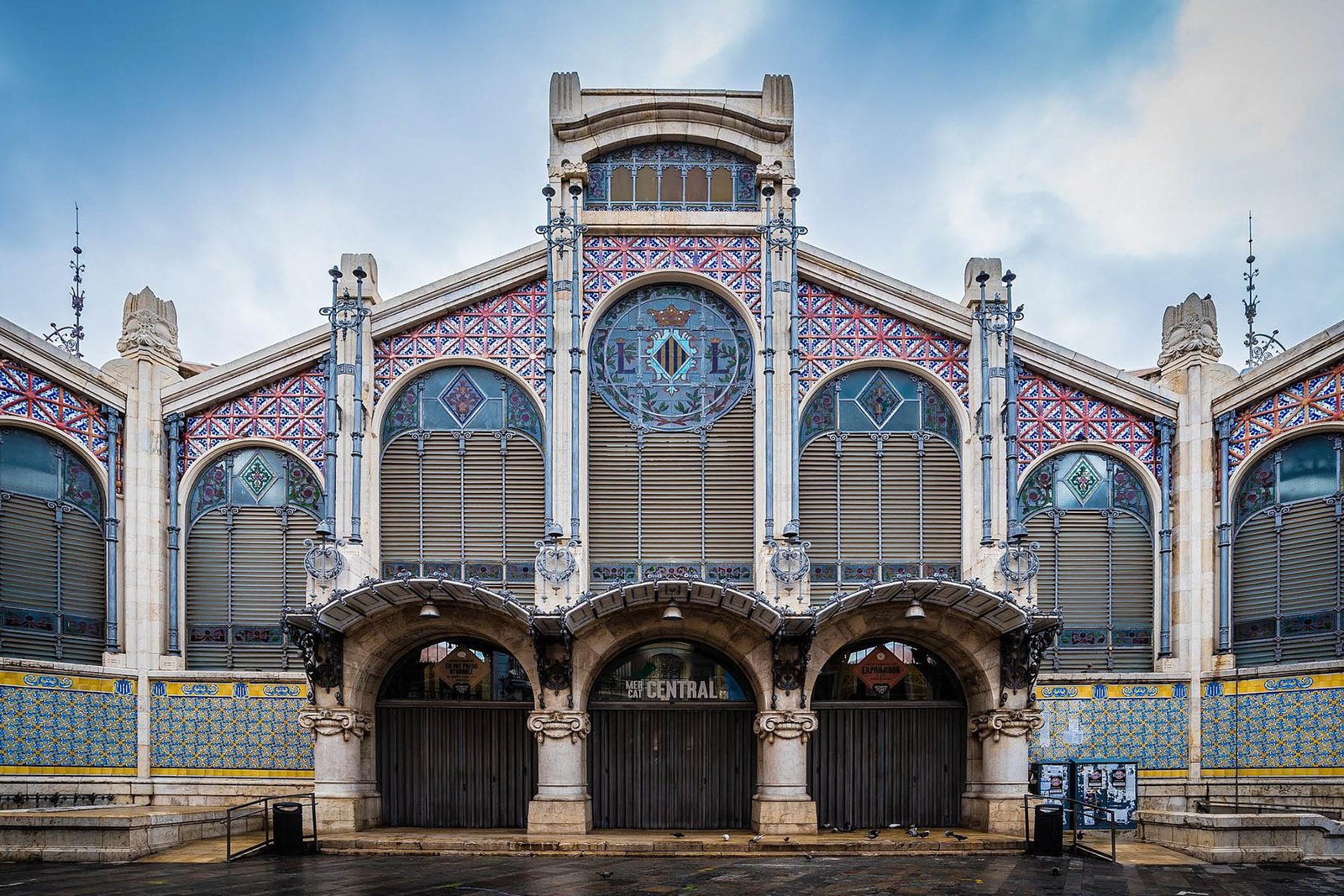
In our previous chapter of «Our History», we looked up towards the top of the Church of Santos Juanes to discover the famous pardal de Sant Joan, the bird of Saint John. Today, we only need to take a few steps to encounter another of Valencia’s best-known birds: the parrot of the Central Market.
And in this corner of our neighbourhood, even the weathervanes seem to have stories to tell.
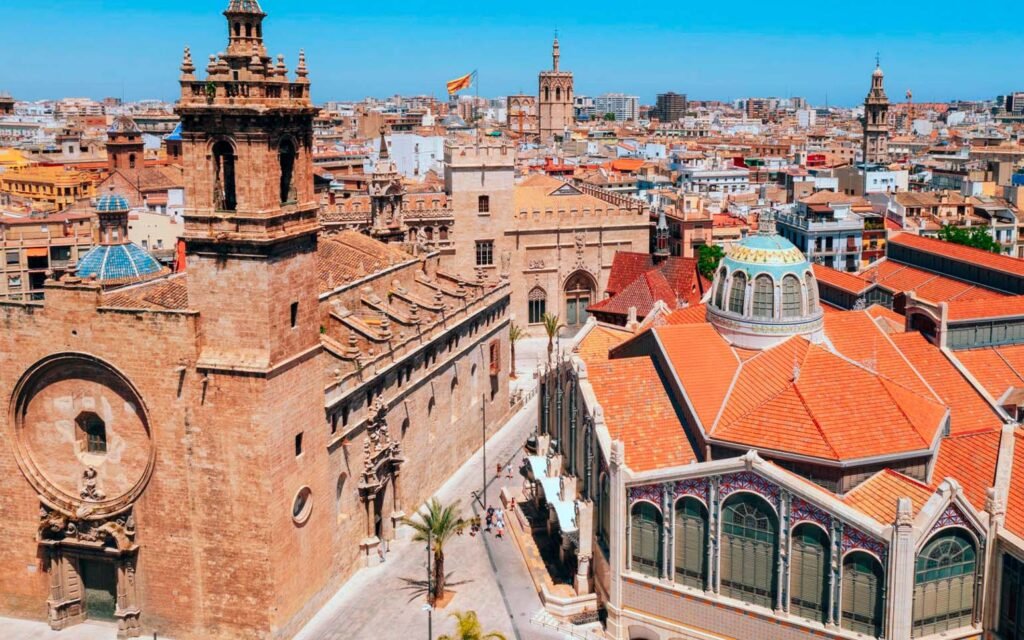
The pardal has spent centuries watching everything that happens at the foot of Santos Juanes. The parrot, considerably younger, observes the constant movement of shoppers, traders and visitors from above. One belongs to Baroque Valencia; the other to the Modernist city that was beginning to transform its appearance in the early twentieth century.
Between them stretches a square that has witnessed much of Valencia’s history. But there is something curious about it: long before the parrot found its place above the Central Market’s dome, Valencians were already coming to this very spot to buy and sell. And before its great stained-glass windows, iron columns and orderly stalls existed, there was something far more bustling and chaotic here: an open-air market.
To discover its history, we must imagine the square without the building we all recognise today.
When the market had no walls
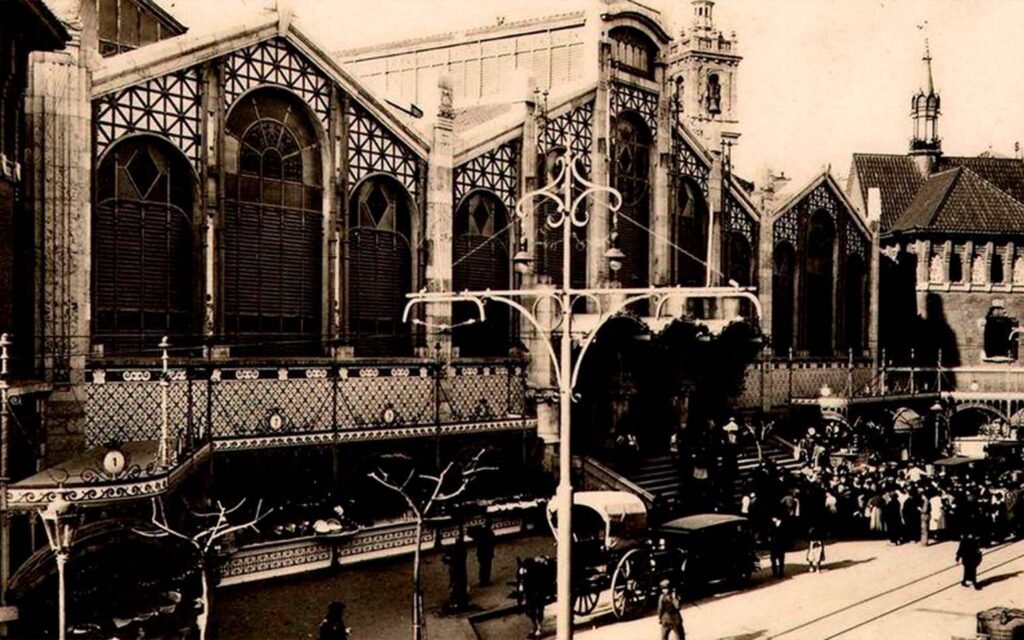
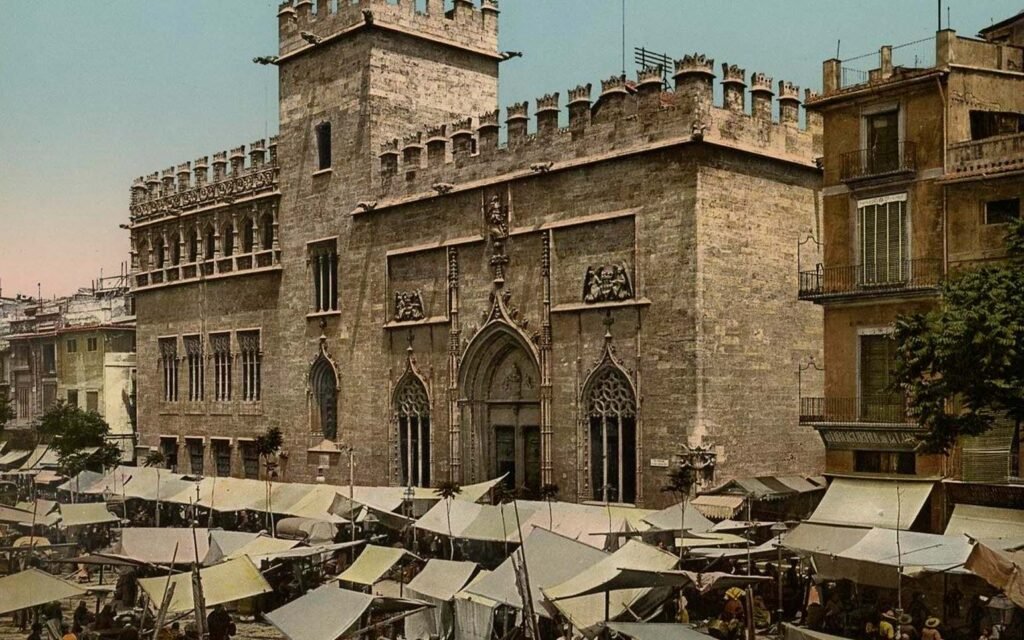
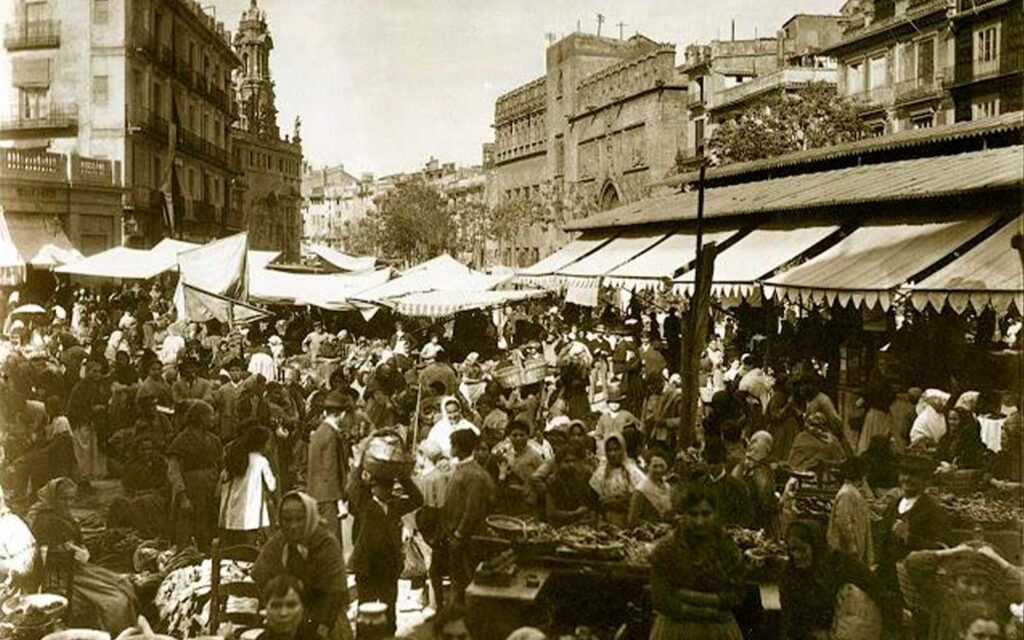
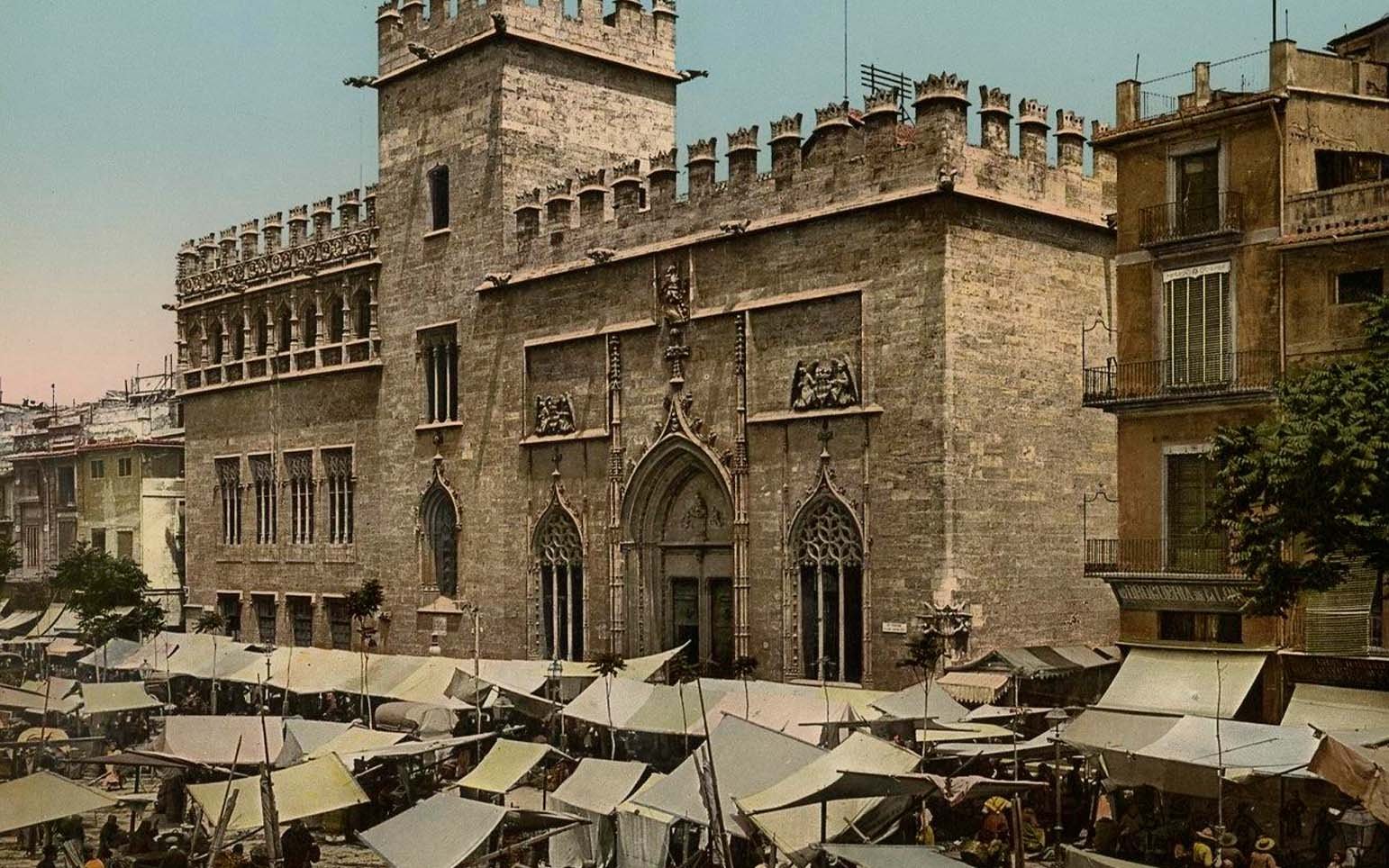
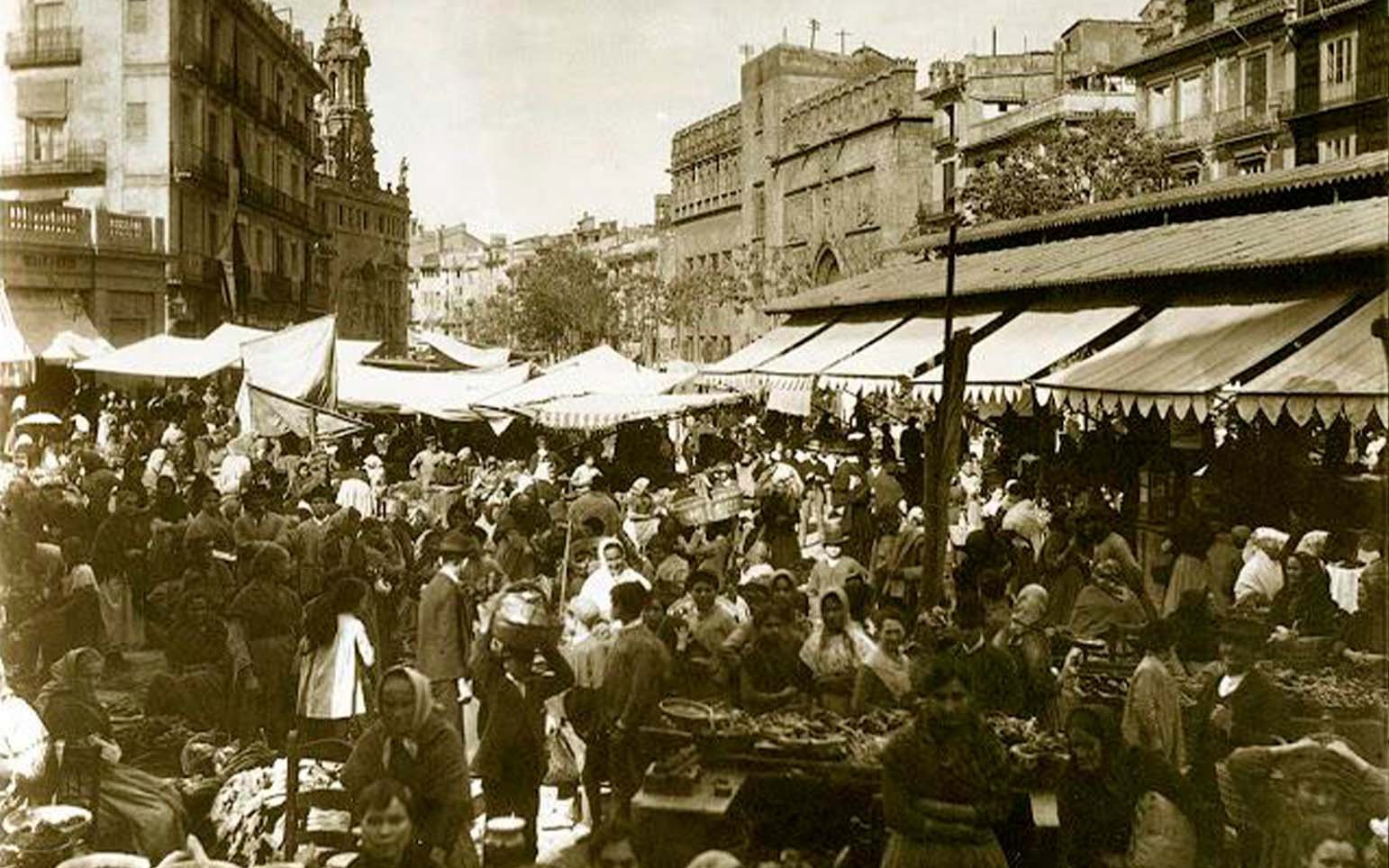
For centuries, the Market Square was one of Valencia’s great centres of trade. Stalls were set up outdoors, sheltered by awnings, while merchants and customers negotiated among goods, carts and the constant movement of the city.
The Central Market did not yet exist, but the market itself certainly did. And that distinction matters, because the building we know today did not create the square’s commercial activity: it arrived to organise a tradition that had been part of Valencian life for centuries.
In 1839, the so-called New Market was established on the site, an uncovered market designed to give commercial activity a more permanent structure. However, as the city grew, its facilities eventually proved inadequate, and Valencia needed a market capable of meeting the demands of a changing city.
A silver pickaxe to begin a transformation
The new market did not appear overnight. In 1910, the City Council held an architectural competition, won by Alejandro Soler March and Francisco Guardia Vial, both associated with the school of the prestigious Modernist architect Lluís Domènech i Montaner.
That same year, a particularly curious episode took place.
On 24 October 1910, King Alfonso XIII took part in the symbolic ceremony marking the beginning of the demolitions required to build the new market. He used a silver pickaxe to strike the wall of a house at number 24, Market Square.
It is difficult to imagine a less conventional tool with which to begin a demolition, but the gesture carried a meaning: Valencia was preparing to transform one of its oldest and most popular public spaces.
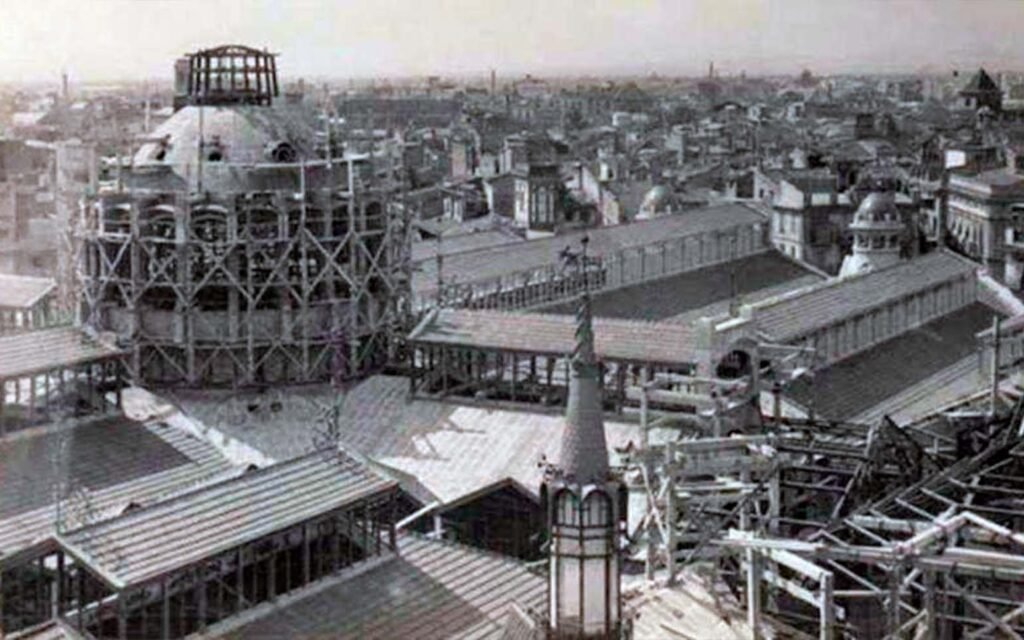
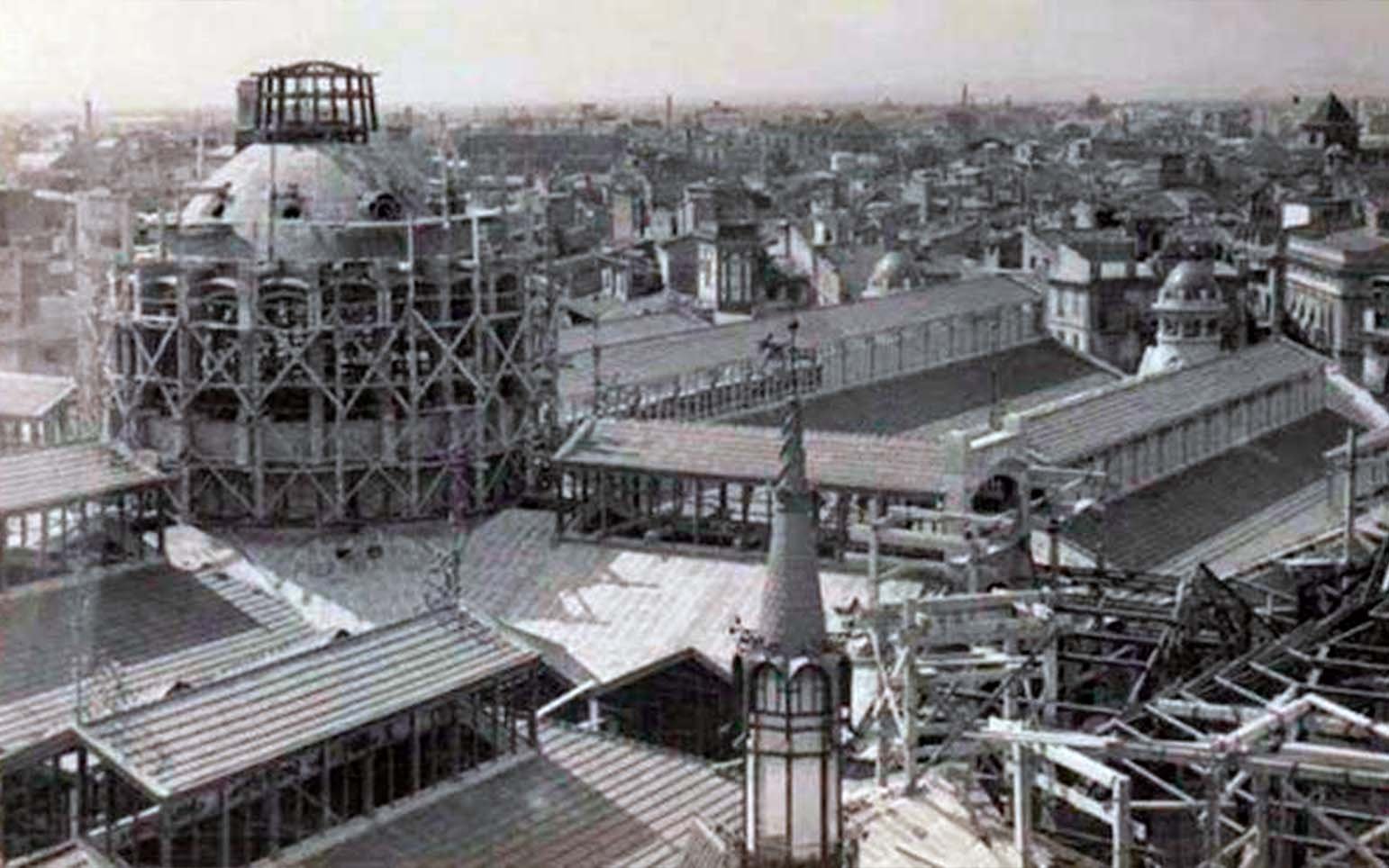
The final design was developed in 1914. Construction continued for years, and architects Enrique Viedma and Ángel Romaní also took part in bringing the building to completion.
The project required major changes to the surrounding urban landscape, including the demolition of numerous homes. The square known to generations of Valencians was changing forever.
A building that seemed like a small city
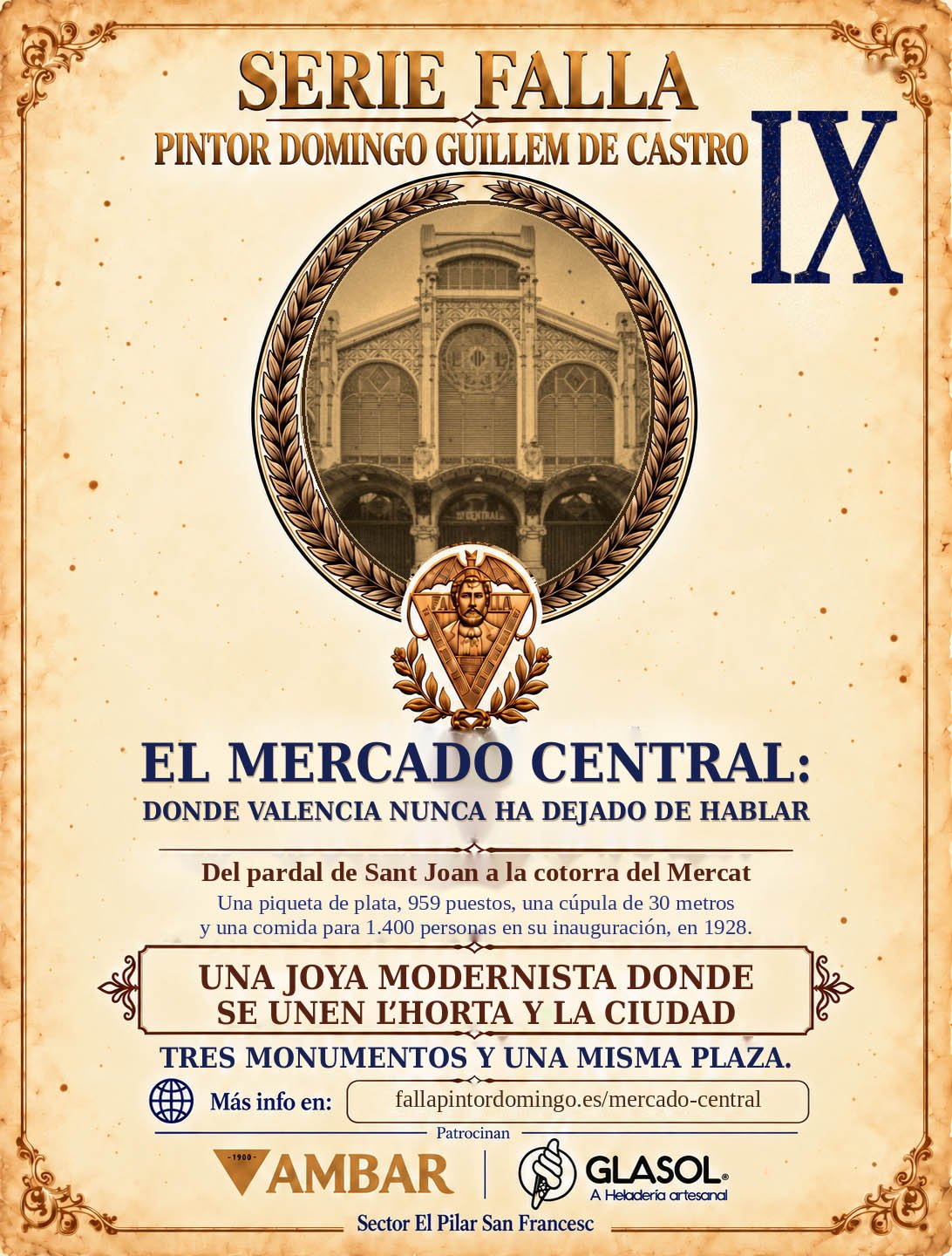
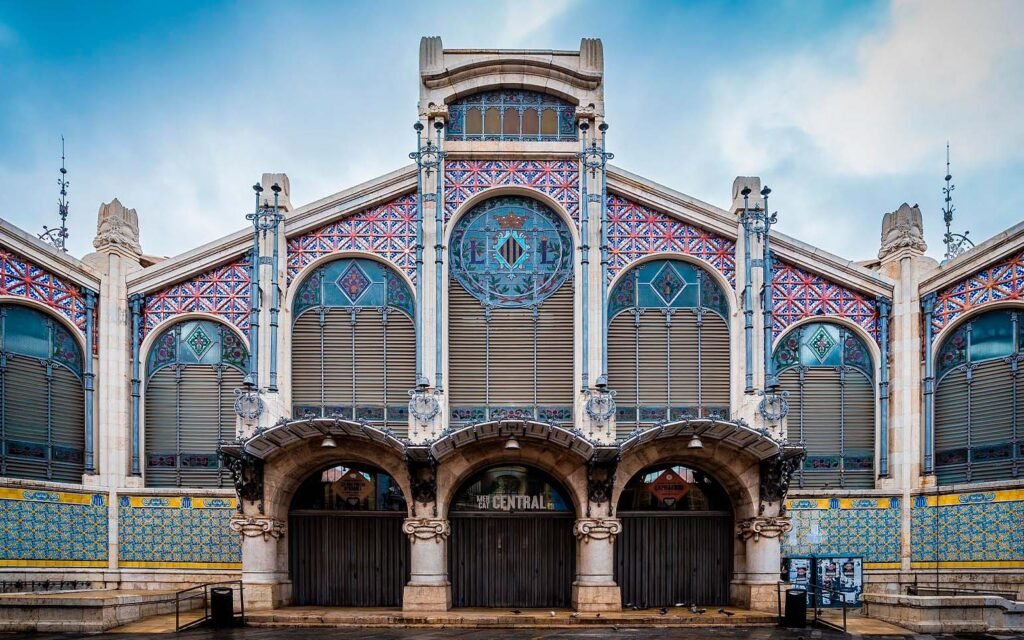
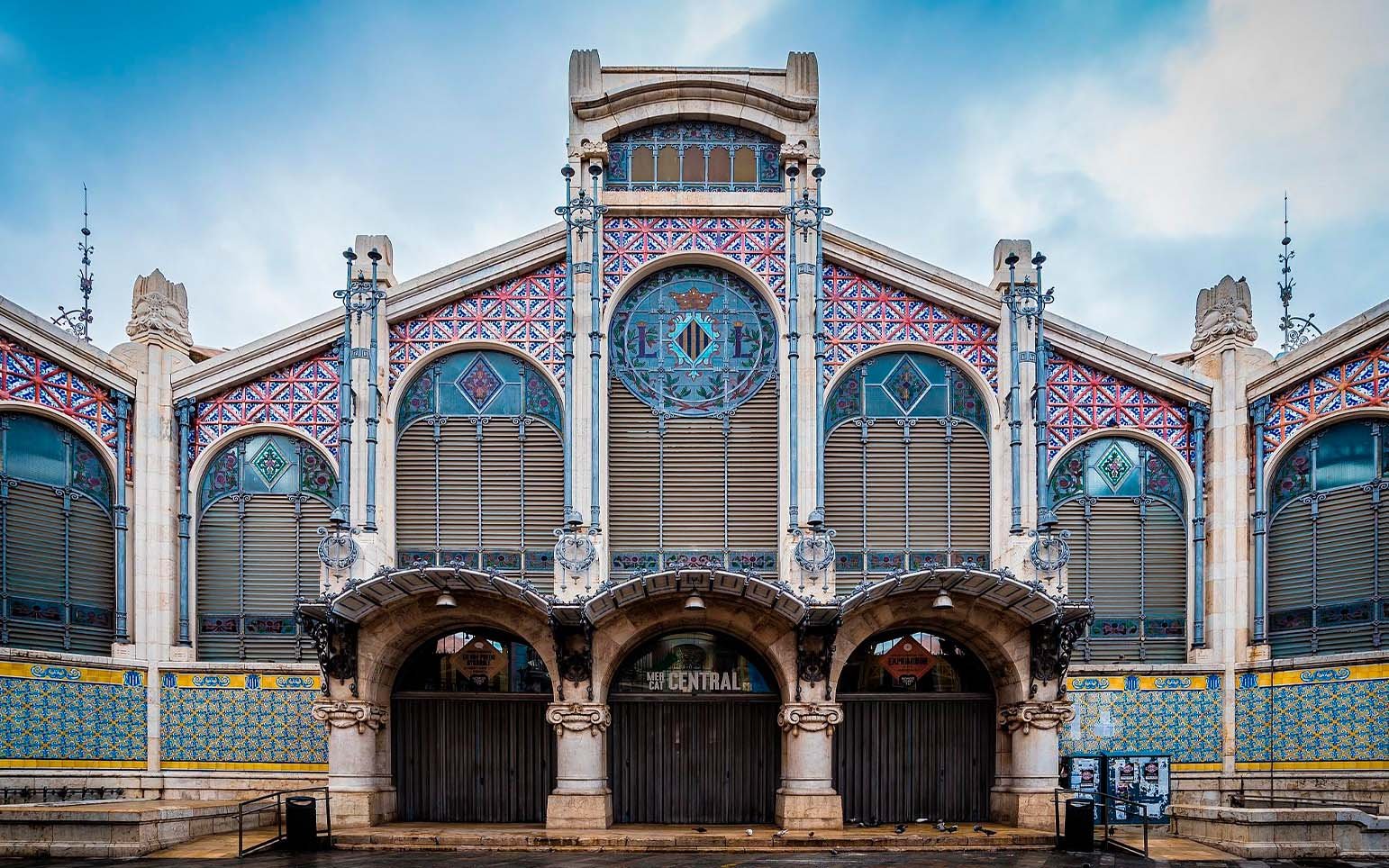
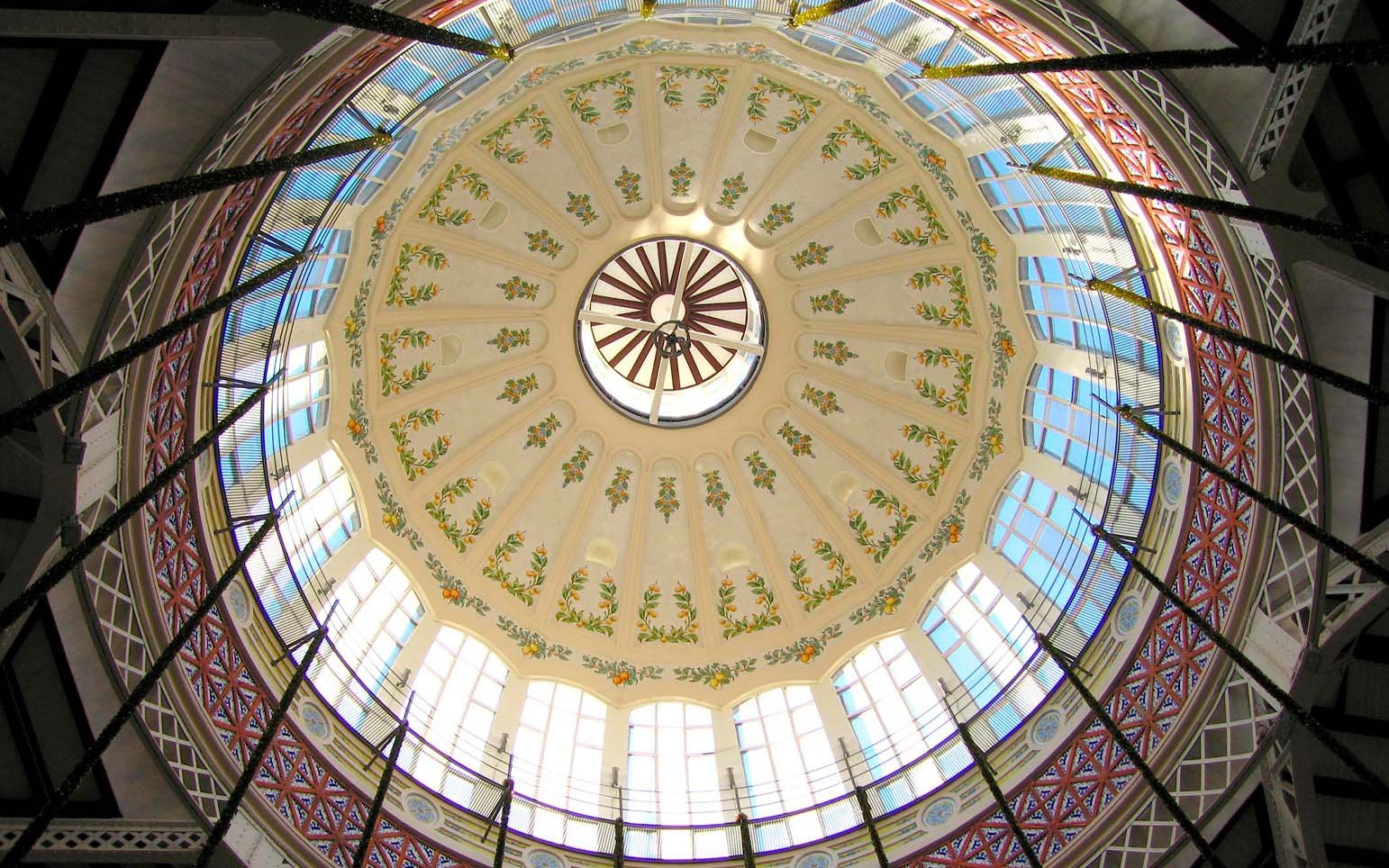
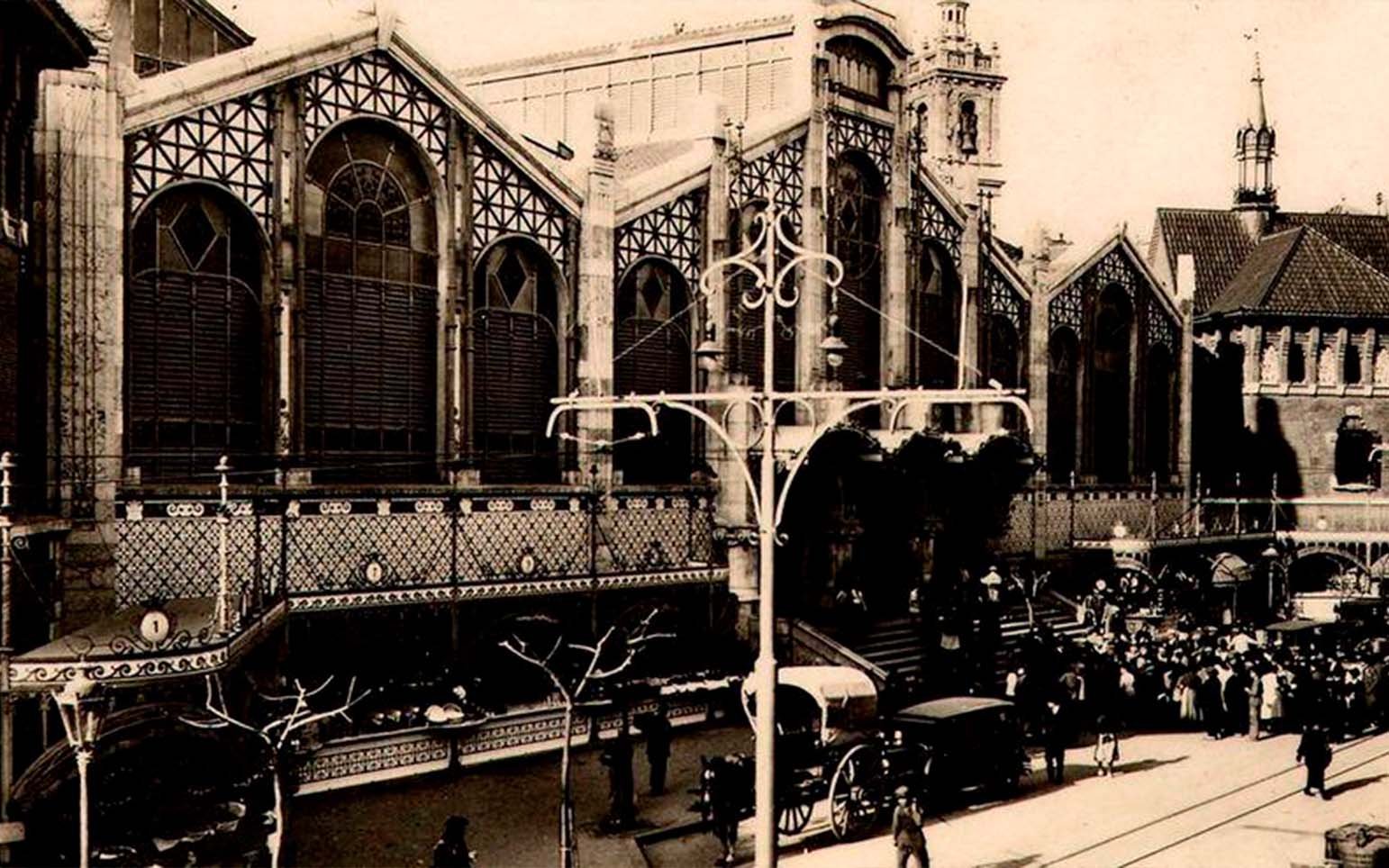
The Central Market was not designed simply as a vast covered hall. Its architects envisioned a monumental space, with a structure of iron, ceramics, stone and glass that made use of natural light and organised trade in an entirely new way.
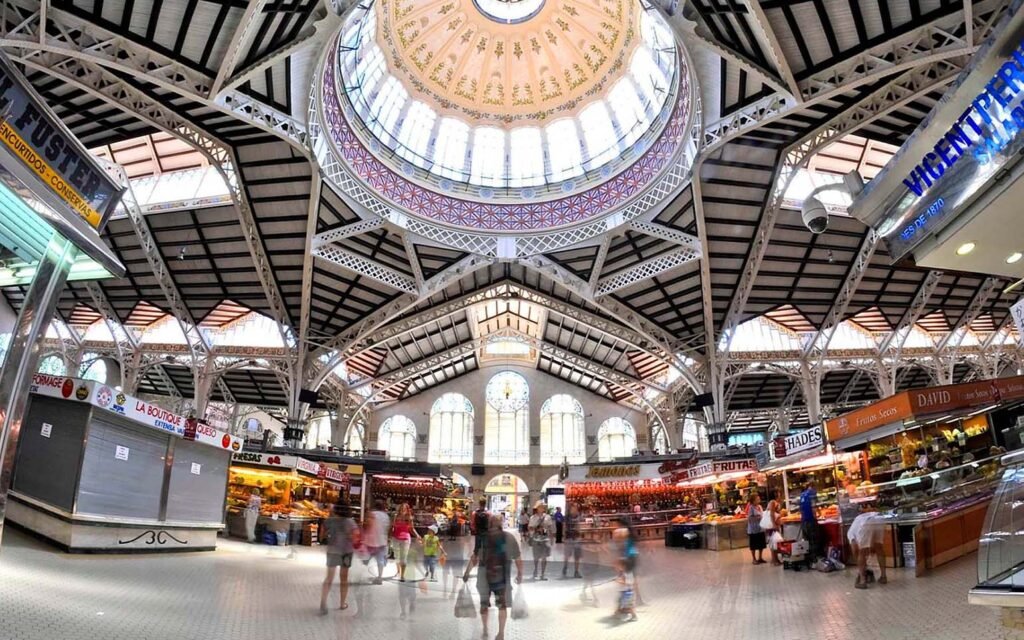
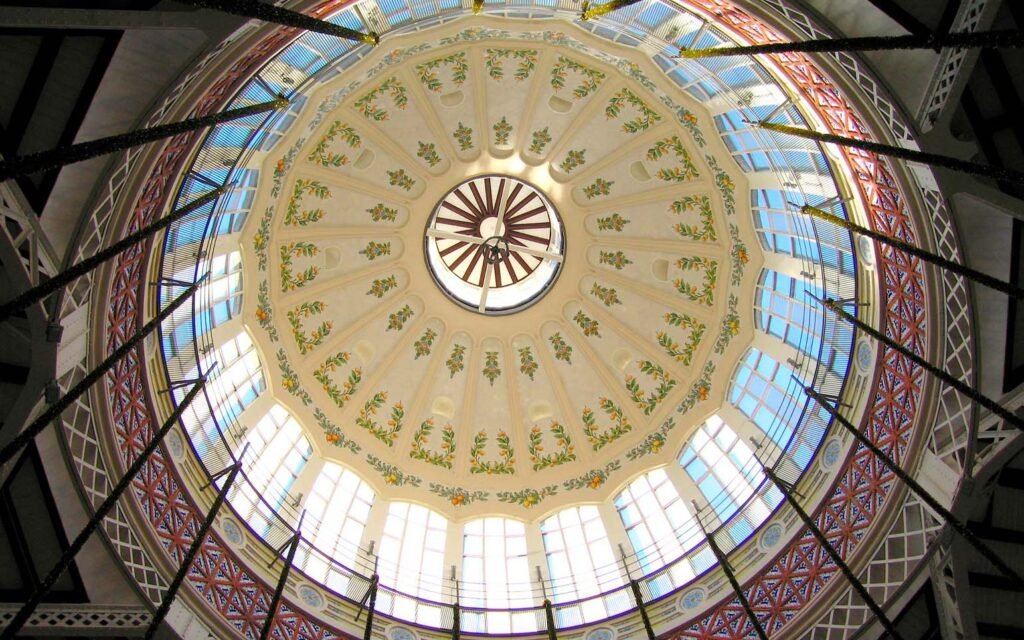
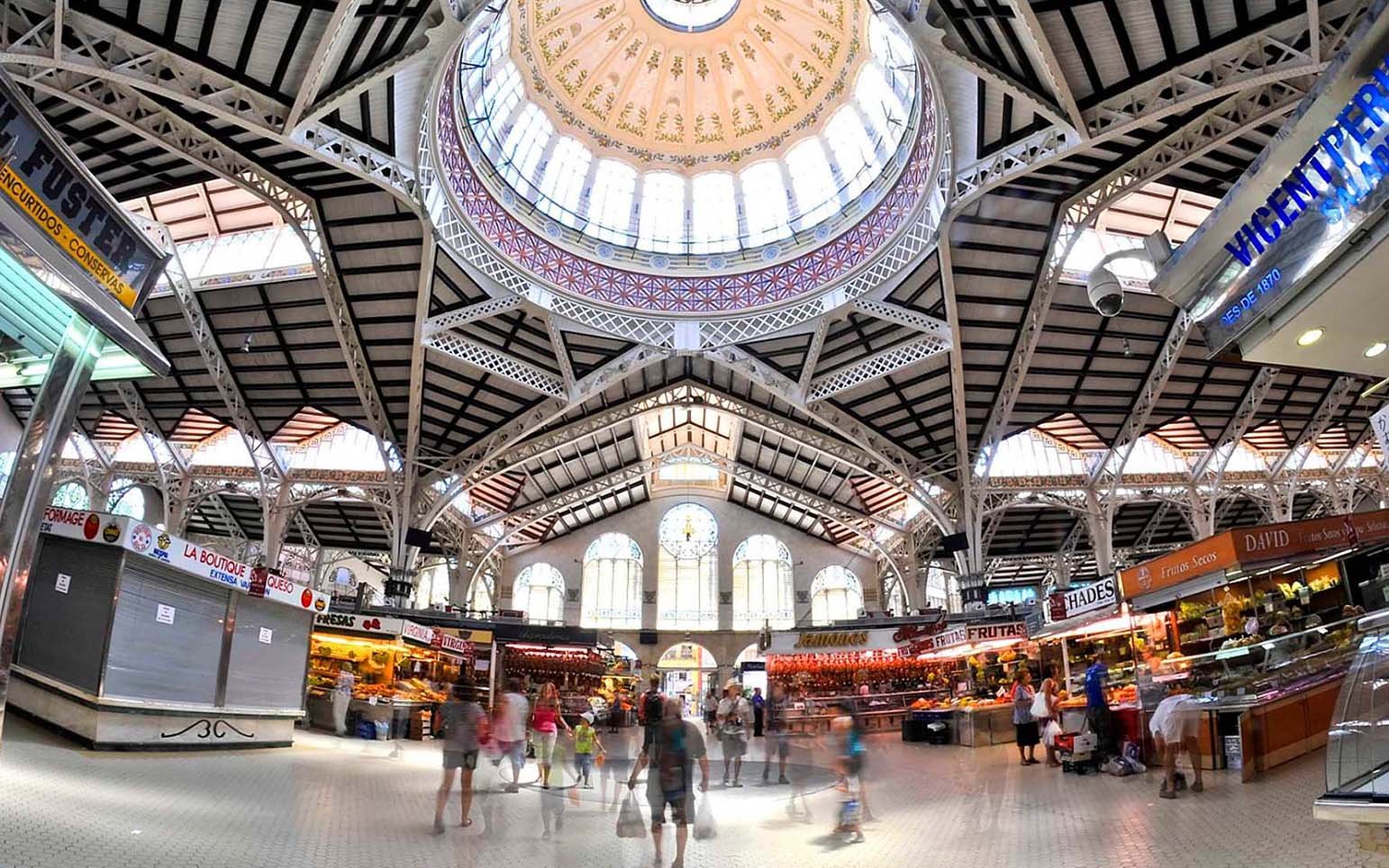
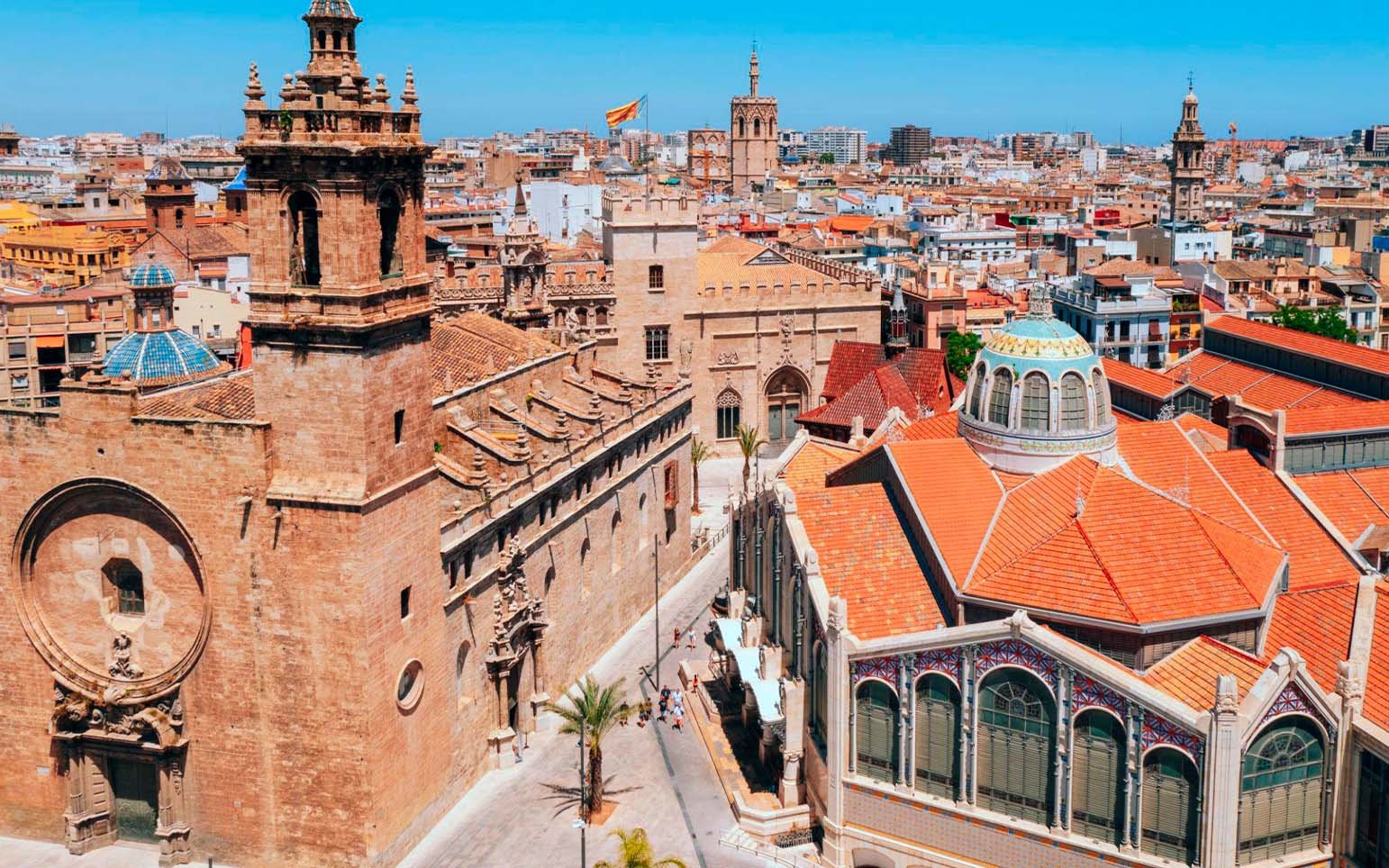
The great central dome rises to approximately thirty metres. Around it are roofs, passageways and trading areas, while the fish market occupies a separate section, recognisable by its own dome.
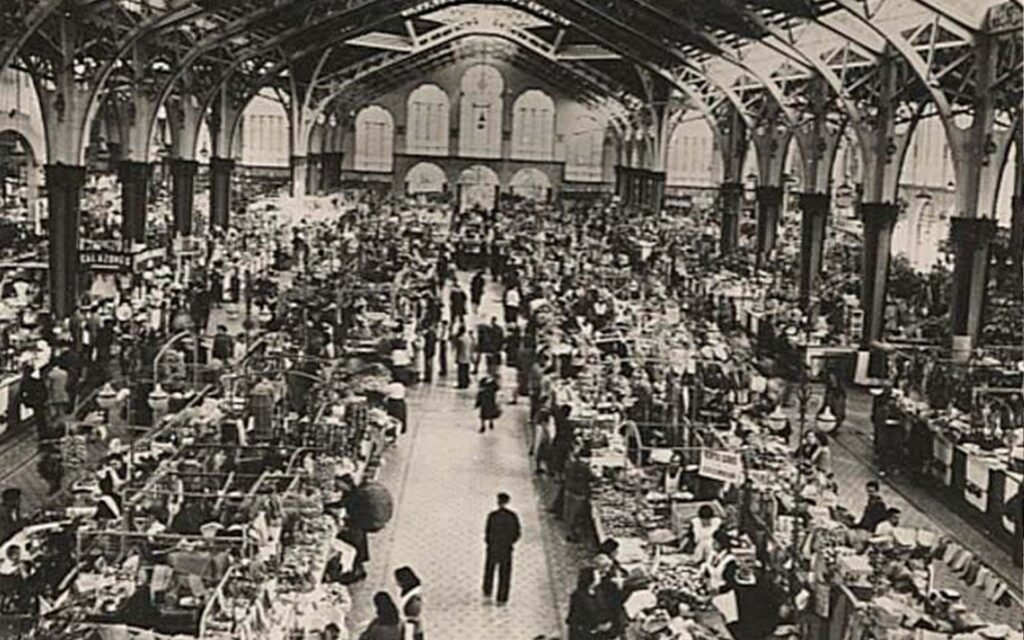
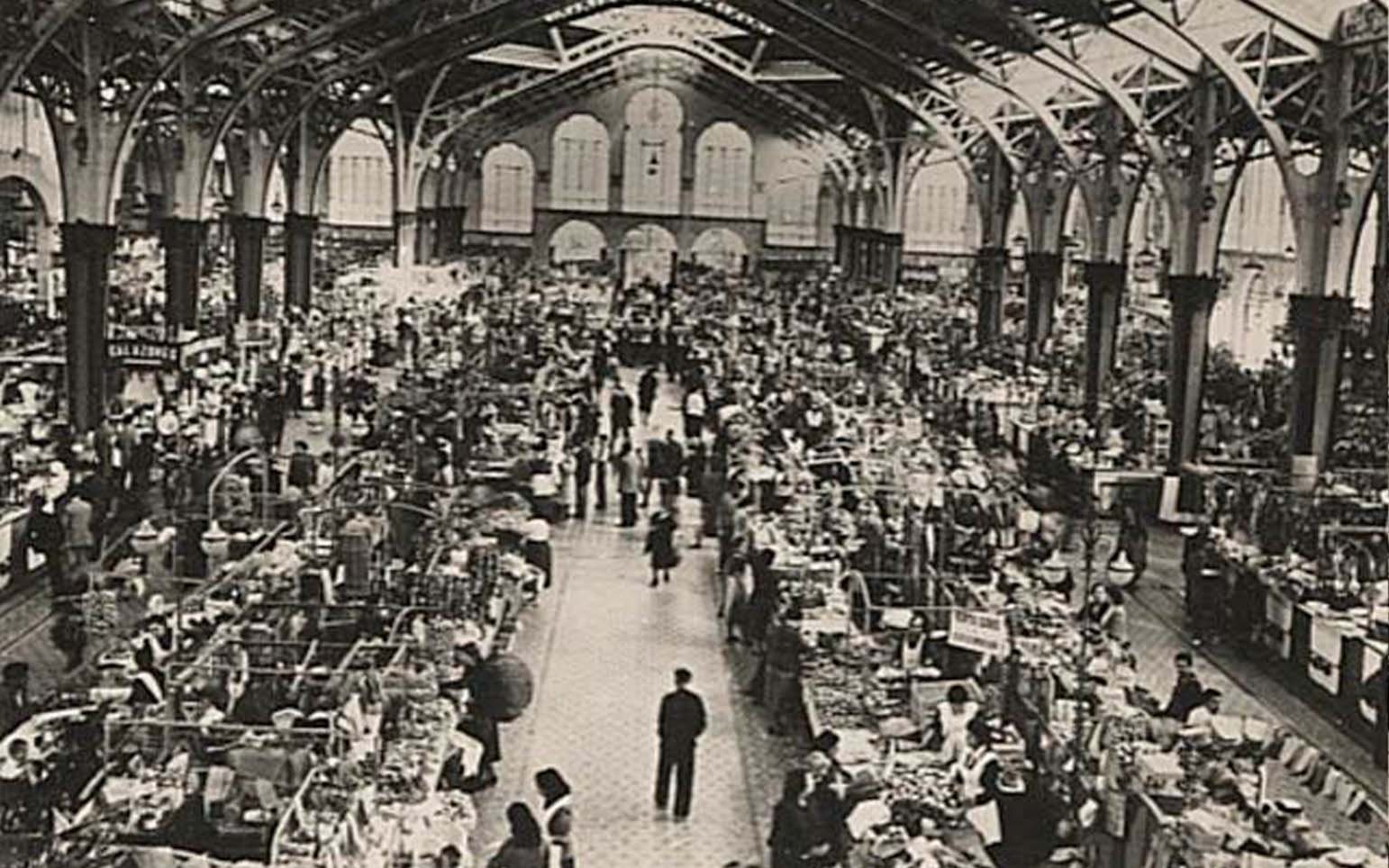
The market was designed to accommodate 959 stalls, with areas devoted to meat, fish, fruit, vegetables, bread, poultry, salted foods and other products. Its layout reflected commercial needs, but also a new understanding of hygiene, circulation and food supply in growing cities.
What is most striking is that, despite its size, the building retains a remarkable sense of lightness. Its metal columns support a roof that seems to float above the bustle of shoppers, while the stained-glass windows allow the light to change throughout the day and the ceramic details constantly evoke the agricultural wealth of Valencia’s surrounding farmland, known as l’horta.
The Central Market is Modernist, but it is also profoundly Valencian.
Yet all that architectural beauty would mean little without what takes place beneath its roofs every morning. The market is not merely a monumental building: it is the meeting point between the city and the land that feeds it.
The fruit, vegetables and countless other products arriving at its stalls remind us of a relationship that has shaped Valencia’s history: the bond between its fertile farmland and its people.
That connection is precisely the central theme of the documentary «Mercado Central. Donde se une l’horta y el centro de la ciudad» (Central Market: Where the Farmland Meets the City Centre), recorded at the Ateneo Mercantil de Valencia and which you can enjoy by following the link below: https://youtu.be/waQ7PLstvtU
The documentary invites us to discover the Central Market from a perspective combining heritage, architecture and everyday life, showing how this Modernist jewel also represents the historic connection between Valencia’s farmland and the heart of the city. It is an opportunity to look at a building that forms part of our everyday surroundings with fresh eyes, and to discover details that often go unnoticed as we walk through its aisles.
The parrot that hears every secret
Let us look upwards again.
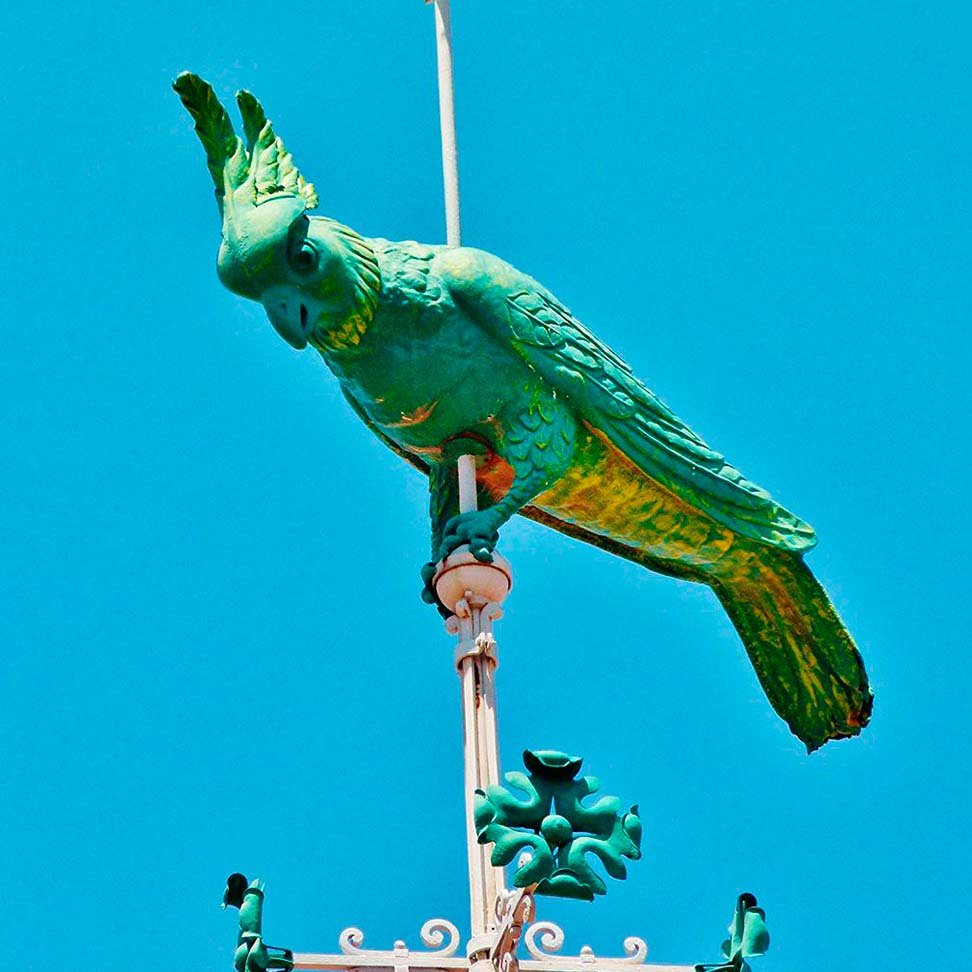
Above the main dome stands the famous cotorra del Mercat, the market parrot, a weathervane that has become one of the building’s most recognisable symbols. Although popularly known as a parrot, the figure is also identified as a cockatoo.
Why place such a bird above a market?
One traditional interpretation links the parrot to the constant chatter of markets, places where not only goods circulated, but also news, rumours, conversations and comments about life in the city.
It seems a particularly fitting choice. People at the market talked about prices, harvests, families, events and everything that concerned or entertained Valencians. The parrot appeared to represent that atmosphere of endless conversation.
And it is not alone. Above the fish market stands another weathervane shaped like a fish, a reference to the produce sold beneath it. In this way, the building tells us something about its purpose before we even enter.
The parrot and the fish are part of the Central Market’s personality. They are small details that help explain why this building has become much more than somewhere to buy food.
The day the market invited 1,400 people to lunch
The Central Market’s inauguration also left behind a story worth remembering.
On 23 January 1928, the building was officially inaugurated. To mark the occasion, a large charitable meal was organised for 1,400 people in need.
The menu included paella, fish, dessert, water and wine. Approximately one tonne of fruit was also distributed.
It must have been an extraordinary sight: a building conceived to feed Valencia every day began its history by hosting a meal for an enormous gathering.
However, the public opening still had to wait several weeks. It was on 15 March 1928 that the Central Market officially began operating as a market.
Since then, generations of traders and shoppers have kept the place alive.
The lives that do not appear on the plans
When we talk about a historic building, we tend to remember its architects, dates and artistic features. But the Central Market has another story, perhaps the most important of all: that of the people who have worked behind its counters.
Families who have passed their businesses from parents to children. Traders who began their working day while much of Valencia was still asleep. Shoppers who have walked the same aisles for decades.
Every stall forms part of a collective memory that cannot be explained through the original architectural plans alone.
And there is something particularly interesting about this: while the architecture remains, life inside the market is constantly changing. Products, shopping habits, ways of serving customers and even conversations have evolved over the generations.
Where vendors once called out their wares, familiar conversations now coexist with new ways of selling and services adapted to modern life.
Between 2004 and 2010, an important restoration project helped recover much of the building’s architectural richness. Yet beyond all these transformations, its essential purpose remains: to be a meeting place for those who produce, sell and buy.
A market may preserve its columns, domes and stained-glass windows for a century, but it needs its traders and customers to remain alive.
Three monuments and one square
There are few places in Valencia where such an extraordinary concentration of history can be found in so small an area.
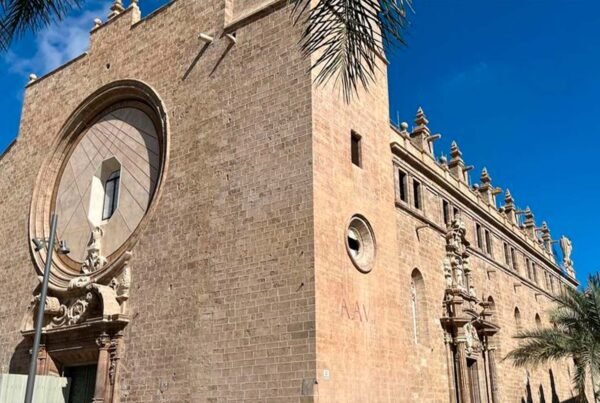
At one end stands Santos Juanes, with its medieval roots and monumental Baroque transformation. Opposite rises the Silk Exchange, or Lonja de la Seda, a reminder of Valencia’s commercial importance during its great mercantile age. Completing the scene is the Central Market, a symbol of twentieth-century architectural and commercial modernity.
Three buildings from different periods that, in reality, tell the same story: that of a city whose life has revolved around trade for centuries.
Market Square is not simply the space separating them. It is the place that brings them together, and it takes only a few moments of observation to understand why.
From a single spot, we can contemplate centuries of architecture, economic activity and urban transformation. Few corners of Valencia offer such a complete journey through the city’s history without requiring us to move more than a few steps.
5 Central Market facts you might not know
1. A market much older than its building. Although the Central Market opened its doors in 1928, trading activity in Market Square dates back centuries. The Modernist building is actually the heir to a long commercial tradition.
2. A king began the demolitions with a silver pickaxe. On 24 October 1910, Alfonso XIII symbolically struck the wall of a house in the square to mark the beginning of the urban transformation that would make the new market possible.
3. The market opened with a meal for 1,400 people. On 23 January 1928, a large charitable lunch was organised, featuring paella, fish, dessert, water and wine. Approximately one tonne of fruit was also distributed.
4. The parrot is not the only animal watching over the market. The famous weathervane above the main dome shares the skyline with a fish above the fish market. Both figures have become part of the building’s identity.
5. The inauguration and public opening took place on different dates. Although the Central Market was officially inaugurated on 23 January 1928, it did not begin operating as a market until 15 March that year.
The Central Market and our falla: much more than good neighbours
What do the Central Market and our Fallas association have in common? At first glance, perhaps not very much. But thinking about how life in a falla is experienced reveals that we share more than it might seem.
For generations, the Central Market has been a meeting place for residents of Valencia’s historic centre. People do more than buy food there: they greet acquaintances, exchange news and maintain the small everyday relationships that give a neighbourhood its character. Something similar happens in a Fallas association, where people of different ages come together, share experiences and keep traditions alive.
And then there is food, such an important part of our celebrations. It is difficult to imagine a Fallas gathering without morning meals, communal lunches or paellas bringing members together around a table. Products like those sold every morning in the Central Market form part of the culinary culture that also defines us.
There is another similarity we particularly appreciate: both the market and the Fallas bring generations together. The knowledge of traders, often passed down within the same family, recalls the Fallas customs handed from parents to children, allowing associations to continue year after year.
Our Falla Pintor Domingo – Guillem de Castro belongs to this same historic centre, where commercial and festive life have shared the streets for generations. That is why talking about the Central Market also means talking about a part of Valencia that we know and enjoy.
And to finish, one last look upwards.
In the previous chapter, we left the pardal de Sant Joan watching over the square from its church. Today we have met its neighbour, the market parrot, observing everything below from its Modernist dome.
While they remain high above, generations continue to pass, businesses change and festivals are celebrated in the streets below. The neighbourhood transforms, but preserves something that even the greatest urban redevelopment projects have failed to erase: that distinctly Valencian habit of meeting, talking and sharing life in the street.
And that is something we know a little about in our falla, too.
En nuestro anterior capítulo de «Nuestra Historia» levantamos la mirada hacia lo alto de la iglesia de los Santos Juanes para descubrir al famoso pardal de Sant Joan. Hoy apenas tenemos que dar unos pasos para encontrarnos con otro de los pájaros más conocidos de Valencia: la cotorra del Mercado Central.
Y es que, en este rincón de nuestro barrio, hasta las veletas parecen tener algo que contar.
El pardal lleva siglos contemplando cuanto sucede a los pies de los Santos Juanes. La cotorra, bastante más joven, observa desde las alturas el ir y venir de compradores, vendedores y visitantes. Uno pertenece a la Valencia barroca; la otra, a la ciudad modernista que comenzaba a transformar su aspecto a principios del siglo XX.
Entre ambos se extiende una plaza que ha sido testigo de buena parte de la historia de Valencia. Pero hay una curiosidad: mucho antes de que la cotorra encontrara su lugar sobre la cúpula del Mercado Central, los valencianos ya acudían a este mismo espacio para comprar y vender. Y antes de que existieran sus grandes vidrieras, sus columnas de hierro y sus puestos ordenados, aquí había algo bastante más bullicioso y desordenado: un mercado al aire libre.
Para conocer su historia tenemos que imaginar la plaza sin el edificio que hoy todos reconocemos.
Cuando el mercado no tenía paredes
Durante siglos, la plaza del Mercado fue uno de los grandes escenarios comerciales de Valencia. Los puestos se instalaban al aire libre, protegidos por toldos, mientras comerciantes y compradores negociaban entre mercancías, carros y el constante movimiento de la ciudad.
No existía todavía el Mercado Central, pero sí existía el mercado. Y esa diferencia es importante, porque el edificio que hoy conocemos no creó la actividad comercial de la plaza: llegó para organizar una tradición que llevaba siglos formando parte de la vida valenciana.
En 1839 se instaló en aquel espacio el llamado Mercado Nuevo, un recinto descubierto que trataba de dar una estructura más estable a la actividad comercial. Sin embargo, con el crecimiento de la ciudad, sus instalaciones acabaron resultando insuficientes y Valencia necesitaba un mercado capaz de responder a las exigencias de una ciudad que estaba cambiando.
Una piqueta de plata para comenzar una transformación
El nuevo mercado no nació de la noche a la mañana. En 1910, el Ayuntamiento convocó un concurso de proyectos que terminaron ganando los arquitectos Alejandro Soler March y Francisco Guardia Vial, vinculados a la escuela del prestigioso arquitecto modernista Lluís Domènech i Montaner.
Aquel mismo año tuvo lugar un episodio especialmente curioso.
El 24 de octubre de 1910, el rey Alfonso XIII participó en el acto simbólico que daba comienzo a los derribos necesarios para levantar el nuevo mercado. Para ello utilizó una piqueta de plata con la que golpeó el muro de una casa situada en el número 24 de la plaza del Mercado.
Resulta difícil imaginar una herramienta menos habitual para iniciar una demolición, pero aquel gesto tenía un significado: Valencia se disponía a transformar uno de sus espacios más antiguos y populares.
El proyecto definitivo se desarrolló en 1914. Las obras se prolongaron durante años y en su conclusión participaron también los arquitectos Enrique Viedma y Ángel Romaní.
Para levantar el nuevo edificio hubo que modificar profundamente el entorno urbano, incluyendo el derribo de numerosas viviendas. La plaza que habían conocido generaciones de valencianos estaba cambiando para siempre.
Un edificio que parecía una pequeña ciudad
El Mercado Central no se diseñó simplemente como una gran nave cubierta. Sus arquitectos concibieron un espacio monumental, con una estructura de hierro, cerámica, piedra y cristal que permitía aprovechar la luz natural y organizar el comercio de una forma completamente nueva.
La gran cúpula central alcanza aproximadamente treinta metros de altura. A su alrededor se distribuyen cubiertas, pasillos y espacios comerciales, mientras la pescadería ocupa una zona diferenciada, reconocible por su propia cúpula.
El mercado se proyectó para albergar 959 puestos, con zonas destinadas a carnes, pescados, frutas, verduras, pan, aves, salazones y otros productos. La distribución respondía a una lógica comercial, pero también a una nueva manera de entender la higiene, la circulación y el abastecimiento de las ciudades.
Lo más llamativo es que, pese a sus dimensiones, el edificio conserva una sensación de ligereza. Sus columnas metálicas sostienen una cubierta que parece elevarse sobre el bullicio de los compradores, mientras las vidrieras permiten que la luz cambie a lo largo del día y los detalles cerámicos recuerdan continuamente la riqueza agrícola de la huerta valenciana.
El Mercado Central es modernista, pero también profundamente valenciano.
Sin embargo, toda esa belleza arquitectónica tendría poco sentido sin aquello que sucede bajo sus cubiertas cada mañana. Porque el mercado no es únicamente un edificio monumental: es el punto de encuentro entre la ciudad y la tierra que la alimenta.
Las frutas, las verduras y tantos otros productos que llegan a sus puestos nos recuerdan una relación que ha marcado la historia de Valencia: la que existe entre su huerta y sus habitantes.
Esa conexión es precisamente el hilo conductor del documental «Mercado Central. Donde se une l’horta y el centro de la ciudad», grabado por el Ateneo Mercantil de Valencia y que puedes disfrutar en el siguiente enlace: https://youtu.be/waQ7PLstvtU
El documental nos invita a descubrir el Mercado Central desde una perspectiva que combina patrimonio, arquitectura y vida cotidiana, mostrando cómo esta joya modernista representa también el vínculo histórico entre la huerta valenciana y el corazón de la ciudad. Una oportunidad para contemplar con otros ojos un edificio que forma parte de nuestro paisaje cotidiano y descubrir algunos de los detalles que muchas veces pasan desapercibidos cuando recorremos sus pasillos.
La cotorra que escucha todos los secretos
Volvamos a mirar hacia arriba.
Sobre la cúpula principal encontramos a la célebre cotorra del Mercat, una veleta que se ha convertido en uno de los símbolos más reconocibles del edificio. Aunque popularmente se la conoce como cotorra, su figura se identifica también como una cacatúa.
¿Por qué colocar un ave así sobre un mercado?
Una de las interpretaciones tradicionales relaciona la cotorra con el parloteo de los mercados, lugares donde no solo circulaban mercancías, sino también noticias, rumores, conversaciones y comentarios sobre la vida de la ciudad.
No deja de ser una elección muy apropiada. En el mercado se hablaba de precios, de cosechas, de familias, de acontecimientos y de todo aquello que preocupaba o entretenía a los valencianos. La cotorra parecía representar ese ambiente de conversación permanente.
Y no está sola. Sobre la zona de la pescadería aparece otra veleta con forma de pez, un guiño al producto que se comercializa bajo ella. De este modo, el edificio nos cuenta algo de su actividad incluso antes de entrar.
La cotorra y el pez forman parte de la personalidad del Mercado Central. Son pequeños detalles que ayudan a entender por qué este edificio ha terminado convirtiéndose en algo más que un lugar donde comprar alimentos.
El día en que el mercado invitó a comer a 1.400 personas
La inauguración del Mercado Central también dejó una historia que merece recordarse.
El 23 de enero de 1928 se celebró la inauguración oficial del edificio. Y, para conmemorarla, se organizó una gran comida benéfica destinada a 1.400 personas necesitadas.
El menú incluía paella, pescado, postre, agua y vino. Además, se repartió aproximadamente una tonelada de fruta.
La escena debió de ser extraordinaria: un edificio concebido para alimentar diariamente a Valencia estrenaba su historia con una comida multitudinaria.
Sin embargo, la apertura al público todavía tendría que esperar unas semanas. Fue el 15 de marzo de 1928 cuando el Mercado Central comenzó a funcionar oficialmente como mercado.
Desde entonces, generaciones de vendedores y compradores han mantenido vivo aquel espacio.
Las vidas que no aparecen en los planos
Cuando hablamos de un edificio histórico solemos recordar a sus arquitectos, sus fechas y sus características artísticas. Pero el Mercado Central tiene otra historia, posiblemente la más importante: la de quienes han trabajado detrás de sus mostradores.
Familias que han transmitido sus negocios de padres a hijos. Vendedores que han comenzado su jornada cuando buena parte de Valencia todavía dormía. Compradores que han recorrido los mismos pasillos durante décadas.
Cada puesto forma parte de una memoria colectiva que no puede explicarse únicamente a través de los planos originales.
Y hay algo especialmente interesante: mientras la arquitectura permanece, la vida del mercado cambia continuamente. Los productos, las costumbres de compra, las formas de atender al público e incluso las conversaciones han evolucionado con el paso de las generaciones.
Donde antes se escuchaban los pregones de los vendedores, hoy conviven las conversaciones de siempre con nuevas formas de comercialización y servicios adaptados a nuestro tiempo.
Entre 2004 y 2010 se desarrolló una importante rehabilitación que permitió recuperar buena parte de la riqueza arquitectónica del edificio. Pero, por encima de todas esas transformaciones, permanece su función esencial: ser un lugar de encuentro entre quienes producen, venden y compran.
Porque un mercado puede conservar sus columnas, sus cúpulas y sus vidrieras durante un siglo, pero necesita a sus comerciantes y a sus clientes para seguir teniendo vida.
Tres monumentos y una misma plaza
Hay pocos lugares de Valencia donde pueda contemplarse una concentración histórica tan extraordinaria en tan poco espacio.
En un extremo encontramos los Santos Juanes, con sus raíces medievales y su monumental transformación barroca. Frente a ellos se alza la Lonja de la Seda, testimonio de la importancia comercial que alcanzó Valencia durante su época de esplendor mercantil. Y completando el conjunto aparece el Mercado Central, símbolo de la modernidad arquitectónica y comercial del siglo XX.
Tres edificios de épocas diferentes que cuentan, en realidad, una misma historia: la de una ciudad que ha vivido durante siglos alrededor del comercio.
La plaza del Mercado no es simplemente el espacio que los separa. Es el lugar que los une, y basta con detenerse unos minutos para comprenderlo.
Desde un mismo punto podemos contemplar siglos de arquitectura, de actividad económica y de transformaciones urbanas. Pocos rincones permiten realizar un viaje tan completo por la historia de Valencia sin apenas moverse del sitio.
5 curiosidades del Mercado Central que quizá no conocías
1. Un mercado mucho más antiguo que su edificio. Aunque el Mercado Central abrió sus puertas en 1928, la actividad comercial en la plaza del Mercado se remonta a varios siglos atrás. El edificio modernista es, en realidad, el heredero de una larga tradición comercial.
2. Un rey inauguró los derribos con una piqueta de plata. El 24 de octubre de 1910, Alfonso XIII golpeó simbólicamente el muro de una vivienda de la plaza para señalar el comienzo de la transformación urbana que permitiría construir el nuevo mercado.
3. El mercado se inauguró dando de comer a 1.400 personas. El 23 de enero de 1928 se organizó una gran comida benéfica con paella, pescado, postre, agua y vino. También se repartió aproximadamente una tonelada de fruta.
4. La cotorra no es el único animal que vigila el mercado. La conocida veleta de la cúpula principal comparte protagonismo con un pez situado sobre la pescadería. Dos figuras que se han convertido en parte de la identidad del edificio.
5. Su inauguración y su apertura fueron en días diferentes. Aunque el Mercado Central se inauguró oficialmente el 23 de enero de 1928, no comenzó a funcionar como mercado hasta el 15 de marzo de aquel mismo año.
El Mercado Central y nuestra falla: mucho más que buenos vecinos
¿Qué tienen en común el Mercado Central y nuestra comisión fallera? A primera vista, quizá no demasiado. Pero basta con pensar en cómo se vive una falla para descubrir que compartimos más cosas de las que parece.
El Mercado Central ha sido durante generaciones un lugar de encuentro para los vecinos del centro histórico. Allí no solo se compran alimentos: se saluda a conocidos, se intercambian noticias y se mantienen esas pequeñas relaciones cotidianas que dan personalidad a un barrio. Algo parecido sucede en una comisión fallera, donde personas de distintas edades se reúnen, comparten experiencias y mantienen vivas las tradiciones.
Y luego está la gastronomía, tan presente en nuestras fiestas. Resulta difícil imaginar una celebración fallera sin los almuerzos, las comidas de hermandad o las paellas que reúnen a los falleros alrededor de una mesa. Productos como los que se venden cada mañana en el Mercado Central forman parte de esa cultura gastronómica que también nos identifica.
Hay otra coincidencia que nos gusta especialmente: tanto el mercado como las Fallas son espacios donde conviven generaciones. Los conocimientos de los comerciantes, transmitidos muchas veces dentro de una misma familia, recuerdan a esas costumbres falleras que pasan de padres a hijos y que permiten que las comisiones sigan adelante año tras año.
Nuestra Falla Pintor Domingo – Guillem de Castro forma parte de ese mismo centro histórico, donde la vida comercial y la festiva han compartido calles durante generaciones. Por eso, hablar del Mercado Central también es hablar de una parte de la Valencia que conocemos y disfrutamos.
Y para terminar, una última mirada hacia arriba.
En el capítulo anterior dejamos al pardal de Sant Joan vigilando la plaza desde su iglesia. Hoy hemos conocido a su vecina, la cotorra del Mercat, que observa desde la cúpula modernista todo cuanto sucede a sus pies.
Mientras ellos permanecen en las alturas, abajo siguen pasando las generaciones, cambiando los comercios y celebrándose las fiestas. El barrio se transforma, pero conserva algo que ni las grandes reformas urbanas han conseguido borrar: esa costumbre tan valenciana de encontrarnos, hablar y compartir la vida en la calle.
Y de eso, en nuestra falla, también sabemos un poco.