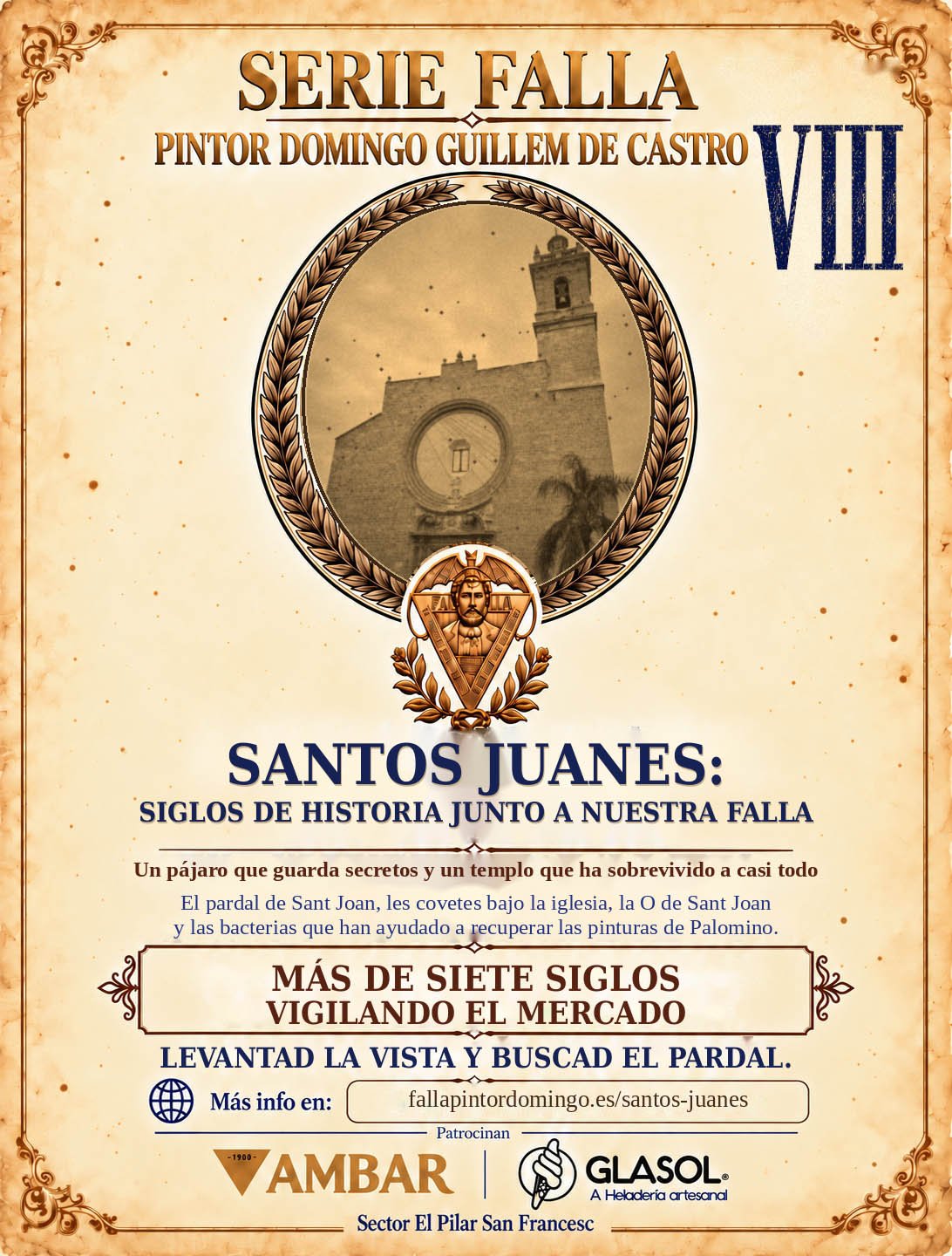


How many times have we said, “Let’s meet at Santos Juanes”? It’s one of those buildings we use as a meeting point without stopping to take a proper look. And that’s a shame, because few buildings in our neighbourhood have so many stories to tell.
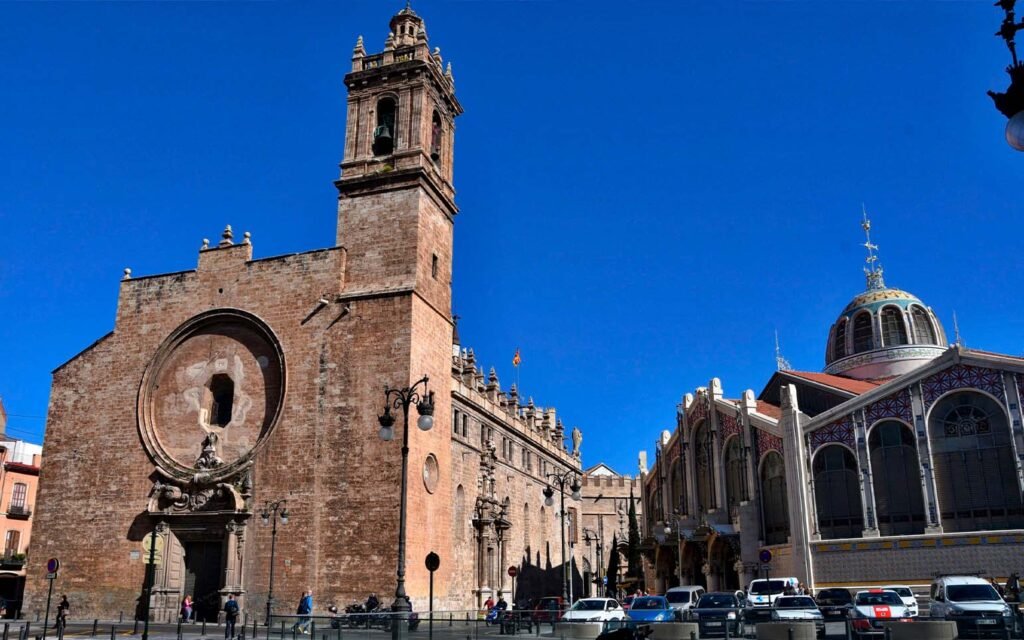
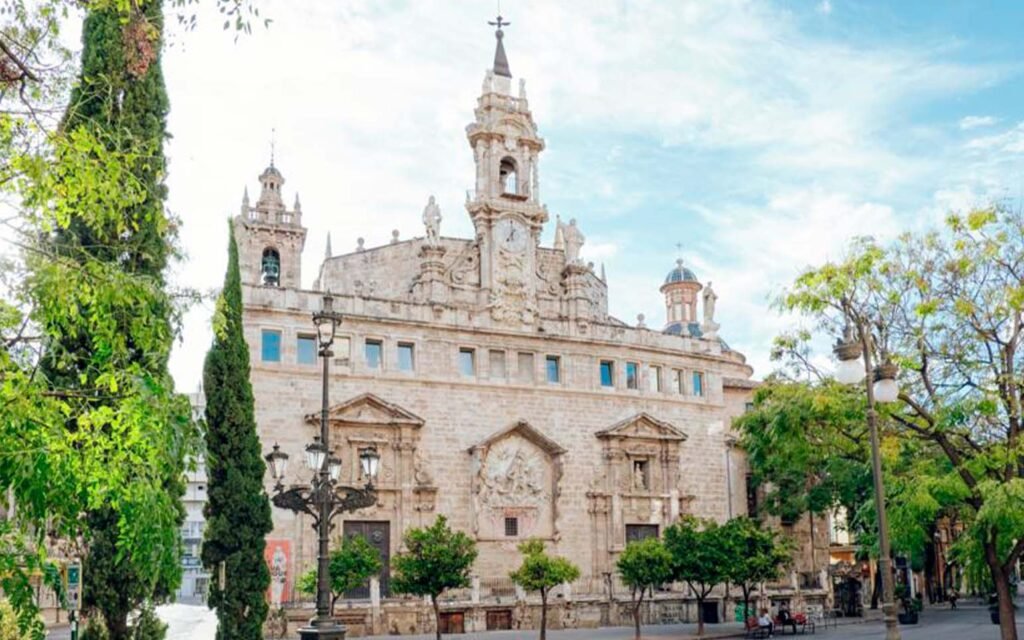
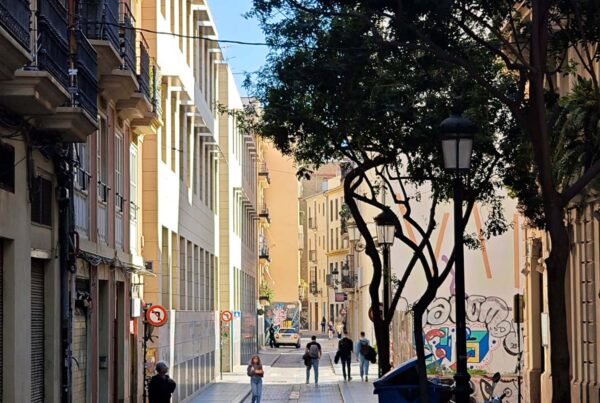
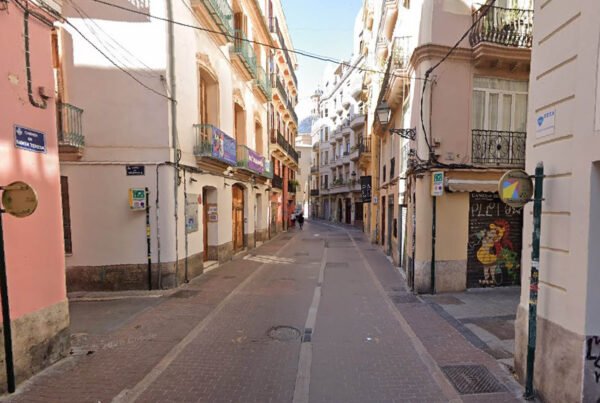
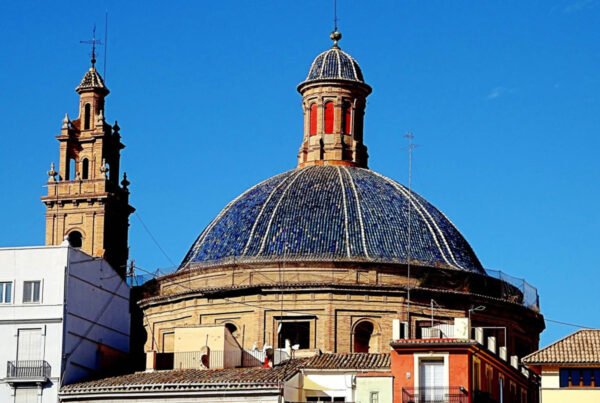
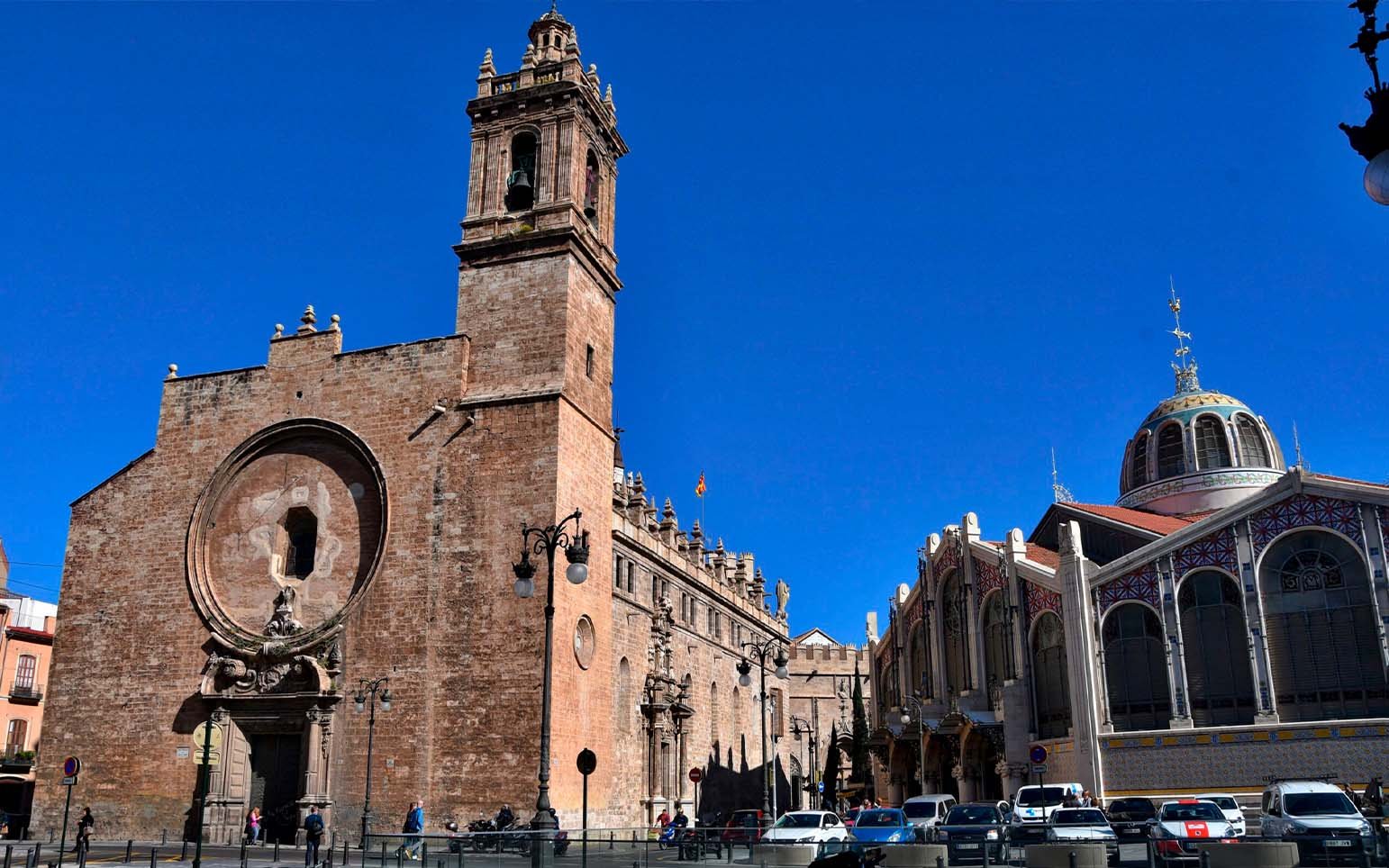
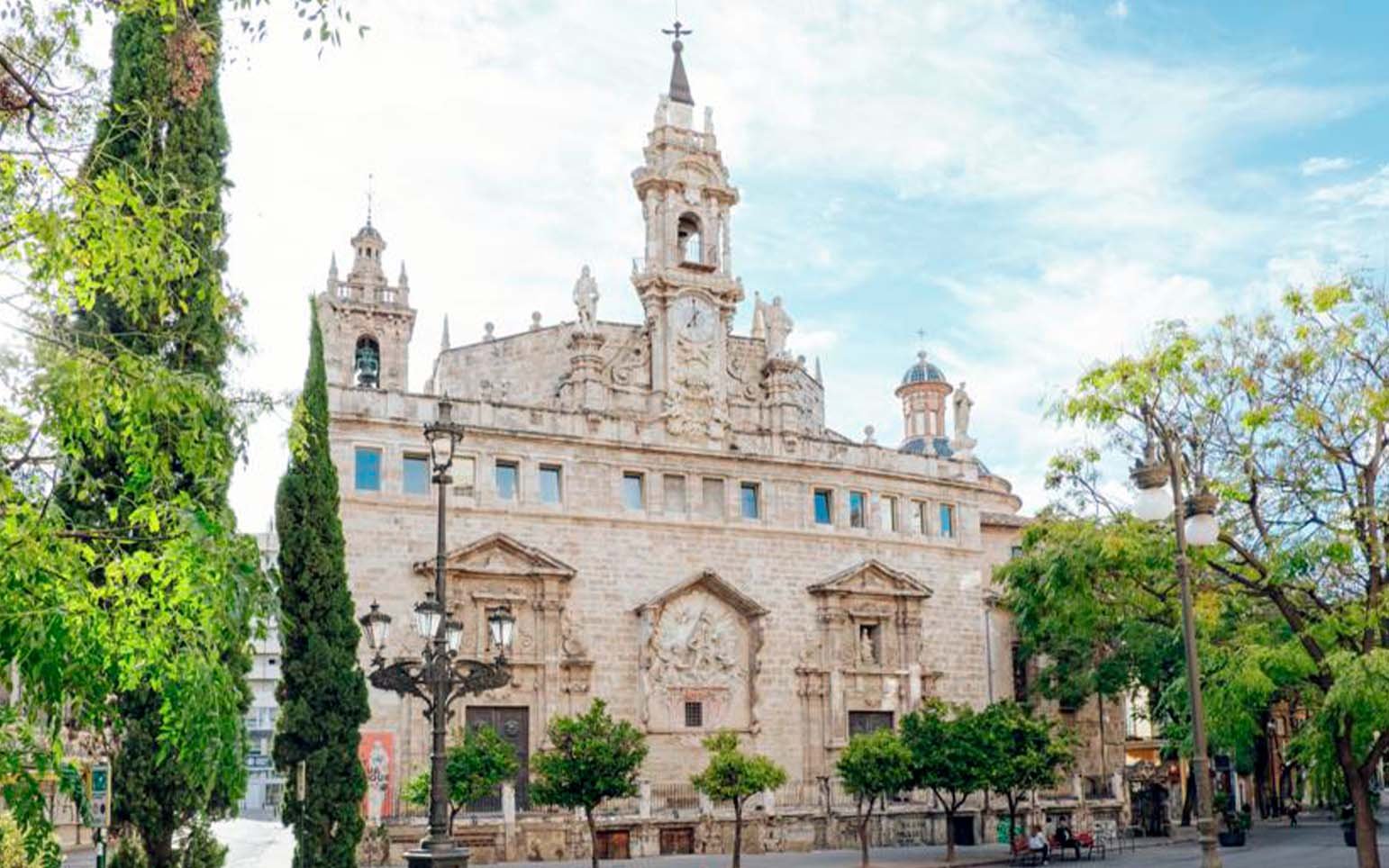
For those of us who belong to the Falla Pintor Domingo – Guillem de Castro, talking about Santos Juanes means talking about one of the most recognisable buildings in our surroundings. There it stands, next to the Central Market and opposite the Silk Exchange, forming part of a landscape that feels very much our own.
But behind its walls lies much more than an old church. There have been fires, merchants, children arriving from other towns, small businesses, a rather famous bird and even a story that found its way into a novel by Vicente Blasco Ibáñez.
And some of these stories are far less well known than you might imagine.
The Market’s most famous bird
Let’s start at the top. Right at the top.
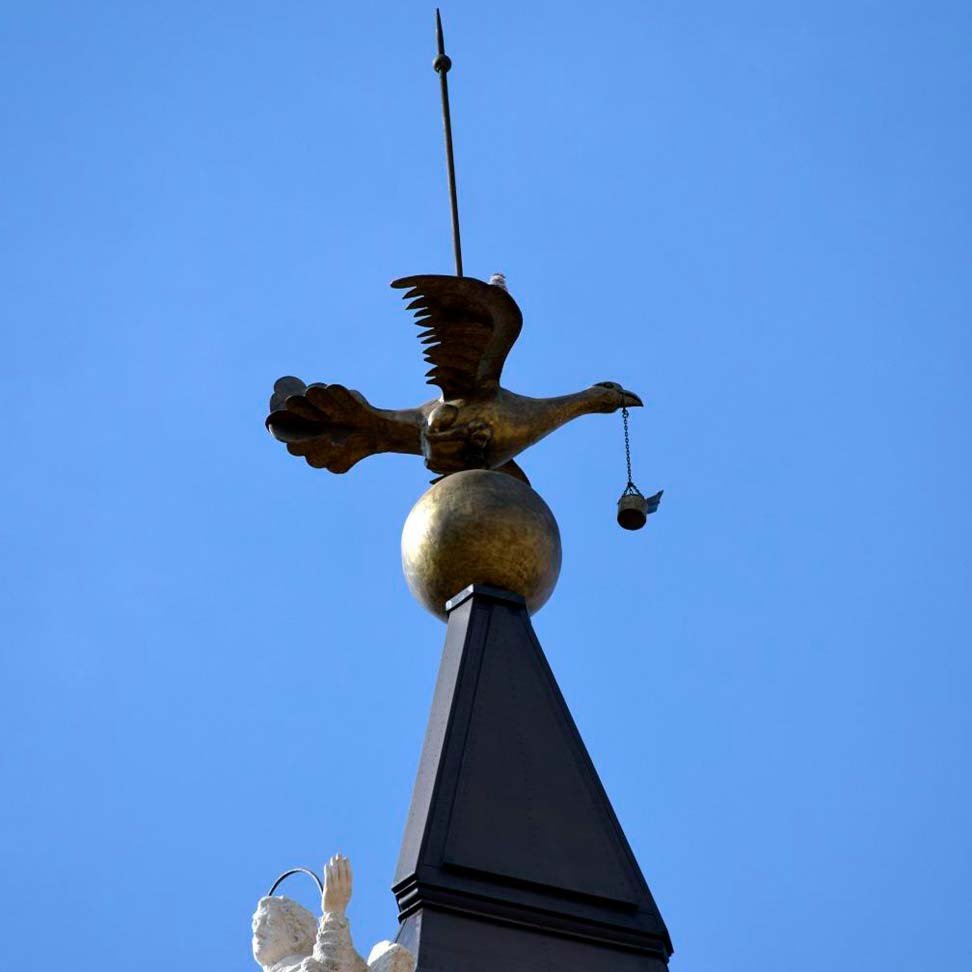
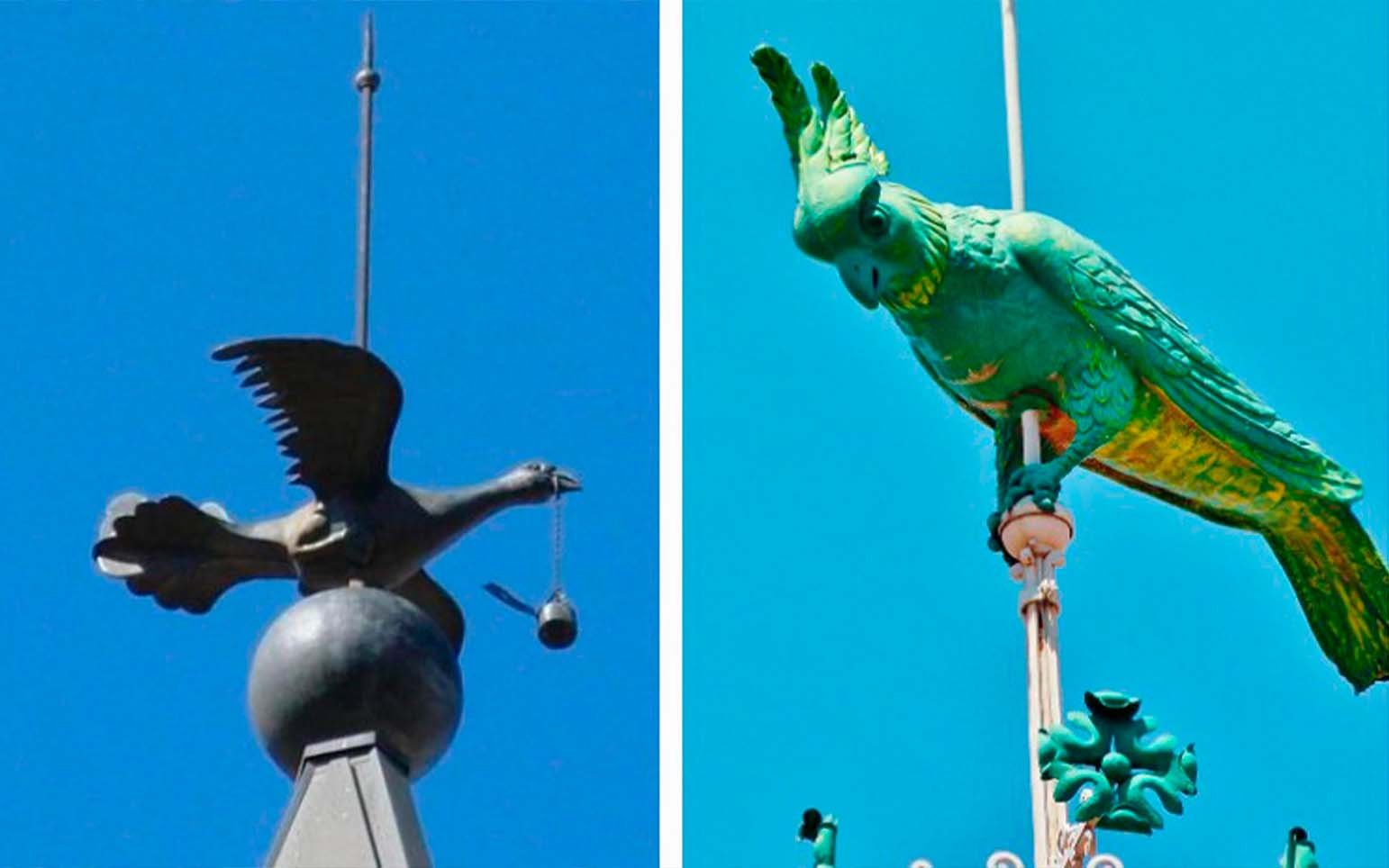
If we look up towards the upper part of the Santos Juanes façade, we will find a weather vane that has been part of Valencian popular memory for centuries: the pardal de Sant Joan.
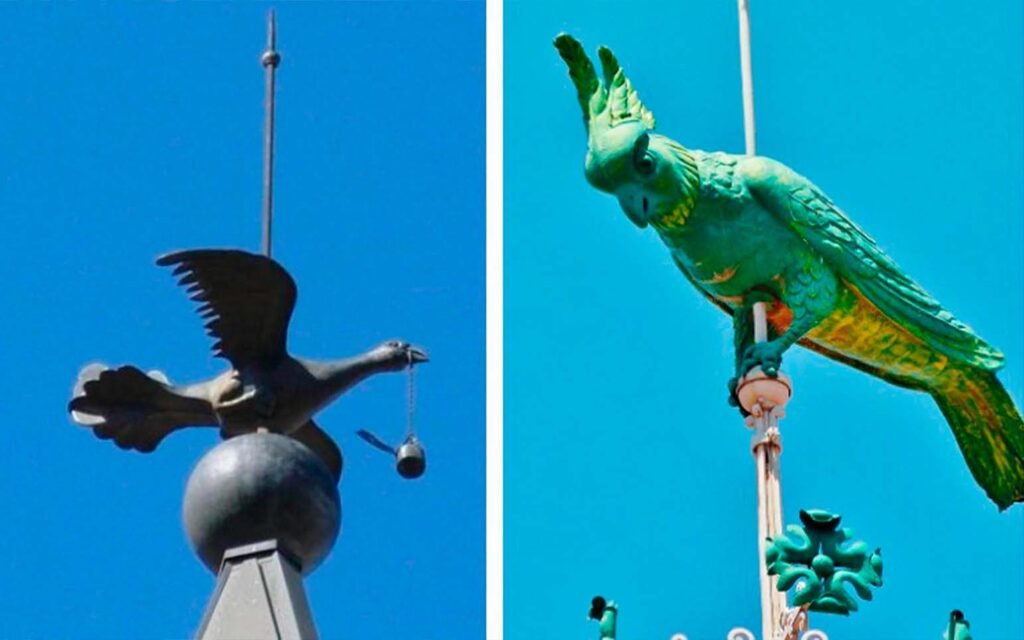
It isn’t just any little bird. It represents an eagle, the symbol of Saint John the Evangelist, one of the church’s two patron saints. In its beak it holds an inkwell, an object associated with his role as an evangelist.
But what makes it truly interesting isn’t its religious significance. It’s the story people tell about it.
According to an old Valencian tradition, some parents who arrived in the city from inland villages, driven by poverty and unable to support their children, would come to the Market with their little ones. There, they would ask them to look up at the top of the church, where that curious bird stood.
And while the children were looking, their parents would disappear.
The hope was that a merchant or a family from the Market would take them in and provide them with work and a means of survival.
It’s a sad story, even though it has come down to us wrapped in popular folklore. It is worth remembering that we are talking about a tradition recorded by writers and historians, not a practice whose frequency can be established with any precision.
What we do know is that Vicente Blasco Ibáñez included this story in his novel Arroz y tartana, published in 1894. In it, he tells of an Aragonese father who came to the Market every winter with one of his children to “try his luck”, leaving the child there while he gazed in fascination at the weather vane, which the writer calls “el famoso Pardalot”. Blasco knew the world of merchants, stalls and social relationships surrounding the Market very well.
So our famous bird also ended up playing a small part in Valencian literature.
One bird facing another
And here’s another curiosity. If we look towards the Central Market, we will find another famous bird: the cotorra del Mercat, the parrot perched above its roof.
Popular interpretation sets the two birds against each other: the eagle of Santos Juanes represents the spiritual and the divine, while the Market’s parrot is associated with everyday life, conversations, trade and worldly affairs. In the popular theatrical sketches of the nineteenth and twentieth centuries, the parrot and the eagle even held conversations, with the parrot telling the eagle all the Market gossip.
It’s quite an amusing image: two birds watching over the same place, but each concerned with very different things.
And knowing the atmosphere of any market, it isn’t difficult to imagine which of the two would have more to talk about.
A church with shops underneath?
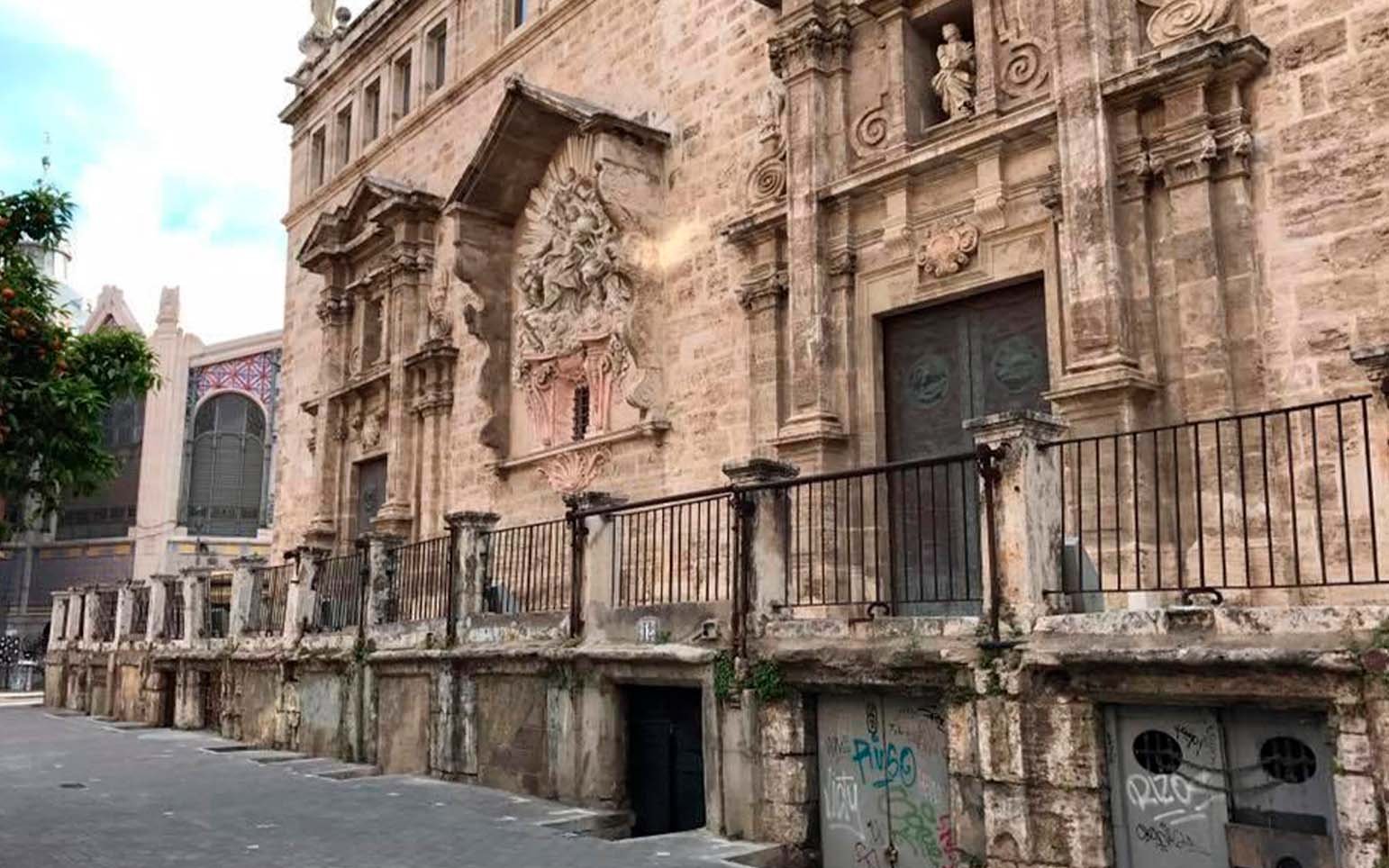
If we lower our gaze from the bird to the lower part of the façade overlooking the Market Square, we will discover another of the peculiarities of Santos Juanes.
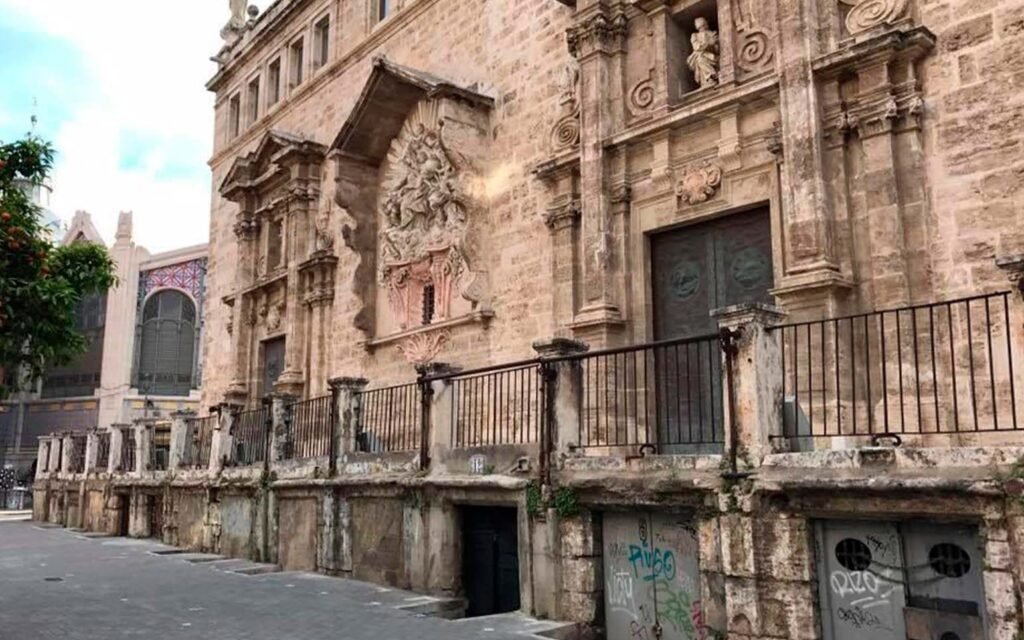
There we find les covetes de Sant Joan, nineteen small semi-underground premises beneath the church terrace, built in the early eighteenth century.
For many years, they housed craft workshops and modest businesses, including scrap dealers and second-hand shops.
It’s curious to think that, while religious services were taking place upstairs, an entirely different kind of commercial activity was going on below. One building shared by two worlds which, in reality, were both part of everyday neighbourhood life.
The covetes explain the relationship between the church and the Market better than any lengthy description could. Santos Juanes has never been a monument isolated from its surroundings: for centuries, it has lived alongside trade, bustle and the everyday needs of local people.
After many years closed and boarded up, the City Council is promoting their recovery as small shops selling crafts, cultural goods or antiques. So the church may soon have shops at its feet once again.
And not every place of worship can boast of having had something like a little market beneath it.
A church with rather bad luck when it comes to fire
If Santos Juanes could speak, it would certainly have quite a few things to say about fires.
Its history dates back to the thirteenth century, following the conquest of Valencia by James I. The church was built in the former suburb of Boatella, on the site of a mosque from the Islamic period.
That first church had a Gothic appearance very different from the one we know today.
But in 1311 it suffered a fire that made reconstruction necessary. In 1362 it was damaged by fire again, affecting the high altar. And on 10 November 1592, another major fire led to a profound architectural transformation.
From then on, throughout the seventeenth and eighteenth centuries, the church gradually acquired its Baroque appearance.
That is why, although today we see it as an apparently uniform monumental ensemble, Santos Juanes is actually the result of many different periods layered on top of one another.
And it still preserves traces of its Gothic past, although some are rather well concealed.
What we see today is not exactly the church known to the Valencians of the thirteenth century, nor those of the fifteenth, or even the sixteenth. It is the result of centuries of rebuilding, extensions and changes.
Few buildings have had to reinvent themselves so many times without ever changing address.
The Eixarch family, once again
And here some old acquaintances from this series make another appearance.
When the fire of 1362 damaged the high altar, the Eixarch family —the family associated with the palaces opposite our casal, featured in one of our earliest chapters— helped to rebuild it. In return, they secured their own funerary chapel inside the church.
This is no coincidence: Eixarchs Street begins just behind Santos Juanes and runs down towards Santa Teresa. Centuries ago, that family literally lived in the shadow of their parish church.
The famous O de Sant Joan
Among the traces of that medieval past, there is one particularly curious feature.
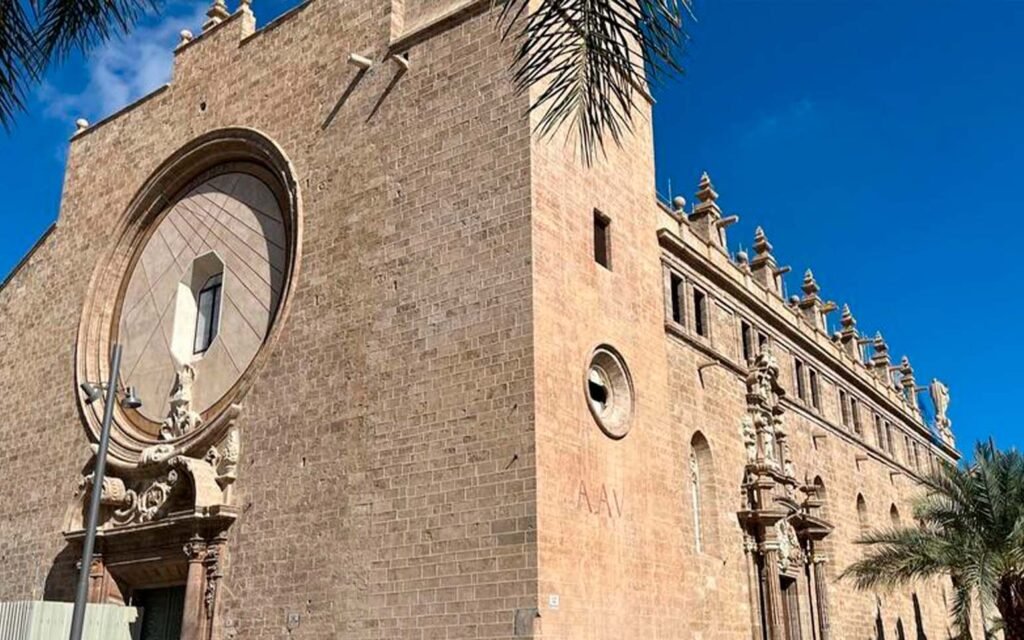
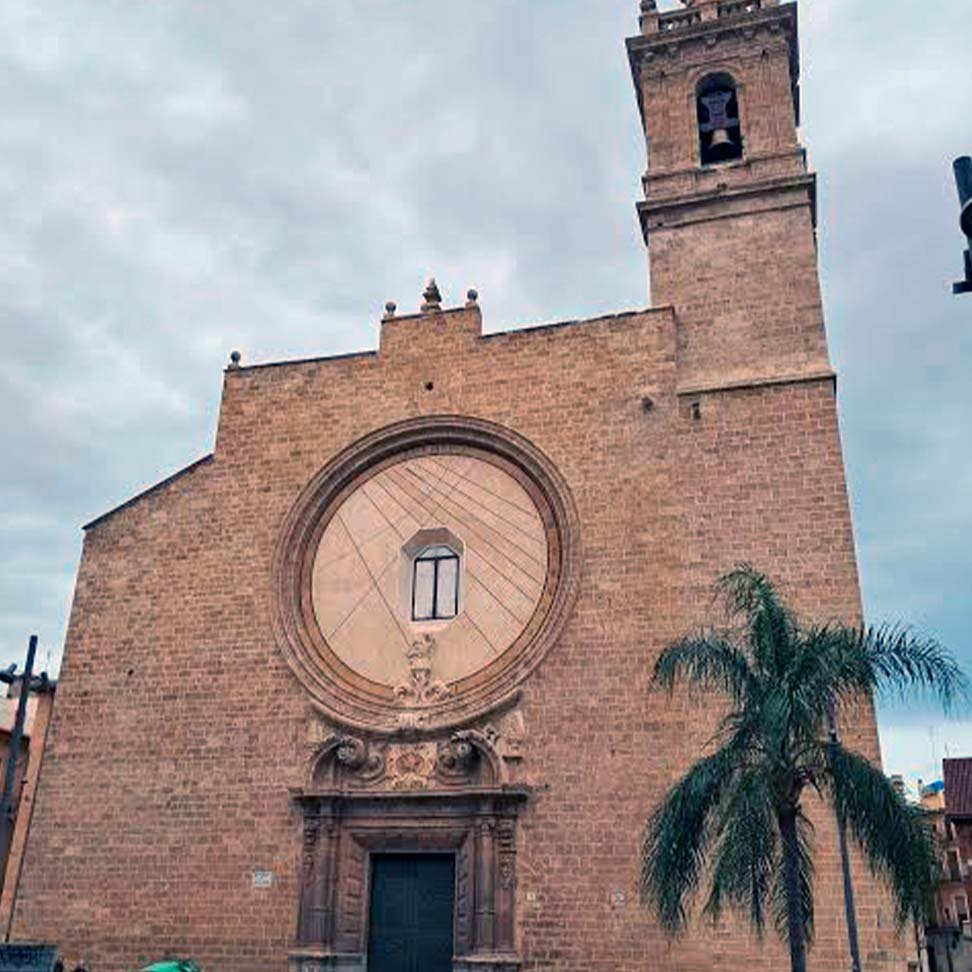
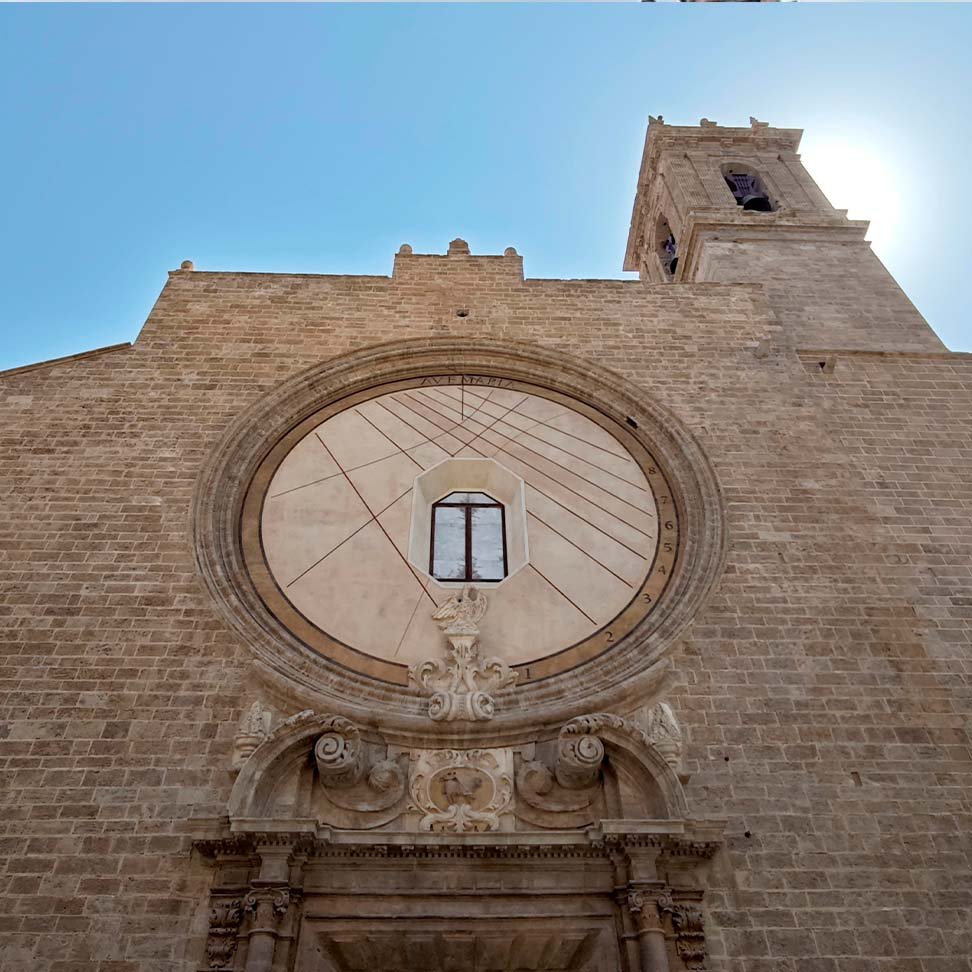
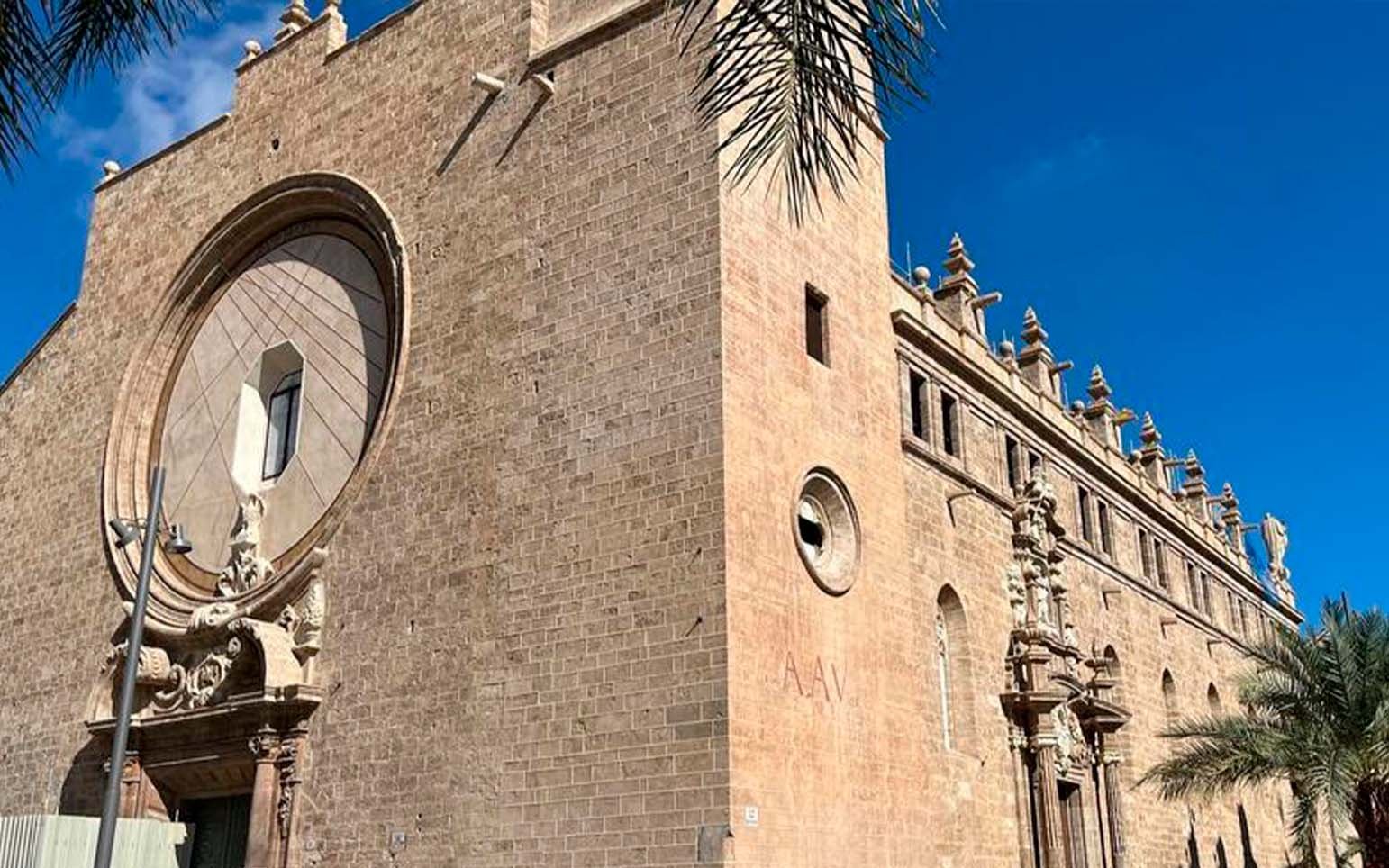
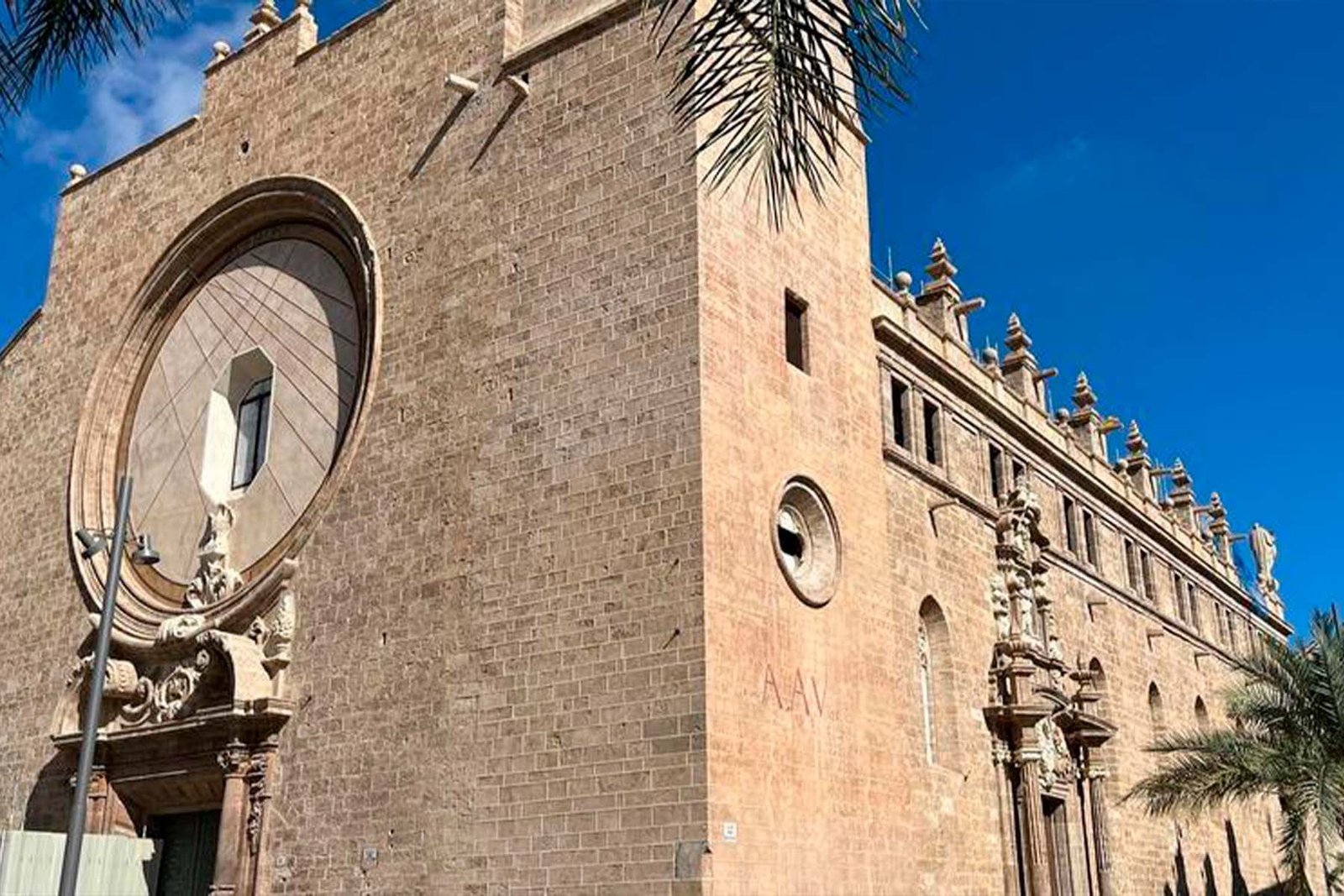
It is the O de Sant Joan, a large blocked-up circular opening belonging to the original Gothic structure, on the façade facing the avenue formerly known as Avenida del Oeste, now Baró de Càrcer.
It was conceived as a large rose window, but it was never fully opened, and subsequent alterations eventually changed its appearance. Today, it contains the eagle of Saint John and a sundial, restored during the most recent conservation works.
Its popular name is much easier to remember than any architectural explanation: the O de Sant Joan.
It’s one of those details that shows how Valencians have always known how to give the features of their city wonderfully simple names.
And it also reminds us that, behind the Baroque appearance of Santos Juanes, a much older church still survives.
When the church’s ceiling turned to ashes
One of the great treasures of Santos Juanes was above the heads of those entering the church.
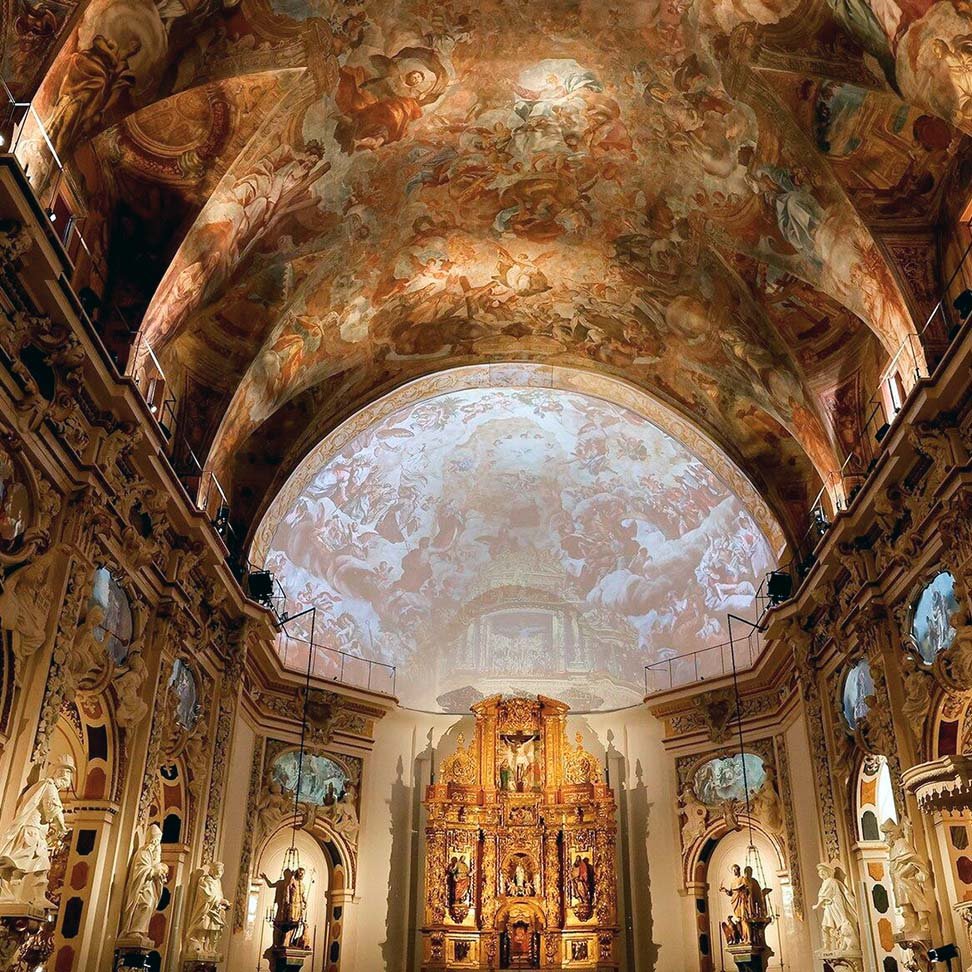
Between 1699 and 1702, the painter Antonio Palomino created an extraordinary series of murals that transformed the church vault into a magnificent Baroque spectacle.
Palomino was no ordinary artist. A court painter to the king, he was also an art theorist and, towards the end of his life, a priest. He left his mark on some of the most important painted interiors of his time.
But that work suffered a tragedy.
In July 1936, during the first days of the Spanish Civil War, the church was set on fire. The flames destroyed much of its artistic heritage, including altarpieces, sculptures and a significant part of Palomino’s paintings.
The heat, smoke and water used to fight the flames severely damaged what had survived.
For decades, that ceiling remained a visible reminder of a loss that seemed impossible to repair.
And this is where one of the most surprising stories of Santos Juanes begins: the recovery of its paintings has also been an extraordinary scientific undertaking.
Bacteria to restore a work of art
When we think about the restoration of a Baroque church, we imagine brushes, scaffolding, specialists working with great care and many hours of patience.
And all of that has been part of the restoration of Santos Juanes.
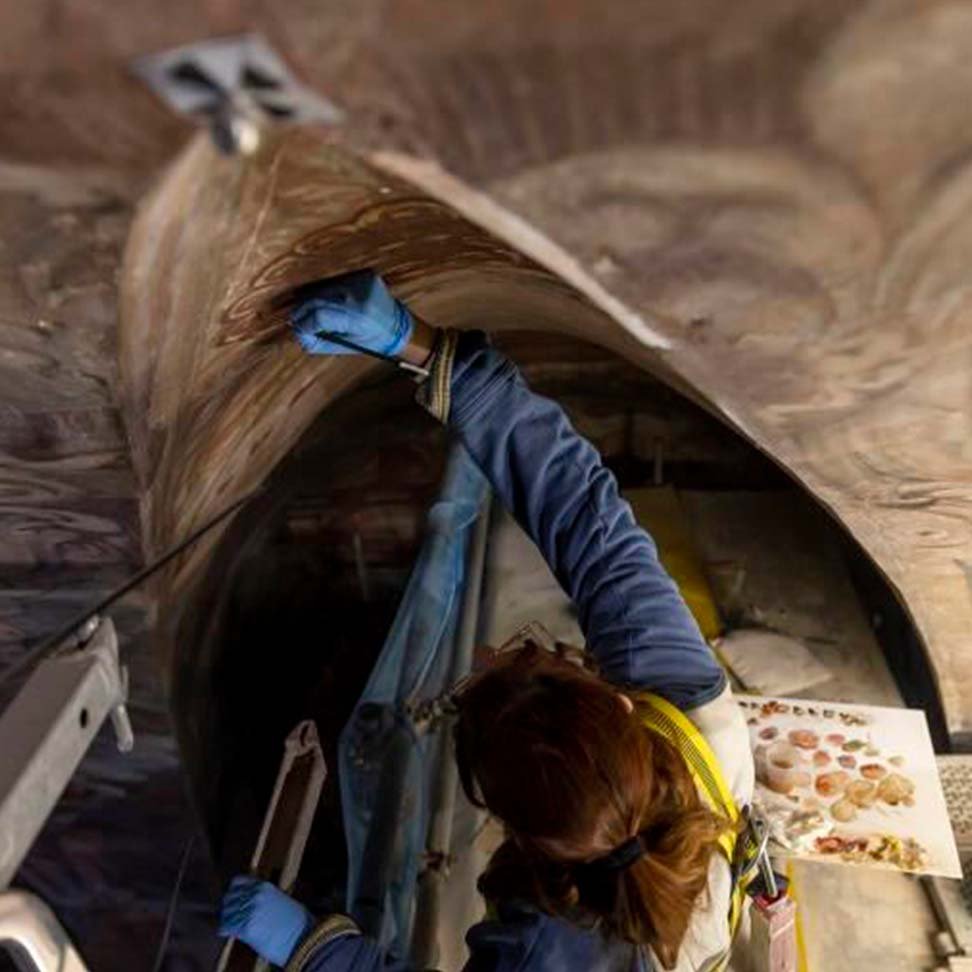
But bacteria have also been used to clean the paintings.
Yes, bacteria.
Biocleaning has made it possible to remove residues and deposits that affected the painted surfaces, alongside other techniques such as gels and lasers, as part of a complex scientific process carried out by conservation and restoration specialists.
The project, funded by the Fundación Hortensia Herrero with 8.2 million euros, involved the Heritage Restoration Institute of the Universitat Politècnica de València —with Professor Pilar Roig leading the restoration of the paintings— and the architectural team directed by Carlos Campos. It was completed in November 2025 after five years of work.
In addition, audiovisual projections based on old black-and-white photographs have been used to recreate the visual appearance of the apse painting, which disappeared in 1936.
The aim is not to pretend that the original paintings are still there, but to help us understand what that artistic ensemble once looked like without concealing what was lost.
This is not the first time this restoration has appeared on our website. Our friend Vicente López devoted an article to it entitled “La ciudad que se cuida en silencio”, which he wrote for the scene dedicated to Santos Juanes in our 2026 Falla, entitled The Fake Art. As he wrote, “restaurar no es embellecer sin criterio, sino estudiar, respetar y transmitir” — restoration is not about beautifying without judgement, but about studying, respecting and passing on our heritage. You can read it here: La ciudad que se cuida en silencio.
And a detail for readers of this series: the restoration has reopened the staircase connecting the church terraces with Calle Vieja de la Paja, the subject of our sixth chapter.
It is fascinating to think that a church built centuries ago has needed the most advanced technology to recover part of its past.
Who would have told Palomino that, three hundred years later, bacteria and digital projections would end up helping to restore his work?
Five curiosities that will make you see Santos Juanes differently
After this journey, here are five details worth remembering:
1. It has two Saint Johns, not one. Its patron saints are Saint John the Baptist and Saint John the Evangelist, both represented on the Market façade.
2. Its famous bird is actually an eagle. And it isn’t there simply for decoration: it has religious significance and a long history in popular tradition.
3. There used to be small shops beneath the church. For many years, les covetes de Sant Joan housed businesses linked to the activity of the Market.
4. It preserves a medieval O. The so-called O de Sant Joan is one of the surviving traces of its former Gothic architecture.
5. Science has helped restore its paintings. The restoration has combined historical research, biocleaning and audiovisual technology to bring back some of the church’s former splendour.
Five details that, on their own, are enough reason to stop for a few minutes the next time we pass by.
A neighbour that has watched Valencia go by for centuries
There is something that makes Santos Juanes particularly interesting: its relationship with the life that has always unfolded around it.
We are not talking about a church hidden away in a quiet corner of the city. It stands beside one of Valencia’s great commercial centres, opposite the Silk Exchange and next to the Central Market.
Generations of merchants, stallholders, shoppers, residents and visitors have passed in front of its façades. It has seen buildings, businesses, customs and even the way people buy and sell change over time.
It has also watched our neighbourhood transform and seen how the Fallas became an inseparable part of life in these streets.
For our Falla committee, Santos Juanes forms part of that familiar landscape that accompanies us almost without our noticing. It is one of the great witnesses to the history of our surroundings.
And after discovering some of its stories, perhaps we will never look at it in quite the same way again.
Because now we know that above us there is a bird with a story to tell, below there were once small shops, within its walls a medieval church remains hidden, and beneath its vaults survives the result of centuries of art, destruction and recovery.
So next time you pass Santos Juanes, do one thing: look up and find the bird. Then look down towards les covetes. And, if you have the chance, step inside to admire the interior.
But if you’re accompanied by a child, make sure you explain the story of the bird properly. After everything we’ve told you, we wouldn’t want them to get worried when they see you looking up.
Who would have thought that such a familiar church still had so many stories waiting to be discovered?
Sources consulted
To document this chapter, we have mainly used information from Valencia City Council, the Real Parroquia de los Santos Juanes, the Archdiocese of Valencia, the Universitat Politècnica de València, the Fundación Hortensia Herrero, Vicente Blasco Ibáñez’s novel Arroz y tartana, and research by local history writer César Guardeño into the pardal de Sant Joan.
To be continued…