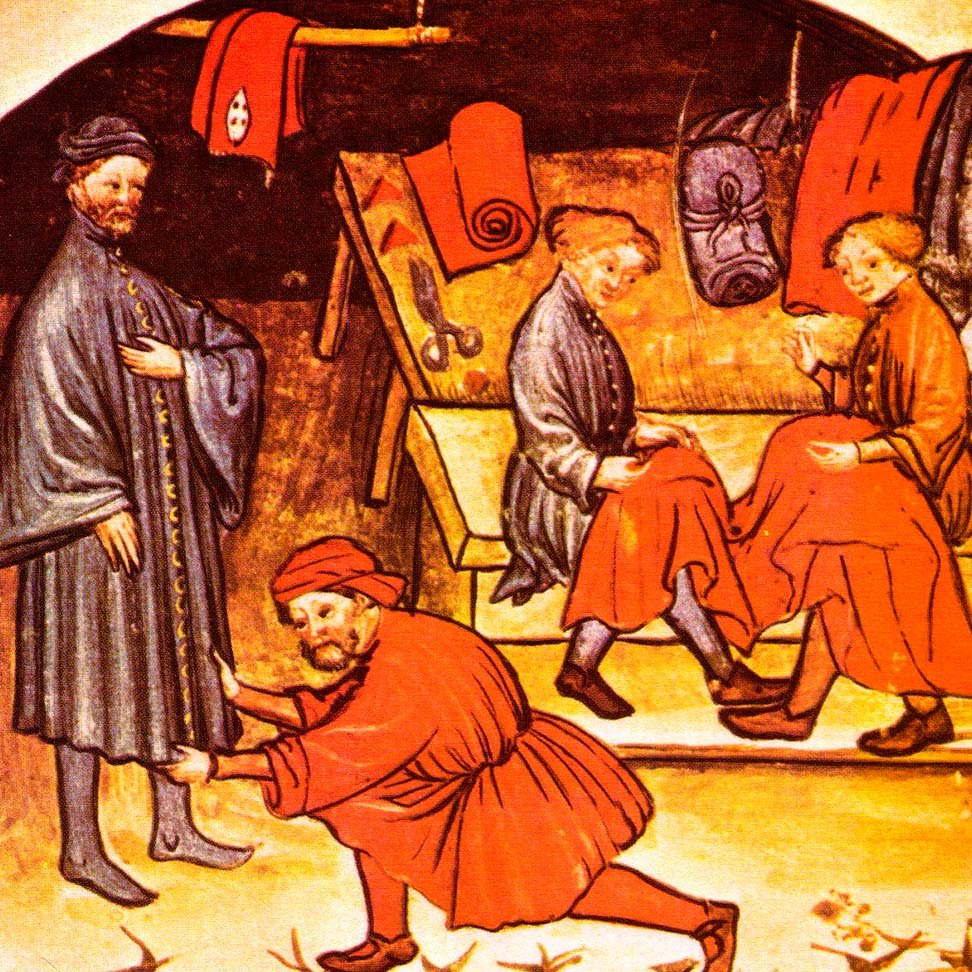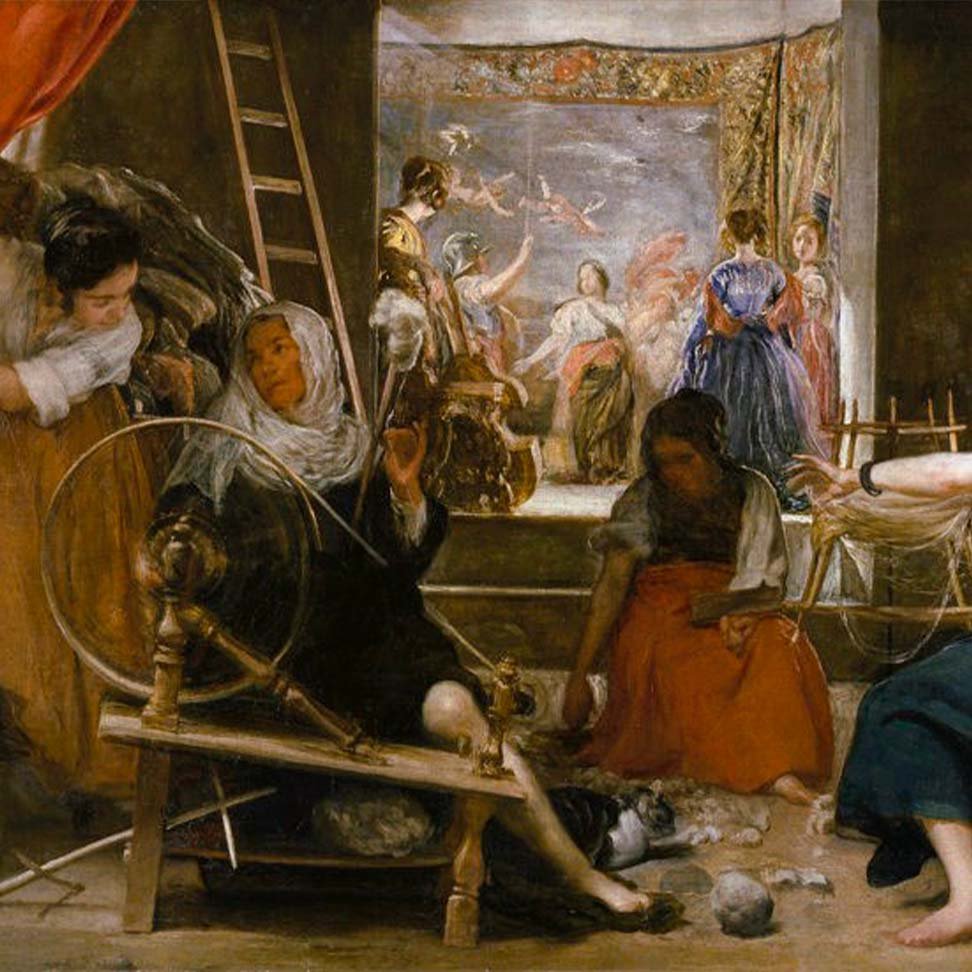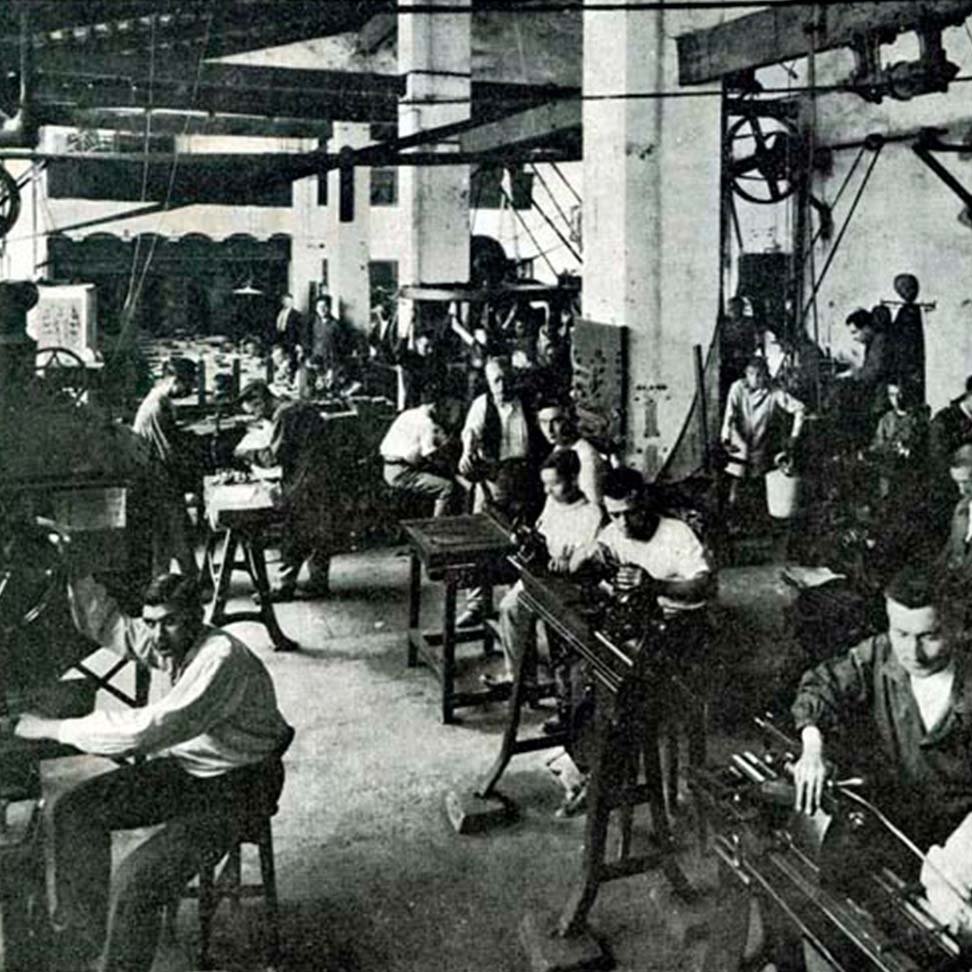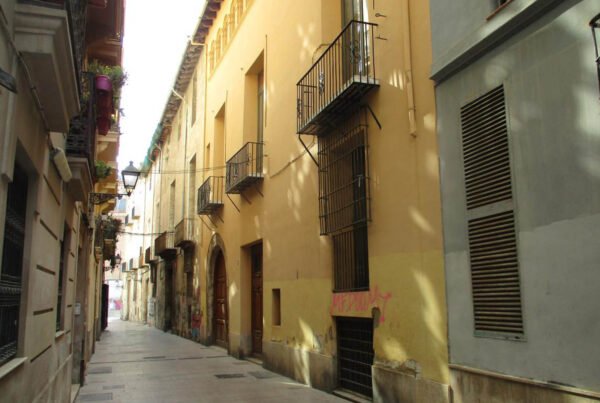


The neighbourhood takes its name from the main occupation of its residents: silk weaving (velluter) and the large concentration of looms once found in the area. Of medieval origin, it began as a group of houses located outside the city walls. With the construction of the new city wall in the 14th century, the area became part of the walled city. From the 15th century onwards, as silk artisans settled there, it became known as the Velluters neighbourhood.
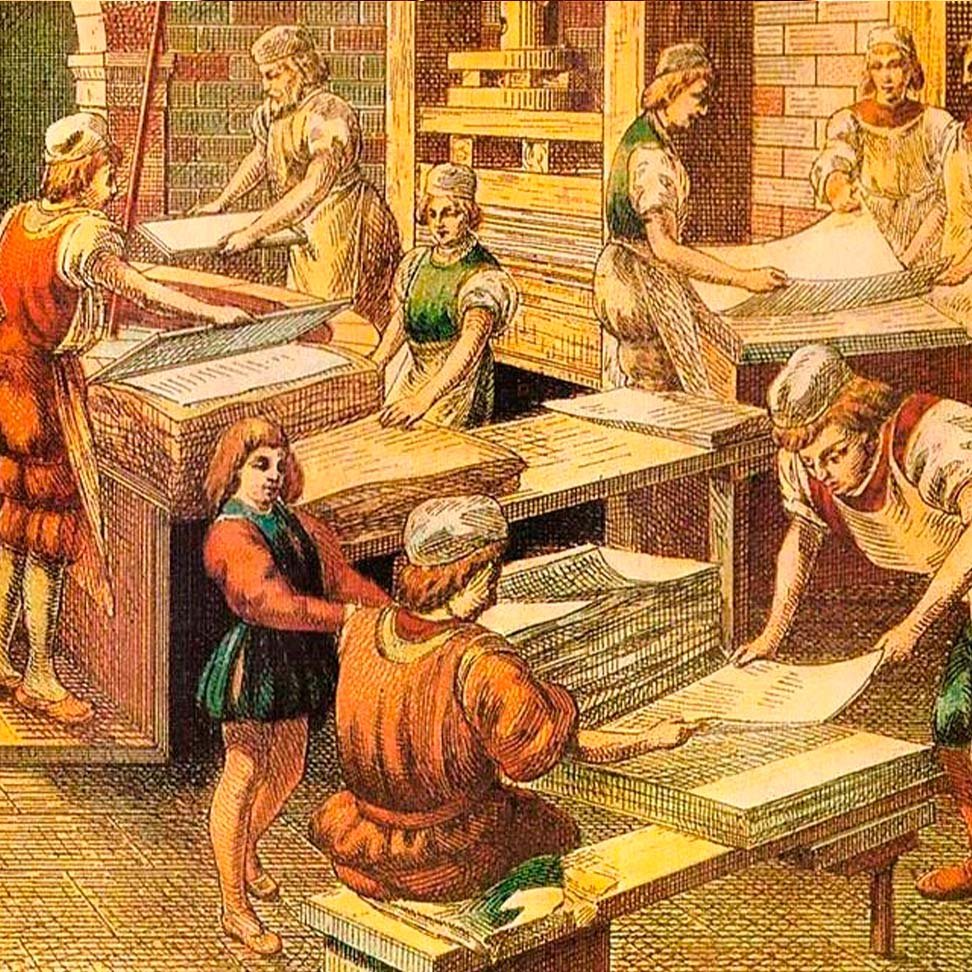
By the end of the 15th century, the velluters had organised themselves into a guild to establish common standards for silk production. Their first ordinances date from 1479 and were ratified by Ferdinand the Catholic. The silk workers played an important role in Valencia’s social and economic life. They initially met at the Convent of Sant Agustí, under the patronage of Saint Jerome, before acquiring their current guild headquarters in 1492.
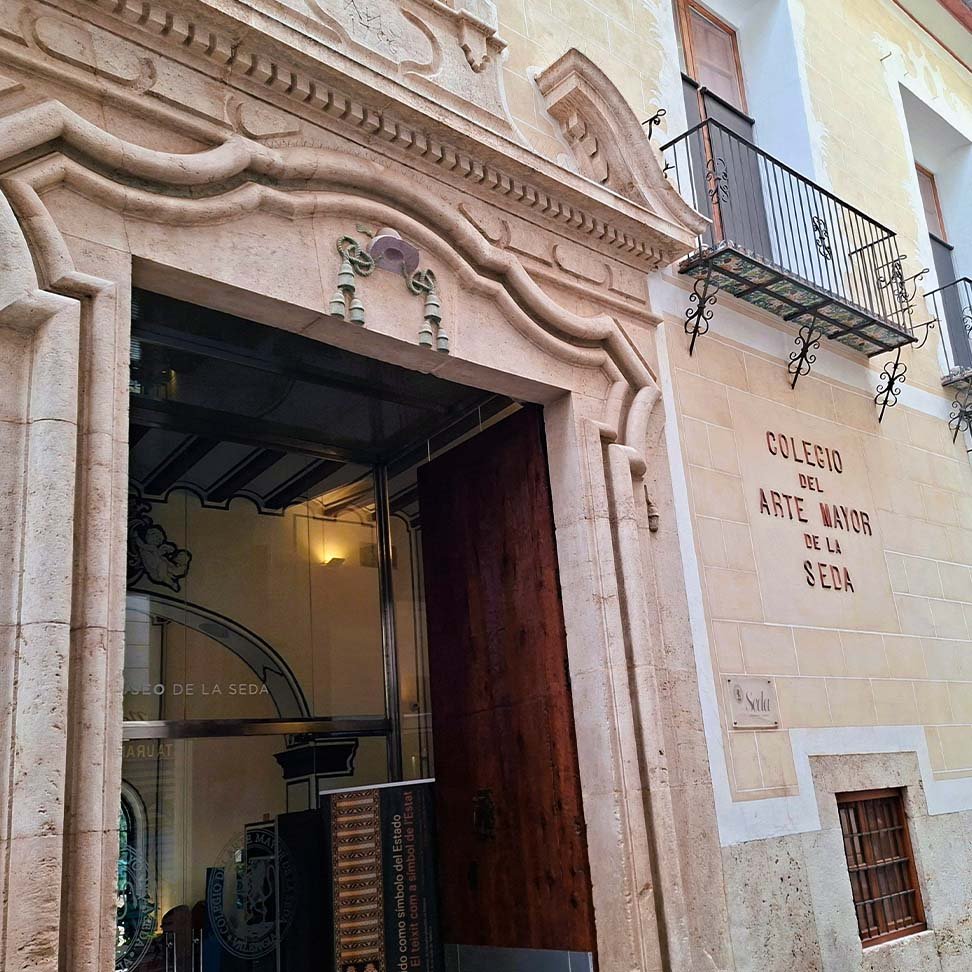
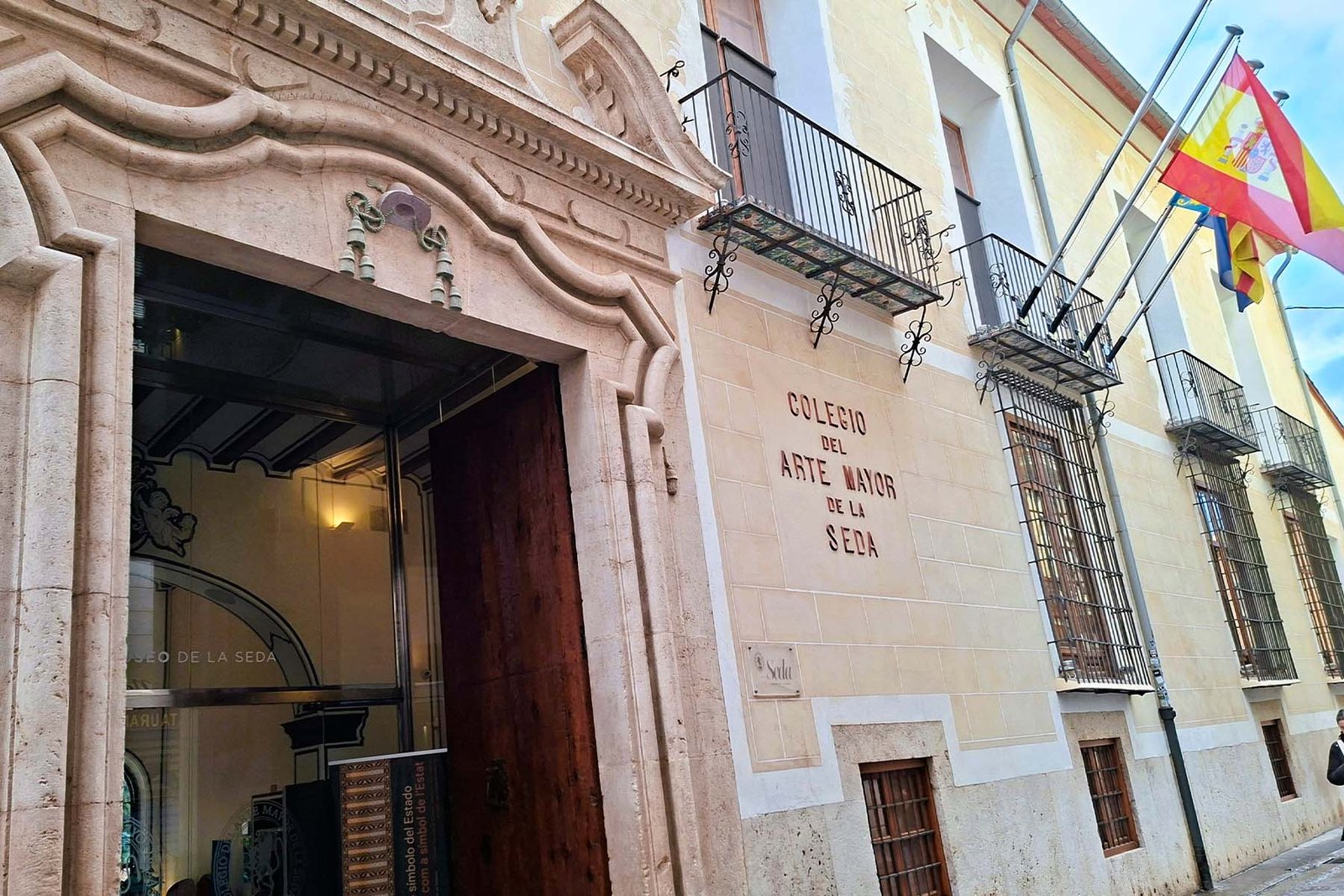
Such was the importance of the guild that, by royal decree of Charles II, in 1686 it was elevated to the highest guild status of College, becoming the College of the Greater Art of Silk (Colegio del Arte Mayor de la Seda). Remodelled in the 18th century, it was declared a historic-artistic monument in 1981. It has a permanent museum, a beautiful chapel and an assembly hall decorated with fine ceramics and paintings featuring the College’s traditional emblems: the lion, the cardinal’s hat, the shuttle, the irons and the tellerola. Its textile machinery museum brings together pieces from former factories and workshops, forming what could be considered Spain’s most important ethnographic textile museum. It also houses Europe’s oldest and most extensive guild archive.
During the 15th and 16th centuries, Valencia’s silk industry developed alongside the neighbourhood itself, which gradually adapted to the needs of silk production. Industrial activity took place in workshop houses such as the Palau Tamarit, although small workshops located in what was known as the “porxe del velluter” were more common. These occupied the upper floor beneath wooden beams and had windows topped by straight lintels or semicircular arches. These attic spaces were used to hold the reed trays on which silkworms were raised. Some of these features can still be seen in buildings today.
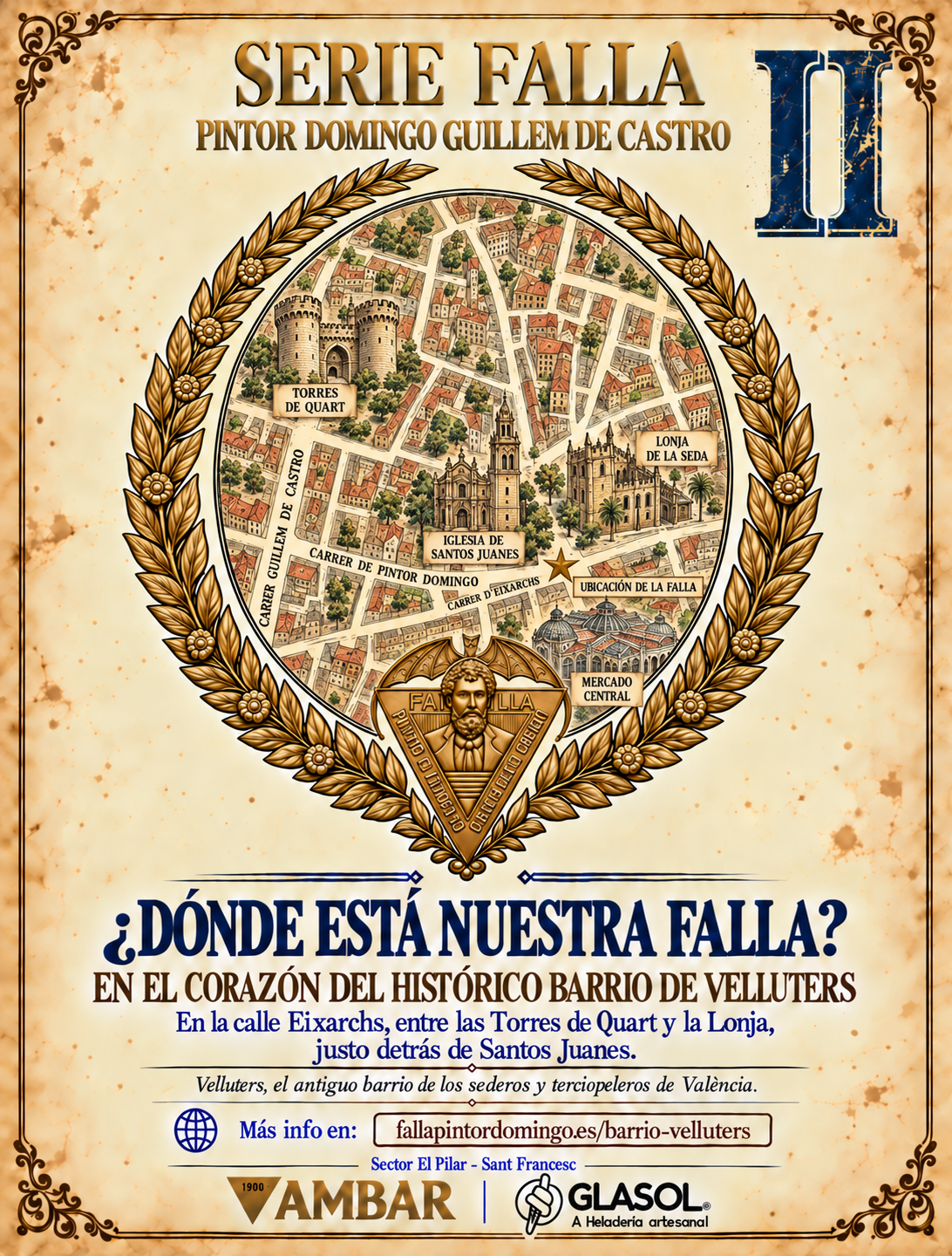
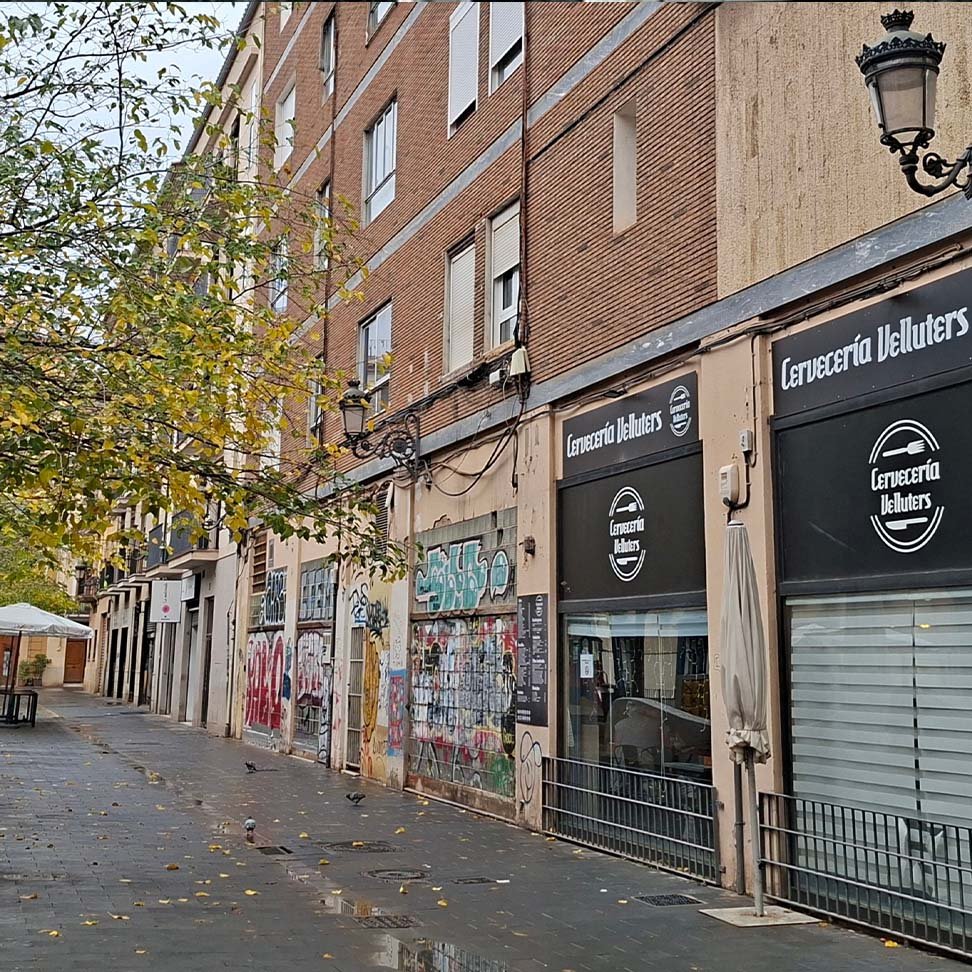
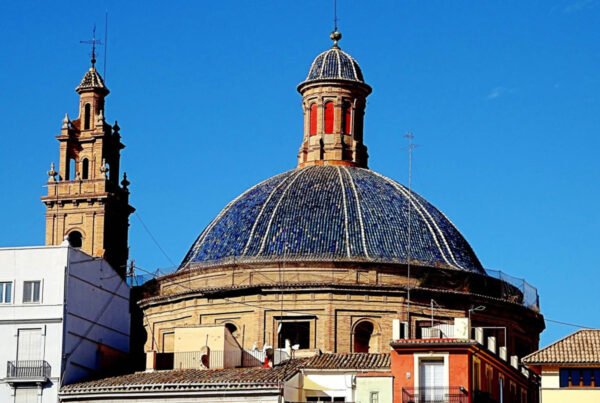
Today, El Pilar, traditionally known as Velluters or the silk-makers’ neighbourhood, is part of Valencia’s Ciutat Vella district, to the west of the historic city centre. It borders El Carme to the north, El Mercat to the east, Sant Francesc to the south and El Botànic, in the Extramurs district, to the west. It covers the area between Guillem de Castro, Quart, Hospital and Baró de Càrcer streets, continuing along Bolseria until it meets Quart again.
Walking through the Velluters neighbourhood
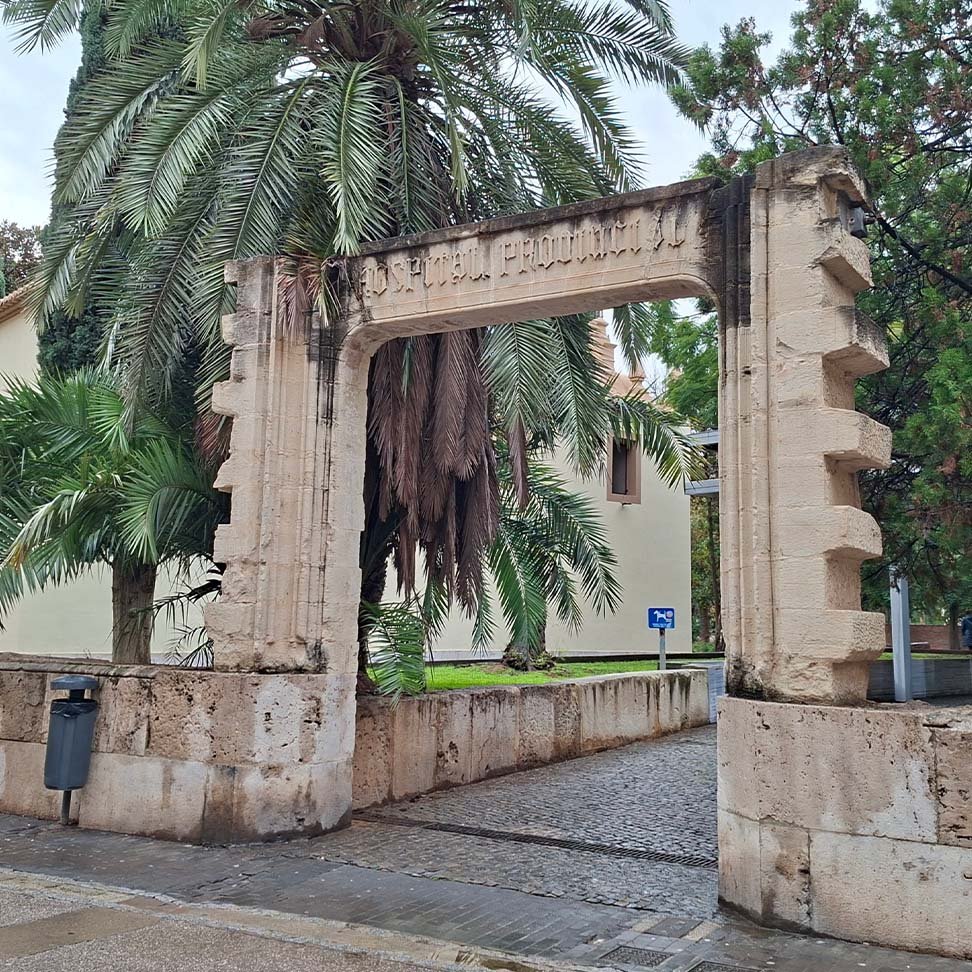
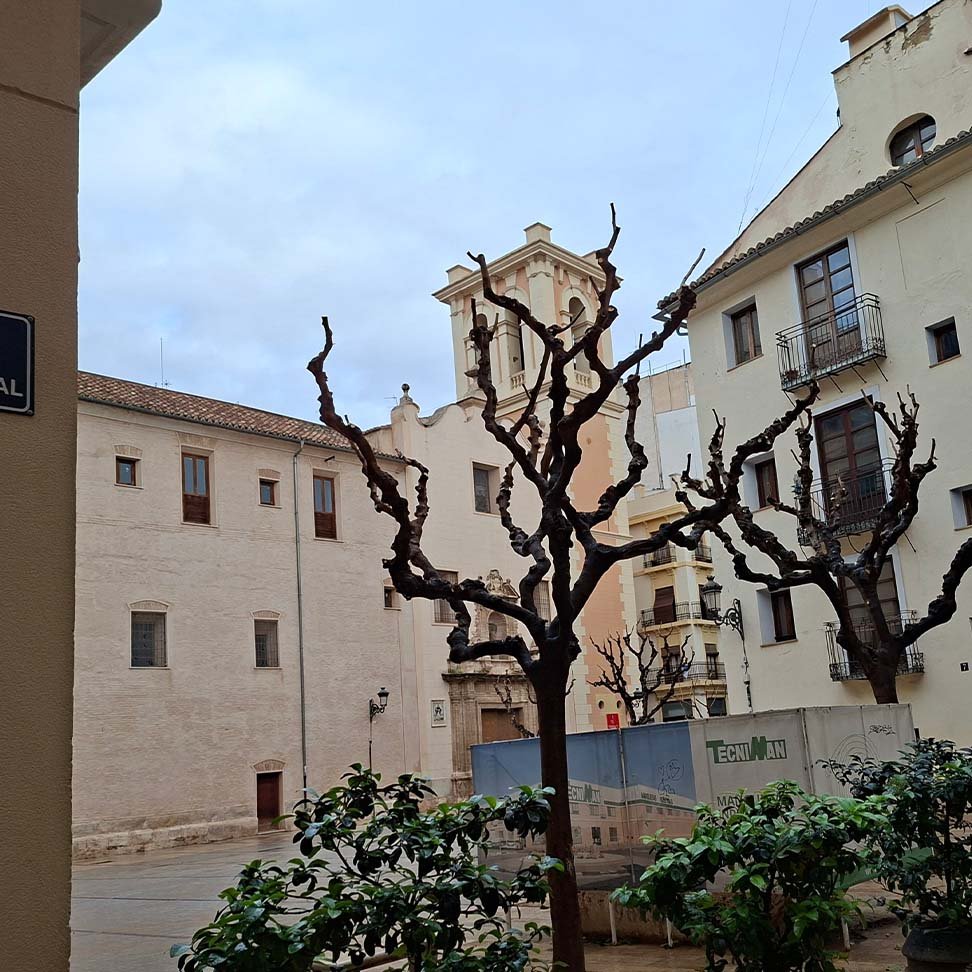
Walking through Velluters, visitors can still discover a number of emblematic buildings, including the Colegio del Arte Mayor de la Seda, at 7 Hospital Street since 1494; and the former Hospital, today the Municipal Library. The hospital, where people with psychiatric conditions were cared for, originally began as a house on land planted with mulberry trees. Other notable buildings include the headquarters of the master carpenters’ guild, whose members were responsible for workshops and silk-working premises largely constructed from wood; the Palau dels Tamarit, on Roger de Flor Street; and the house of the Marquises of Llanera.
The renowned actor Ismael Merlo Piquer was born at 17 Torn de l’Hospital Street. Velluters is also home to the celebration known as the Foguera del Motí dels Velluters, held on the last weekend of January in Plaça del Pilar. It commemorates the uprising by silk workers as well as the women spinners’ strike.
The legacy of Valencia’s guilds in today’s city
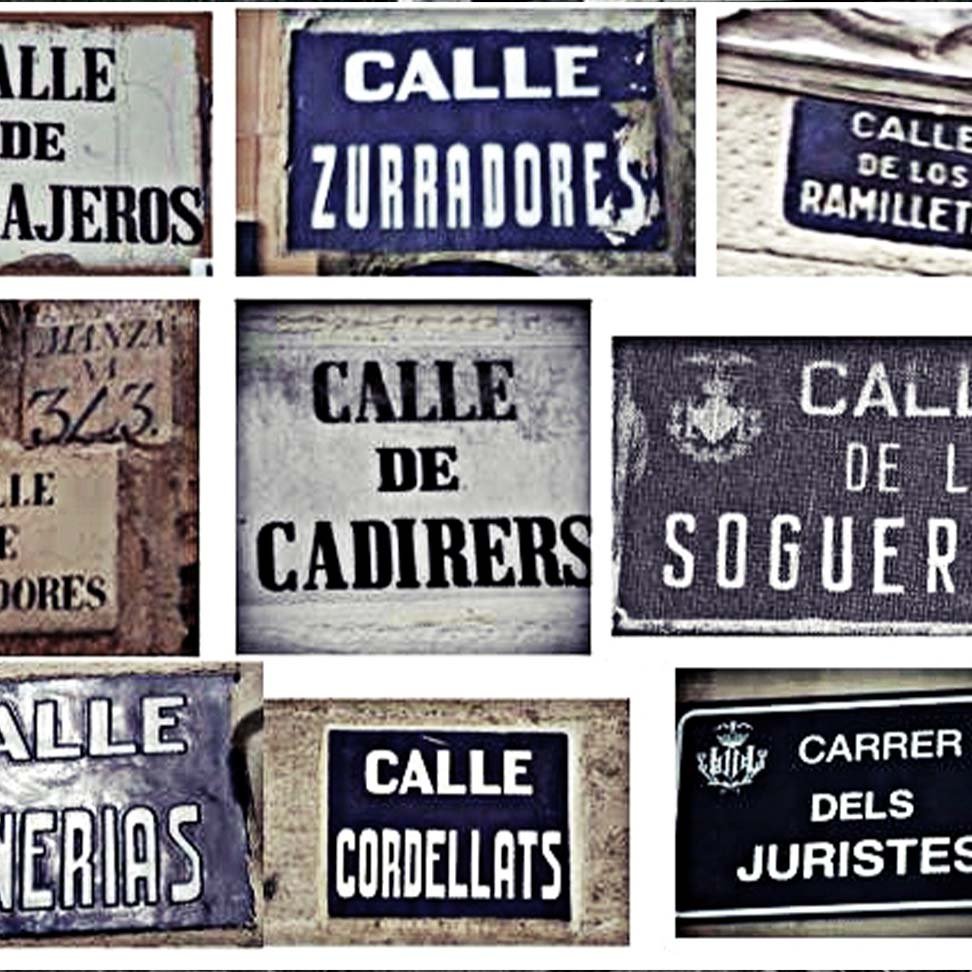
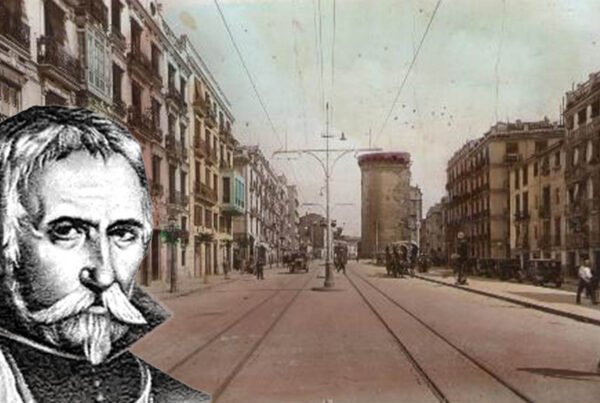
Valencia is the Spanish city with the largest number of streets named after trades, guilds and professions. During the Middle Ages, the city’s industry flourished. It was a period of prosperity in which workers’ guilds played a fundamental role. Indeed, the 15th century is often described as Valencia’s “Golden Age”, when the city emerged as one of the Mediterranean’s leading commercial centres.
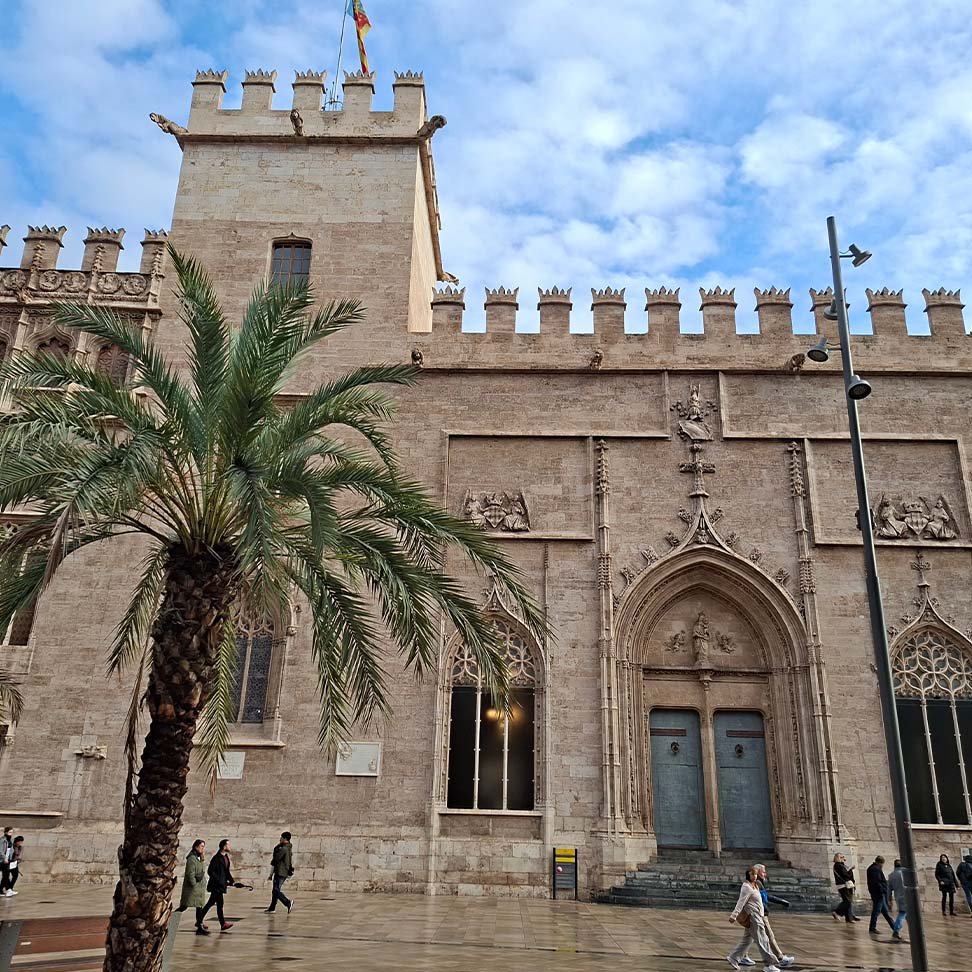
The importance of this commercial activity led to the construction of major public buildings designed to accommodate trading operations and the institutions of mercantile government. La Lonja de Valencia (1482–1498) was built to facilitate these activities, providing a meeting place where merchants and traders could conduct transactions, particularly in silk. As a tribute to this heritage, many streets in Valencia’s historic centre, particularly in Ciutat Vella, were named after these traditional trades.
Some examples include:
- Carrer dels Adreçadors: near Avinguda de l’Oest, formerly Baró de Càrcer. The adreçadors worked, prepared and finished velvet. Their work was extremely important in many weaving workshops, and several looms in Velluters employed these craftsmen.
- Carrer dels Aladrers: running from Carrer d’En Plom to Carrer de Quart. In the 15th century, craftsmen who made ploughs lived here. Interestingly, they originally belonged to the carpenters’ guild but separated from it around 1643.
- Carrer dels Aluders: from Plaça dels Porxets to Carrer de la Linterna. Leather tanners lived here. It was also known as the “street of the stench” because of the smell produced by the hides of deer, goats and sheep used to make gloves and parchment.
- Carrer de Blanqueries: home to craftsmen who tanned and prepared hides using water from the Rovella irrigation channel. When Valencia was still walled, these workers were based beside the section of the old Christian wall known as the Blanqueria wall, from which the street takes its name.
- Carrer de Bolseria: connecting El Tossal with El Mercat. It became a centre for passementerie workshops and shops, glovemakers and cord-makers, trades that also produced leather bags.
- Carrer de Cistellers (Carrer del Músic Peydró): shops selling handcrafted wicker products can still be found here, including chairs, armchairs, decorative objects, baskets and bags, often displayed outside the shops.
- Carrer de Carnissers: the butchers’ street, between Carrer del Peu de la Creu and Lope de Rueda.
- Carrer dels Serrallers: near Sant Vicent Màrtir and Trench streets. The serrallers made and repaired locks for doors, cupboards and chests.
- Plaça del Correu Vell: before cars existed, travelling was largely done on horseback. During the reign of Jaume I, mail was delivered by mounted couriers known as troters.
- Carrer de Tapineria: named after the tapiners, craftsmen who made handmade footwear.
- Carrer de Ballesters: home to workshops that made crossbows and other objects.
- Carrer Bany dels Pavesos: associated with the public baths and located near Corretgeria and Juristes streets. The pavesos were craftsmen who produced elements used with knights’ armour.
- Carrer de Brodadors: near Corretgeria and Carrer del Micalet, where riding saddles were embroidered. The saddles themselves were made in Carrer de Selleria, a section of Corretgeria.
- Carrer dels Boters: the street of the coopers, where barrels were made.
- Carrer de la Carda: from Carrer de Botelles to Carrer del Moro Zeit. Its name refers to the wire-toothed tool used to comb, straighten and fluff wool, also employed by other textile guilds.
- Carrer de Cabillers: associated with hairdressers and craftsmen who prepared wigs and hairpieces.
- Carrer dels Cadirers: connecting with Carrer de la Puríssima or Plaça del Forn de Sant Nicolau. Its name refers to the chairmakers’ guild.
- Carrer dels Caixers: home to craftsmen who made wooden boxes, chests, cupboards and trunks for storing belongings and clothing.
- Carrer dels Calderers: associated with coppersmiths and metalworking workshops between Plaça del Tossal and Plaça de l’Espart. This trade was actually moved outside the city walls because residents complained about the noise.
- Carrer dels Carteros: named in honour of postmen and mounted couriers.
- Carrer de la Corretgeria: home to leather-strap makers, who produced straps, harnesses and fittings for horses. It runs from Plaça de la Reina to La Puríssima.
- Plaça de l’Espart: recalls the craftsmen who worked with esparto grass to make ropes, espadrilles, panniers, baskets and other household objects. It lies around Plaça del Mercat, between Cavallers and Calderers, and was formerly known as Plaça de l’Esparteria.
- Carrer de la Farina: opposite the Almudín, where the city’s grain was stored in old Valencia and where the millers’ brotherhood was prominent.
- Carrer dels Juristes: home to high-ranking lawyers, between Corretgeria and Cavallers, close to the court where justice was administered.
These are just some examples of the more than fifty streets dedicated to traditional trades. In the 15th century, Valencia reached one of the greatest periods of prosperity in its history thanks to its silk industry. The city became an important centre of commerce, particularly around Carrer dels Cavallers, and its streets were filled with trades and professions typical of the great Mediterranean cities of the period. What makes Valencia particularly distinctive is that many of these occupations live on in its street names, preserving the memory of the trades, activities and people of the former Kingdom of Valencia.
Manuel Serra Meliá, as part of the article “GUILDS, corporations that shaped the Middle Ages” for the Fallas 2026 llibret.
Would you like to read the article in the llibret?: Llibret 2026 – GREMIOS – Corporaciones que forjaron la Edad Media