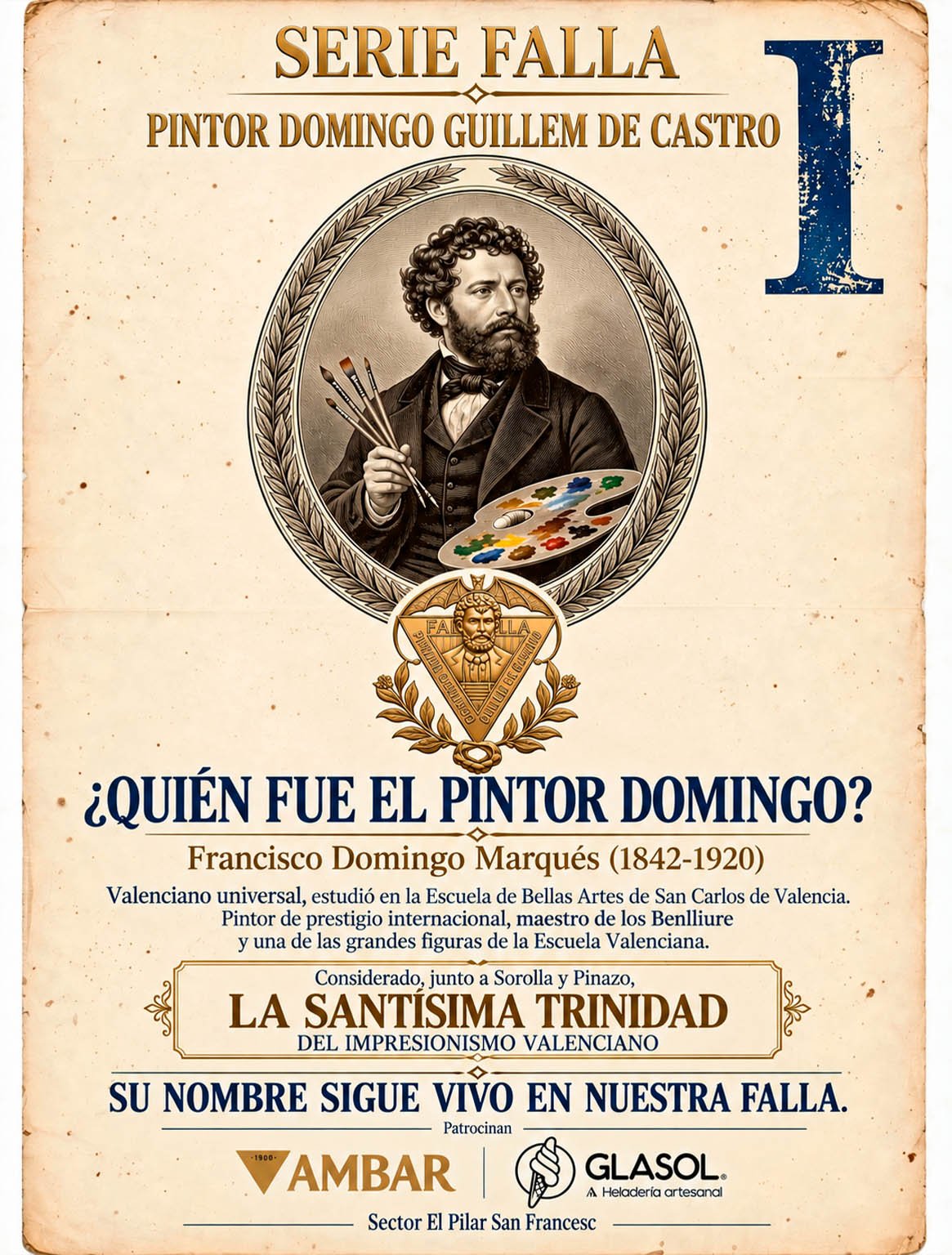

We belong to a century-old falla in Valencia’s El Pilar neighbourhood, with emblematic street names within our district such as Pintor Domingo and Guillem de Castro. While Guillem de Castro may be familiar to us as the notable playwright of the Spanish Golden Age, a contemporary of Lope de Vega whom he helped during his period of exile in our city, we know almost nothing about the importance of Pintor Domingo. Yet the street has always been familiar to me, as my grandfather lived all his life at number 8 and much of my childhood and youth was spent there. And that makes it all the more curious.
Unfairly forgotten by the general public, though certainly not by lovers of art and history, he is considered, alongside Sorolla and Pinazo, part of the “Holy Trinity” of Valencian Impressionism. Together with the Benlliure family, Peris Brell, Navarro Llorens, Benedito, Stolz, Dubón and Vila Prades, they formed a unique generation spanning the second half of the 19th century and the first half of the 20th century in our region.
Little is known about his early years, except that Francisco Domingo Marqués, the son of a Valencian merchant, was born in Calle Comedias. In 1862, he began his studies at the San Carlos Academy in Valencia, while working as an apprentice in the studio of Rafael Montesinos, a notable landscape painter of the time. The following academic year, he moved to Madrid to study at the Royal Academy of Fine Arts of San Fernando, then under the direction of Federico Madrazo.
On returning to Valencia, at just twenty-three years of age, he was appointed professor of life drawing, classical drawing and landscape at the San Carlos Academy. Among those attending his classes were the Benlliure brothers, beginning a relationship that would develop into a lifelong friendship. He settled in the Llano de Zaidía, where he founded a workshop and school known as “La Gallera”. His pupils included Emilio Sala and José Benlliure himself, among others. With its evening gatherings, La Gallera became the true cultural centre of the city and an essential meeting place for bohemians and artists from every branch of the fine arts in Valencia.
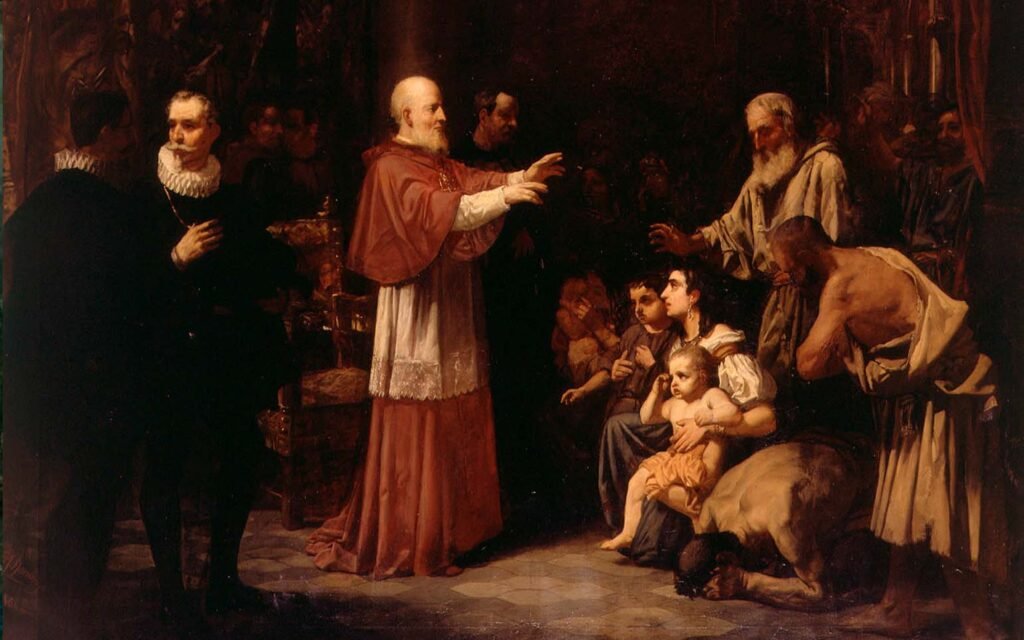
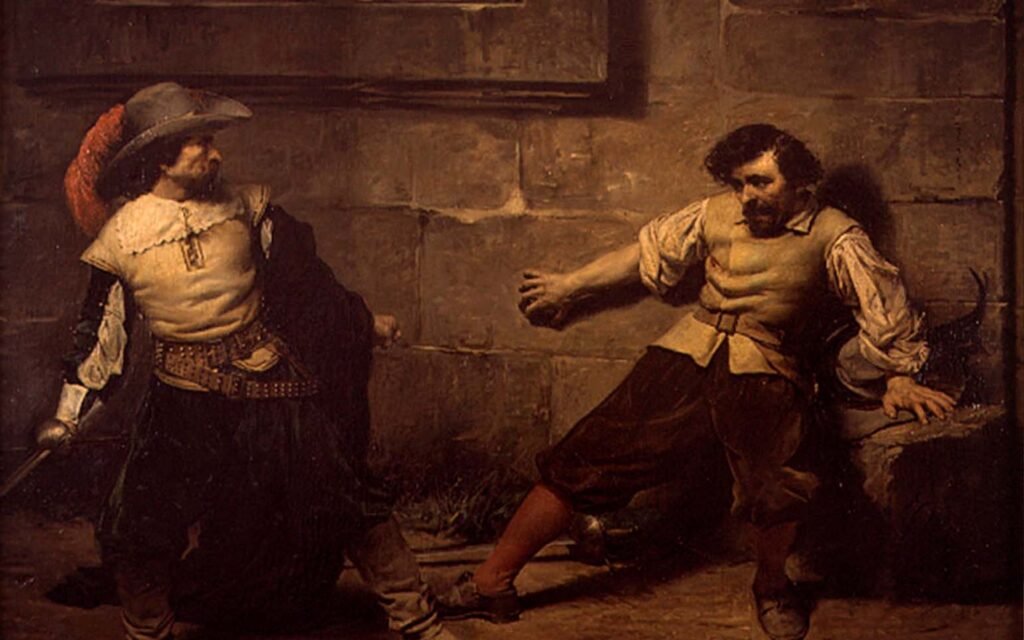
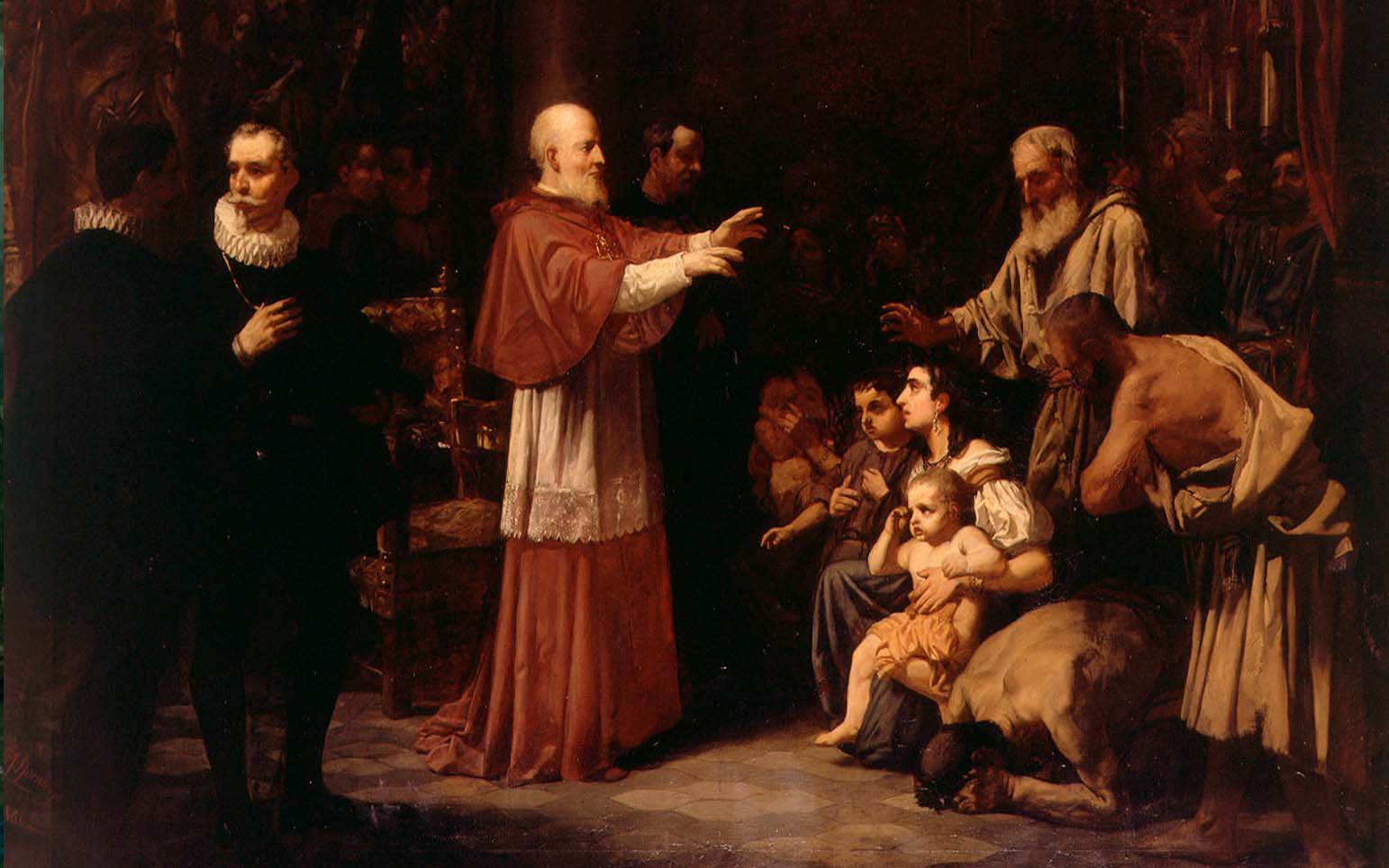
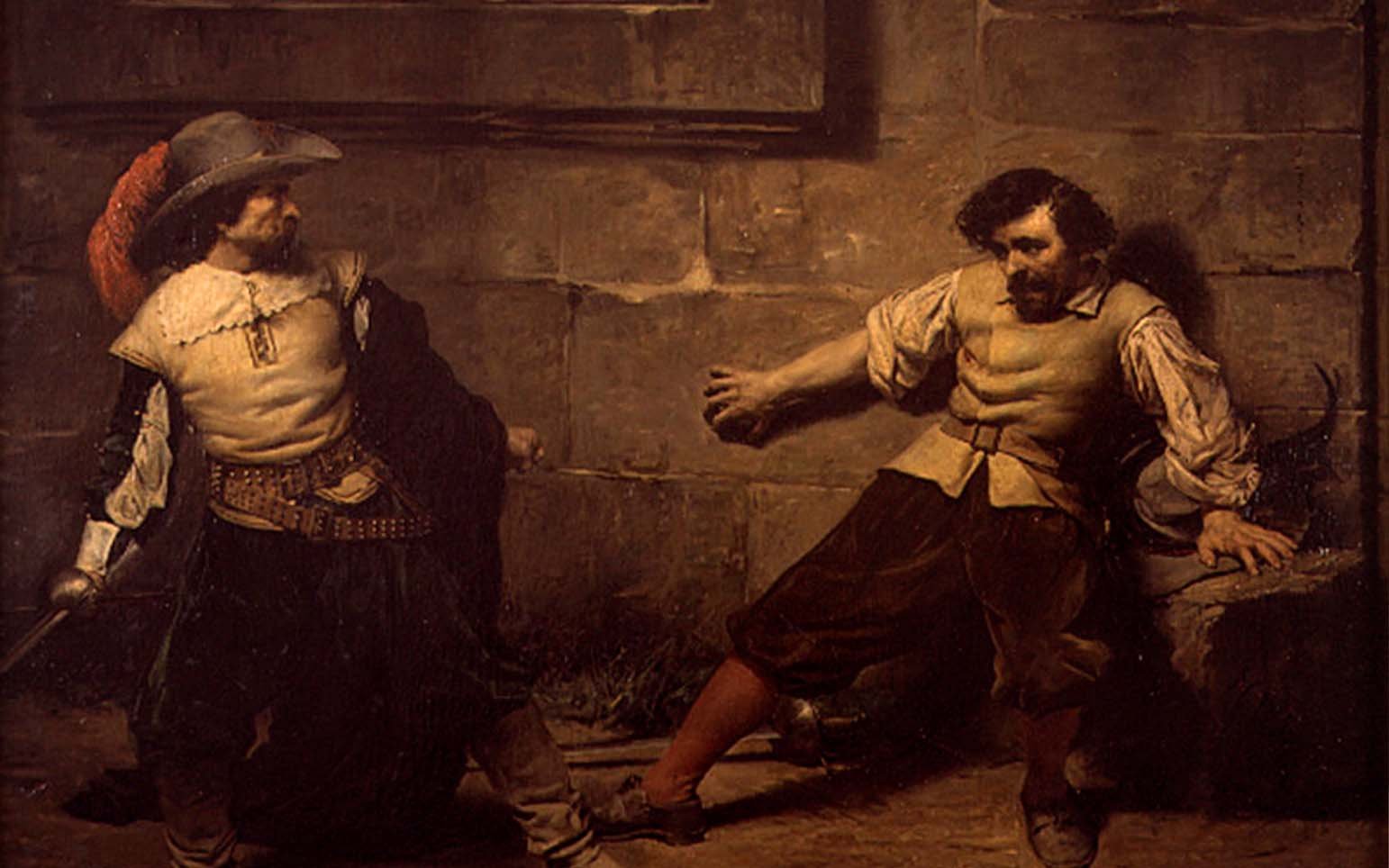
He soon began entering national and regional exhibitions, quickly earning prizes and recognition. With “Los moriscos valencianos pidiendo protección al beato Juan de Ribera”, also known in shortened form as “La expulsión de los Moriscos de Valencia”, he received an honourable mention at the 1864 National Exhibition of Fine Arts, followed by a third-class medal in 1866 for “Un lance en el siglo XVII”. He presented the same painting the following year at the Valencian Regional Exhibition, where it won the gold medal, accompanied by a grant from the Provincial Council to continue his studies in Rome.
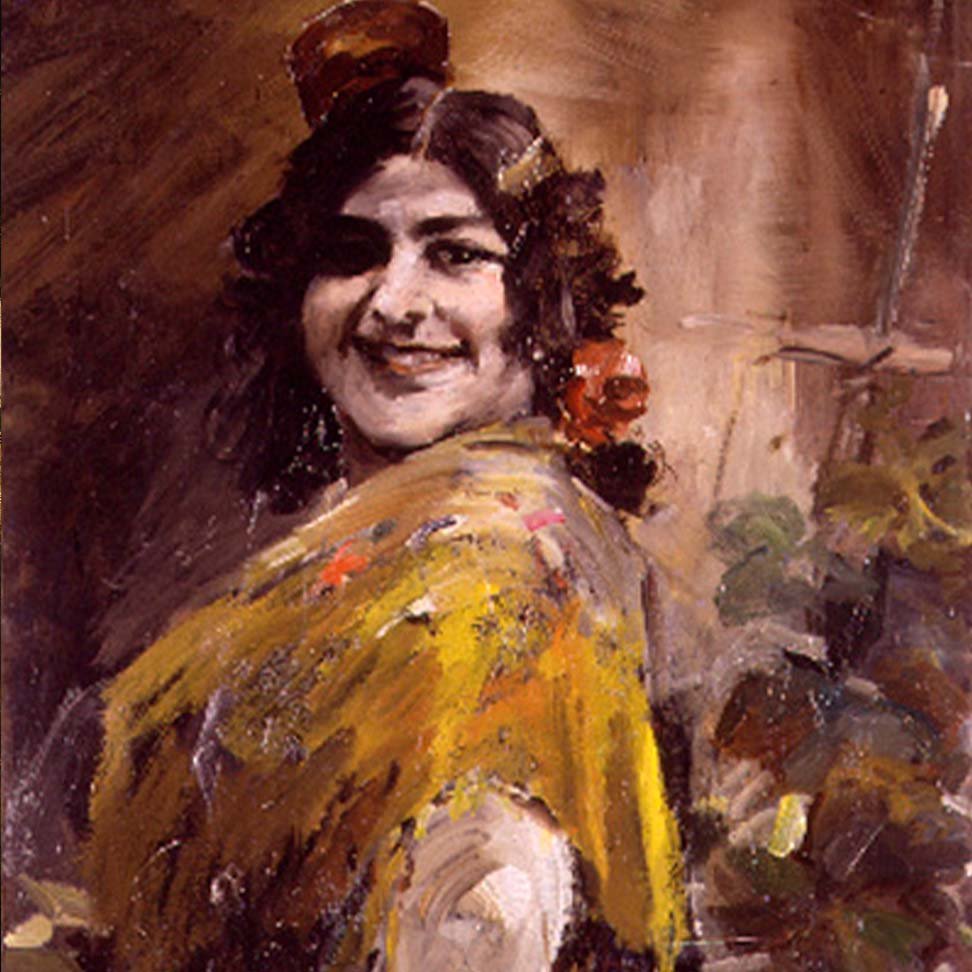
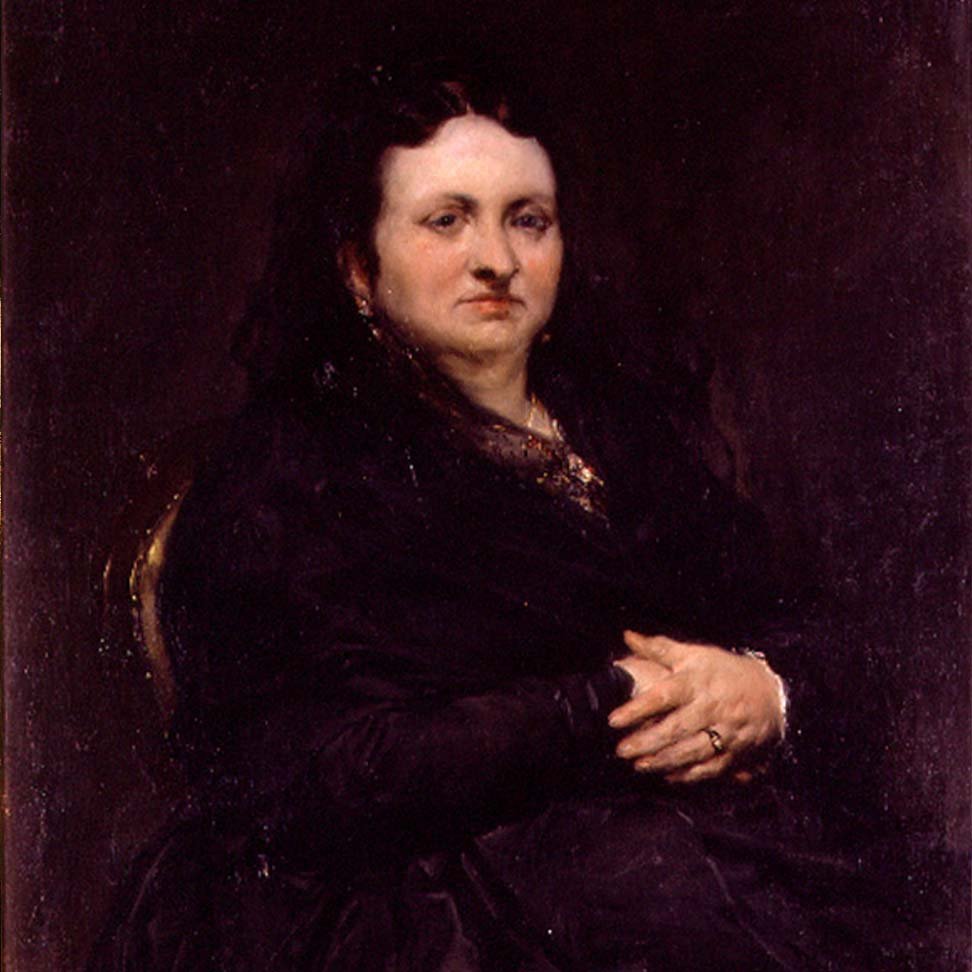
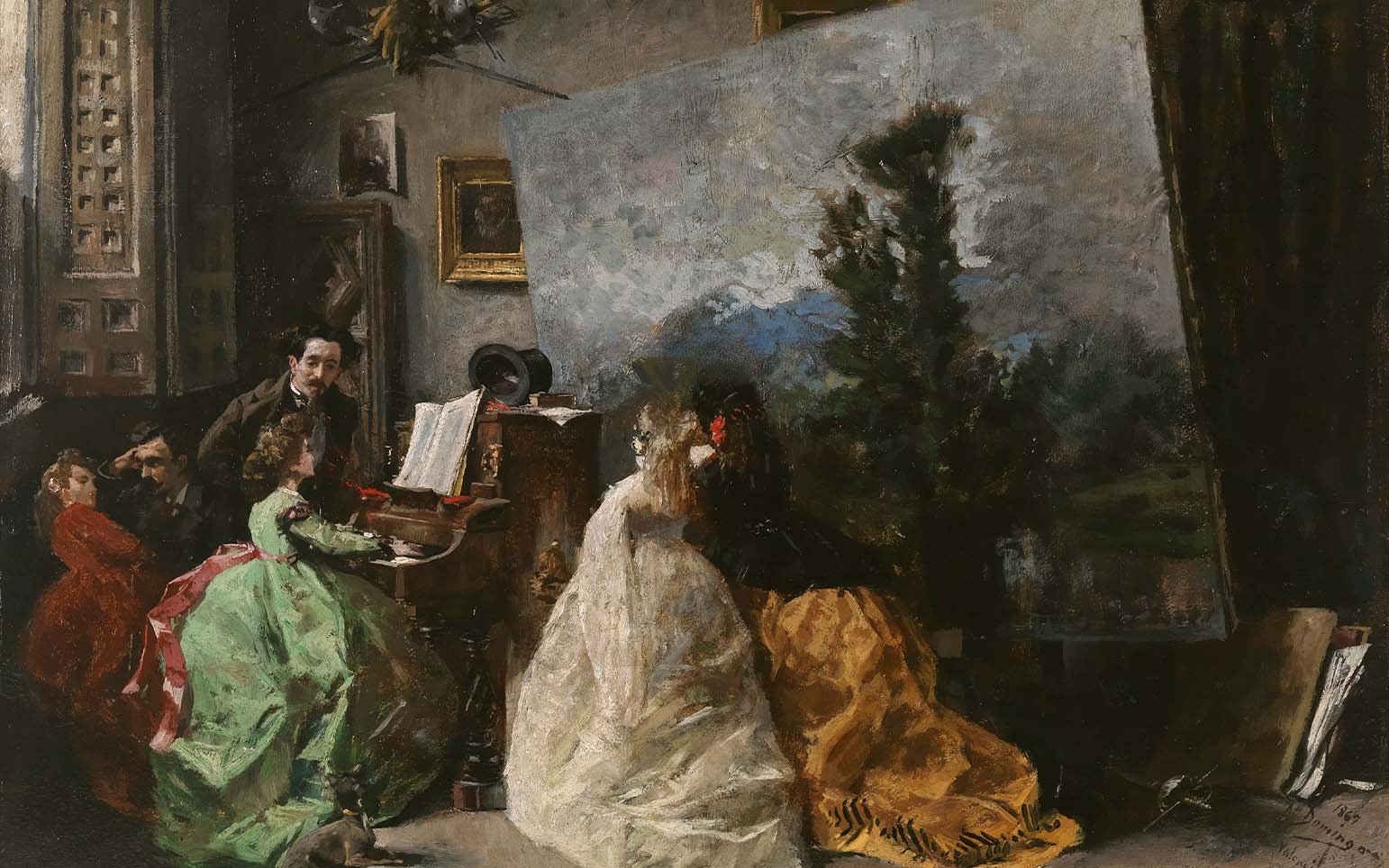
During this period, he began his friendship with Muñoz Degraín, whom he greatly admired and frequently visited in his studio. He immortalised him in his famous painting “Interior del estudio de Muñoz Degraín”, which also includes a self-portrait. He also began producing portraits, eventually painting more than two hundred during his career. Most portrayed anonymous sitters, although he was also sought after by prominent figures of the time. At La Gallera, he completed the “Retrato de Manuel Ruiz Zorrilla”, Minister of Public Works during the First Republic, and some time earlier had even painted General Prim, before he was mortally wounded in the attack in Calle del Turco.
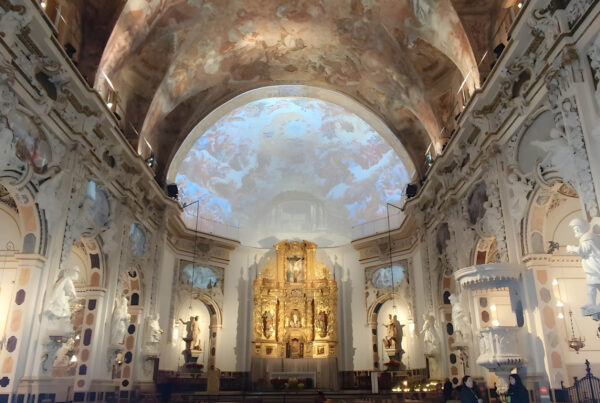
A restless and eclectic artist, before leaving for Rome he still found time to produce the frescoes for the Convent of San Julián in Calle Sagunto, together with his friend, the painter Peyró.
In 1868, he arrived in the Eternal City under the direction of Eduardo Rosales, whose influence on his painting brought him closer to the great masters Velázquez and Goya. His stay coincided with that of Mariano Fortuny, whose artistic circles he frequented. Fortuny’s Romantic and Orientalist painting made a profound impression on him, and Domingo admired him until his premature death.
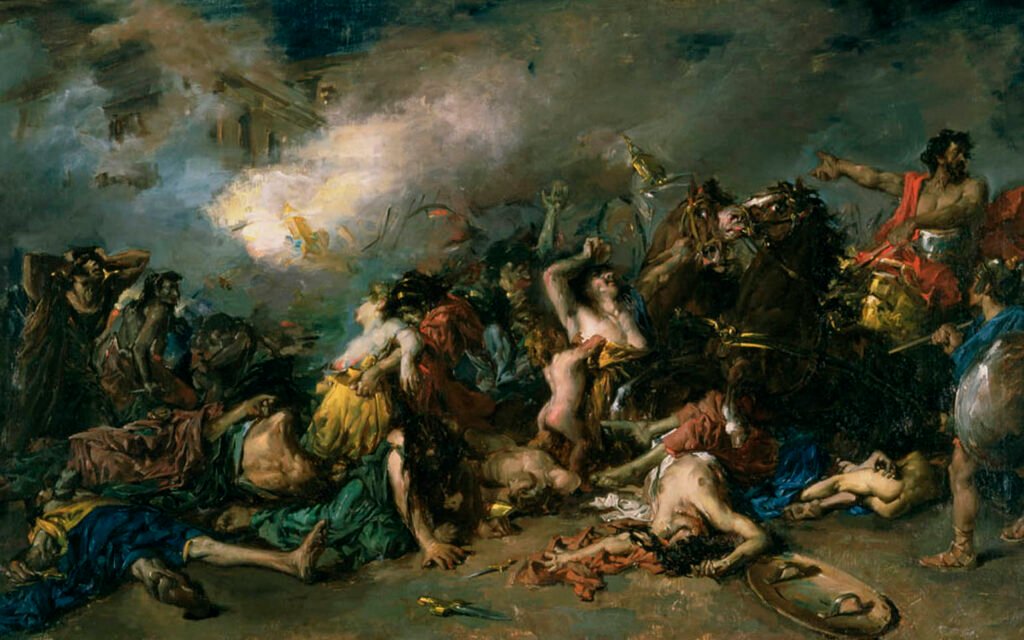
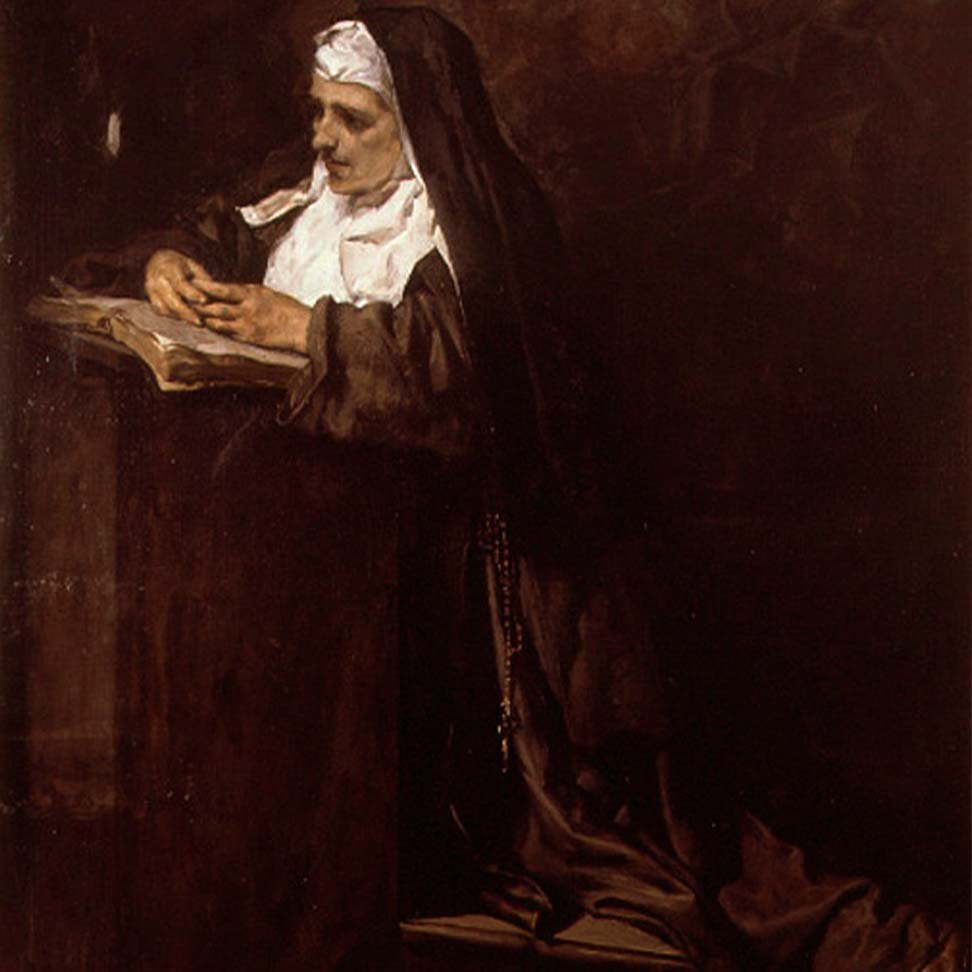
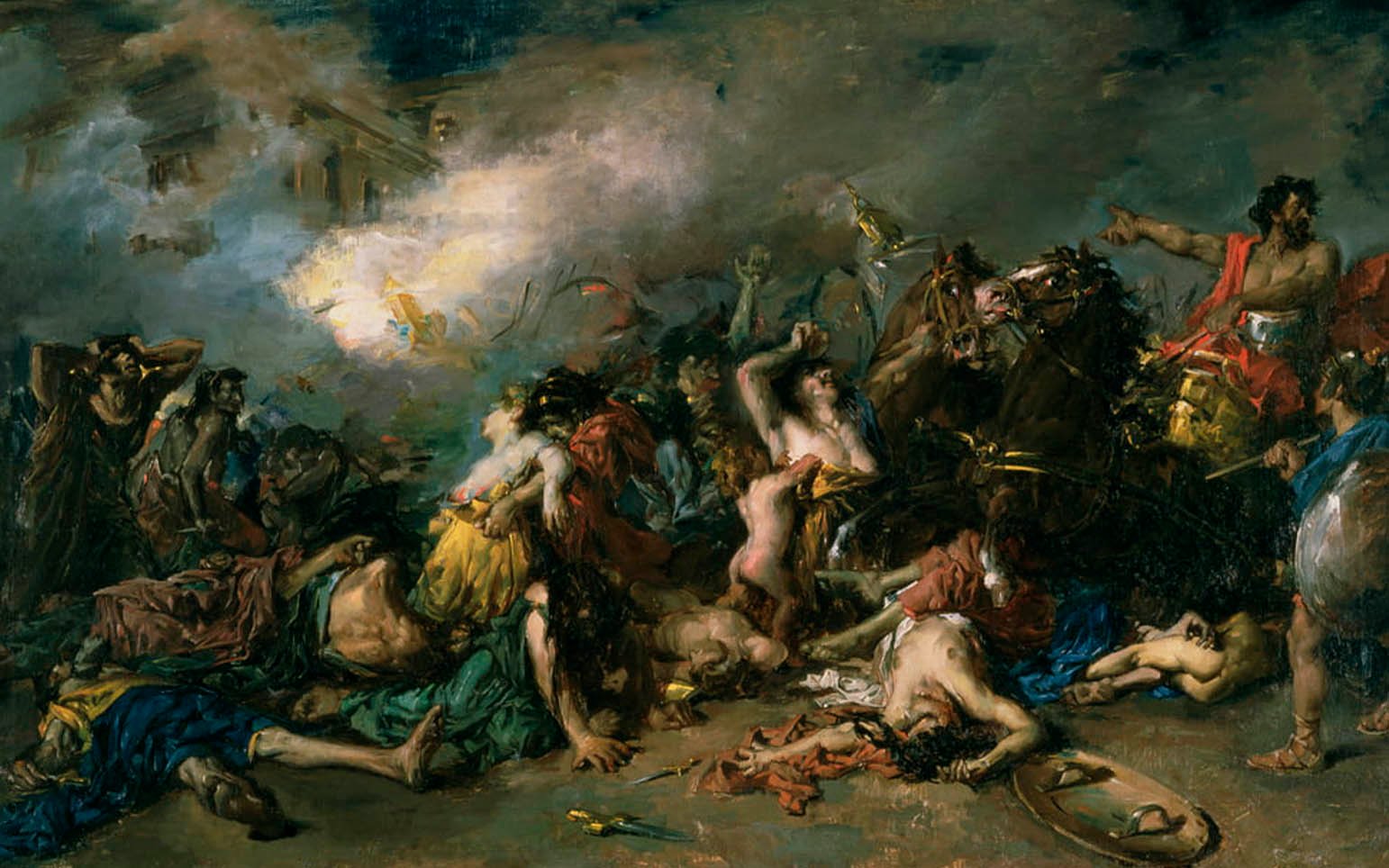
In Rome he practised the formal traditions of history painting and continued sending works to national and regional exhibitions. “El último día de Sagunto” —which can now be admired at the Provincial Council of Valencia— earned him a mention, but it was his “Sta. Clara”, firmly rooted in the way Spanish painters of the third quarter of the century interpreted the art of Spain’s Golden Age, that earned him a first-class mention, bringing him national recognition and respect.
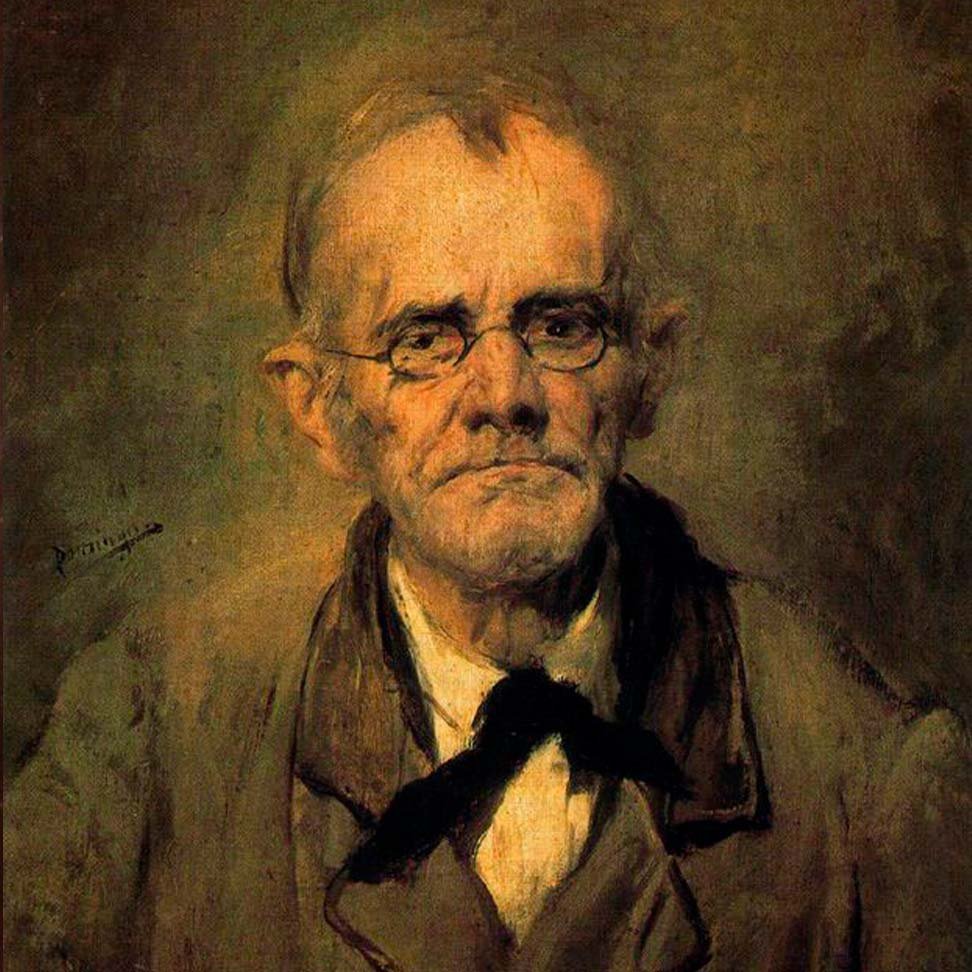
In 1872, he moved to Madrid, increasing his artistic output as his popularity grew. He continued painting portraits —including the notable “Zapatero de viejo”— and began receiving important commissions from the Madrid nobility.
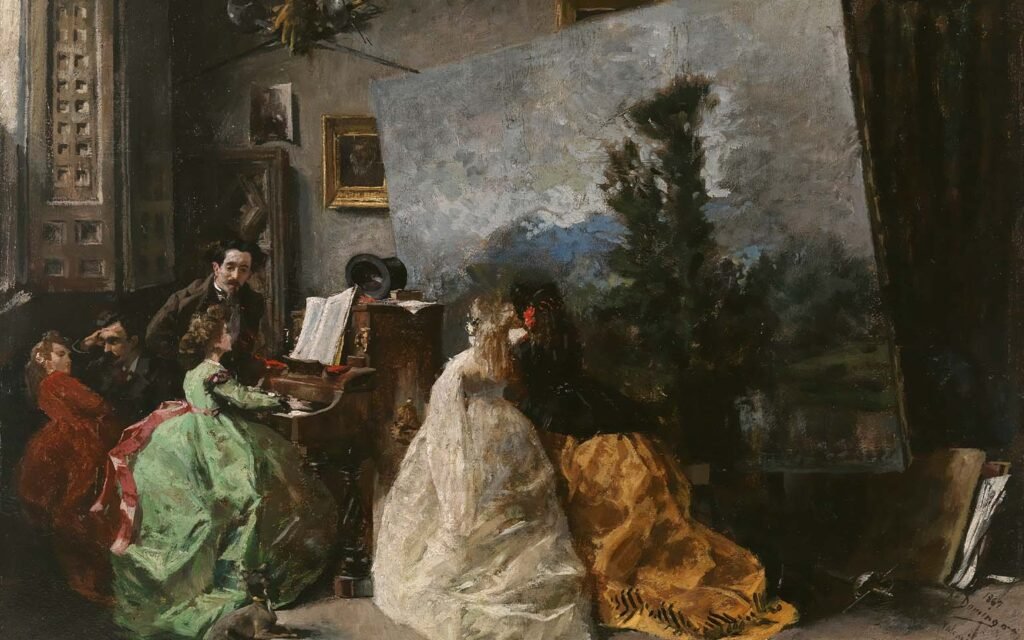
He produced decorative works for the Portugalete and Fernán Núñez palaces, as well as genre scenes for the Dukes of Bailén, including “Una fiesta del siglo XV” and the magnificent “La lección de música”. Fame and recognition brought him considerable income and further increased his prestige.
In 1873, he made a productive artistic journey through Andalusia, and the following year married Elvira Fallola, from Madrid. They would have four children, the third of whom, Roberto Domingo, would later become well known for his bullfighting paintings.
Restless and non-conformist by nature, Madrid became too small for him, and in 1875 he moved to Paris, where he would live for the next thirty-nine years, only returning to Madrid when forced to do so by the First World War in 1914.
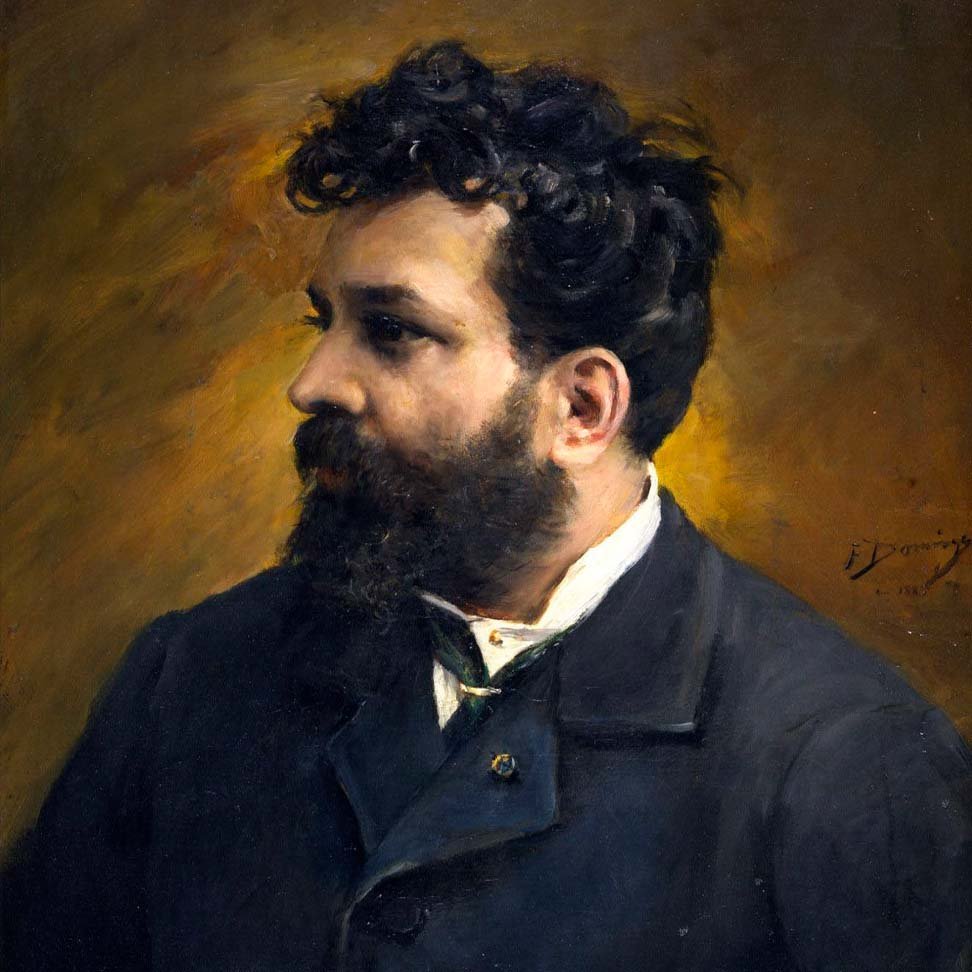
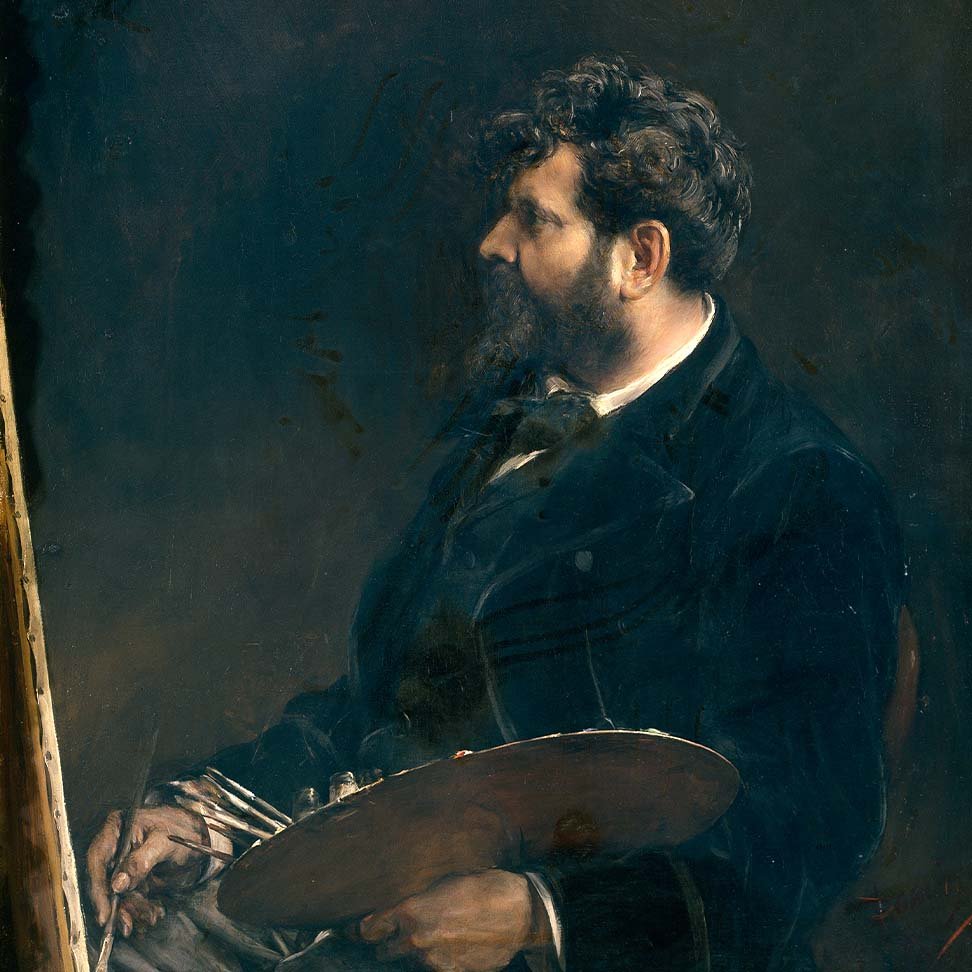
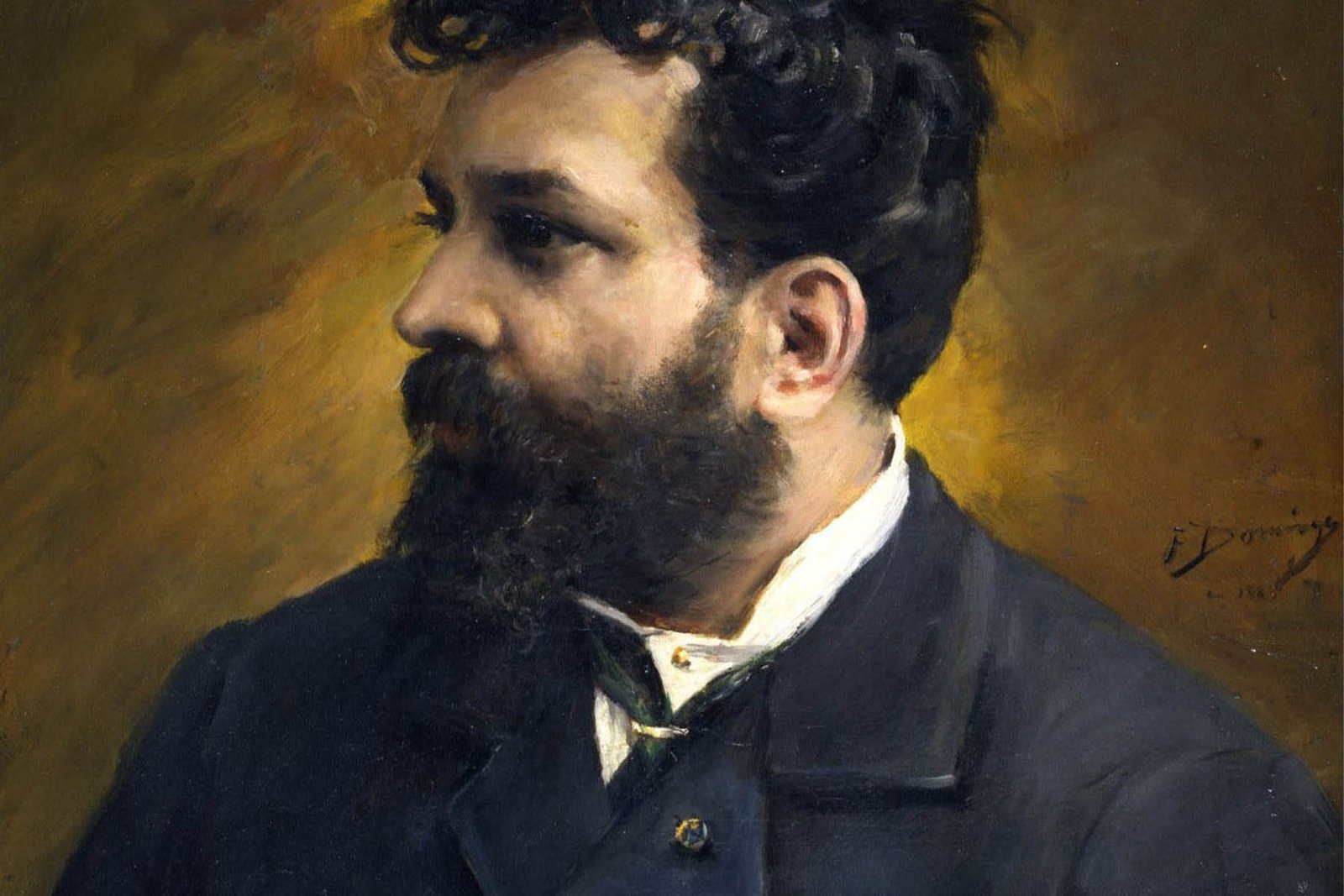
During his early years in Paris, he found a highly receptive market for his work, particularly genre scenes set in the 17th and 18th centuries. Works from this period include “Un alto en la montera” and historical scenes featuring Napoleon, although his musketeer paintings —now in the Prado— became particularly important. After the premature death of his beloved Fortuny, Domingo inherited part of his clientele. His French dealers, Henry Haro and Adolphe Goupil, marketed his work throughout Europe and North America, and he received commissions for Vanderbilt and Huntington for the Hispanic Society, helping pave the way for the future collection of Sorolla’s Vision of Spain. One of Domingo’s finest self-portraits is preserved there. He ultimately became better known internationally than in Spain.
He continued to receive important commissions from Spain, particularly portraits. Among his patrons was Maria Christina of Austria, Queen Regent of Spain, for whom he also painted “Alfonso XIII de niño”, receiving the extraordinary sum of one hundred thousand pesetas at the time. Years later, Sorolla would receive 150,000 dollars for the complete Vision of Spain series. Admittedly, those were dollars and there were many paintings, but the comparison helps illustrate Francisco Domingo’s importance at the end of the 19th century.
From his mansion in Saint-Cloud, on the banks of the Seine, he frequently welcomed his Spanish friends Benlliure and Sorolla, helping to promote their careers.
The First World War forced him to return to Madrid, leaving behind his comfortable Parisian life. Perhaps distance had allowed him to fade somewhat from public memory, and his return to Madrid was not as triumphant as might have been expected. Nevertheless, his friends Benlliure and Sorolla insisted that he should receive the recognition he deserved, helping secure official recognition from the San Carlos Academy of Fine Arts and his appointment as a full member of the Royal Academy of Fine Arts of San Fernando.
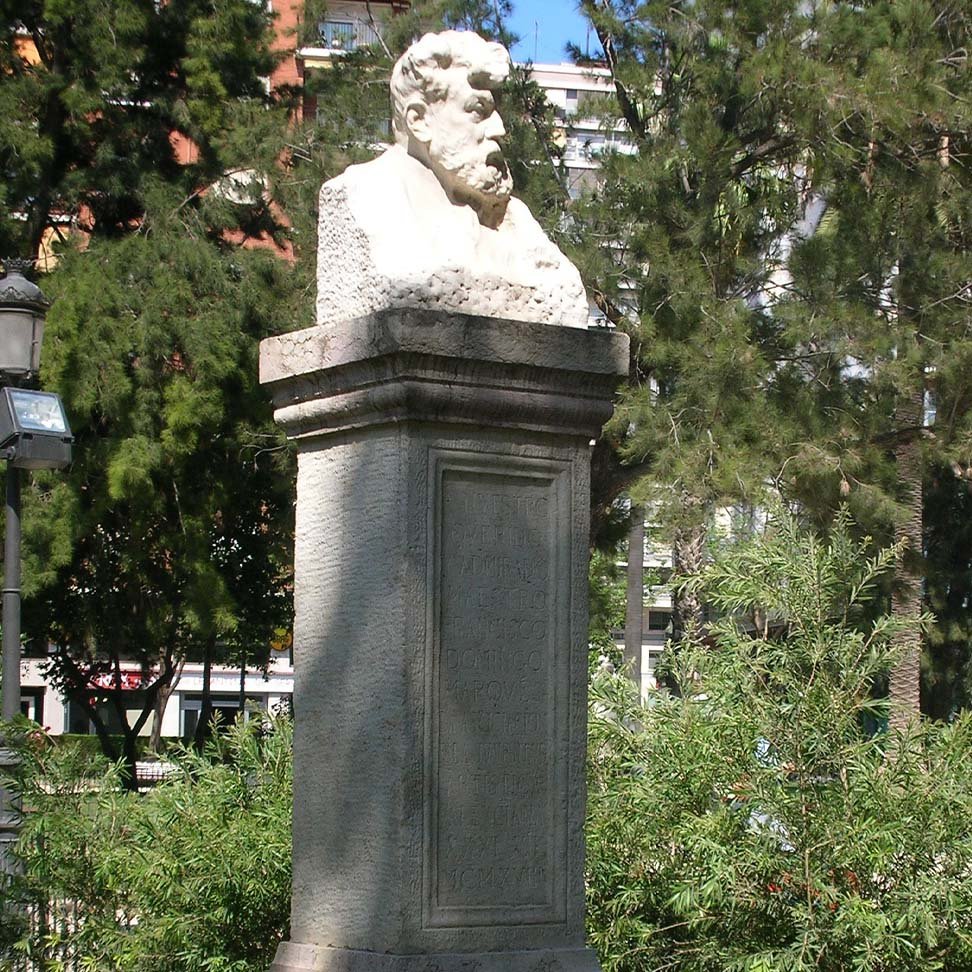
He would still receive an important tribute in his native Valencia in 1918, at the age of seventy-six, just two years before his death in Madrid. The tribute was sponsored by Mariano Benlliure, who in 1885 had sculpted a terracotta bust of Domingo. Its reproduction in white marble will undoubtedly be familiar to many who have walked through Valencia’s Glorieta Gardens.
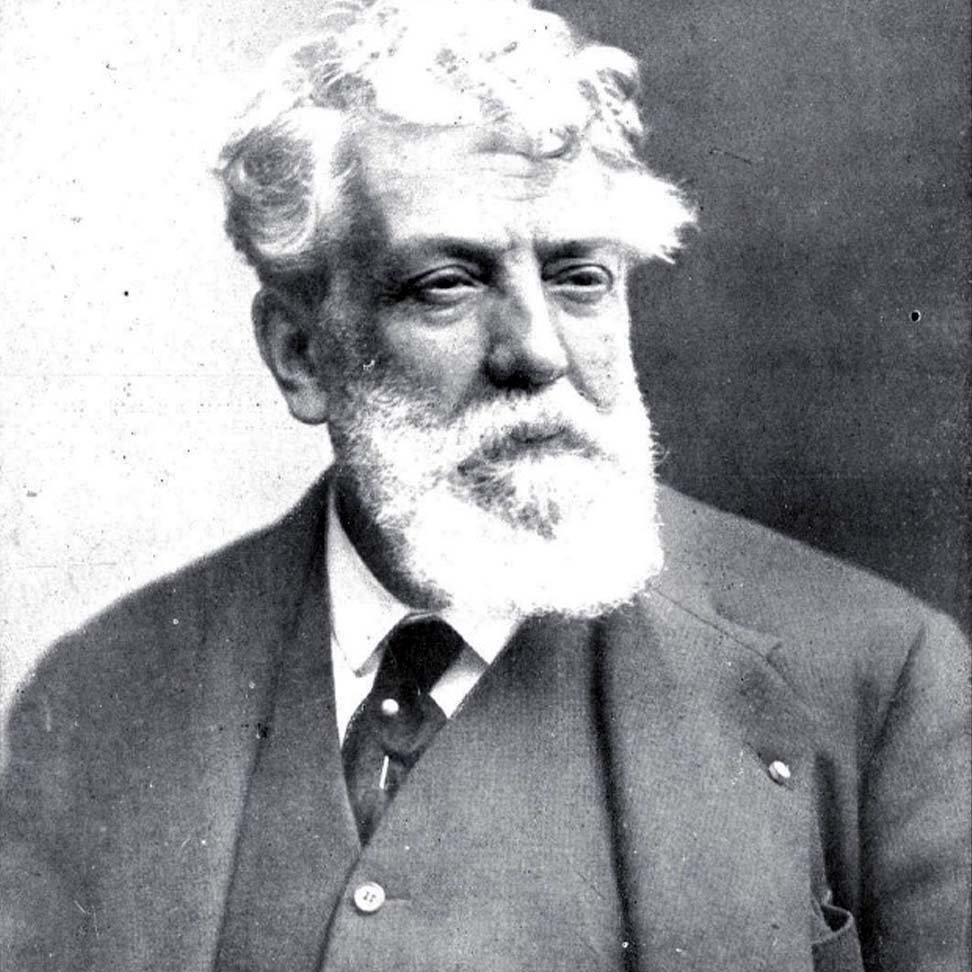
Pintor Domingo (Valencia, 12 March 1842 – Madrid, 22 July 1920)
Manuel Serra Meliá for the 2024 Fallas llibret
Would you like to see the original article in the llibret?: Llibret 2024 – Semblanza de Francisco Domingo Marqués